SIFF 2021: Summer of 85

Summer of 85': why you need to see the best teen drama of the autumn

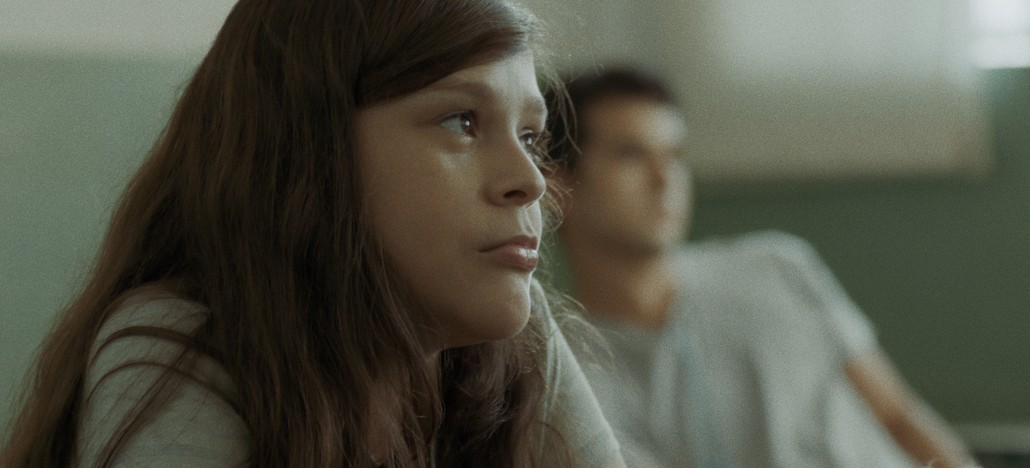
Summer of 85 is well respected auteur François Ozon’s foray into the queer coming-of-age subgenre. Set in the mid-80s as the title indicates, Ozon leverages the sexually regressive past as a building block for family drama and young ignorance. All that coupled with a unique framing device Ozon attempts to tell a brimming, complex narrative in a concise 90-minute package.

While caught in a storm, Alexis (Félix Lefebvre) capsizes his boat only to be saved by David (Benjamin Voisin). That fateful encounter begins what will eventually become the most important romance of Alexis’s young life. Enchanted by David’s flirtatious nature, Alex spends all of his time with his crush including getting a job working at David and his mother’s (Valeria Bruni Tedeschi) fishing shop. As the weeks go by, Alexis is eventually forced to understand that summer flings are fleeting in nature and that first loves never last for as long as we want.

Love stories are only as relatable as their actors can portray. Unfortunately for Summer of 85, stilted acting deprives the film of some of this relatability. Even when both boys give into their emotions in the story, the actors especially Lefebvre play everything guarded. This restraint works well when they figuratively dance around their feelings, but it becomes immersion breaking when the two are supposed to be in the throes of love. There is no vulnerability in Alexis’s character which is an essential component of a good coming-of-age story. This frigidness of character is further hampered by the films pacing. The six-week relationship between the boys is condensed to one montage a handful of scenes. The film’s short runtime means that these emotional moments were so fleeting that a few awkward takes stunted the film’s emotional core.

François Ozon understands that the queer coming-of-age drama is no longer a unique topic, so he expanded the premise beyond a traditional narrative by introducing a sprawling framing device to Summer of 85. While a fine decision in theory, some awkward acting and minimal romantic moments deprives the film of its heart. What’s left are countless scenes of Alexis talking about his lost love without showing a believable picture of the love in the first place.

SIFF 2021: I’M FINE (Thanks for Asking)

I'M FINE (Thanks for Asking)

“How are you?” always feels like a loaded question when the answer is anything but great. In I’M FINE (Thanks for Asking), directors Kelley Kali and Angelique Molina use the backdrop of the pandemic to explore how toxic that question can feel when the answer is anything but fine and how easily everything can spiral down when holding on by a thread.

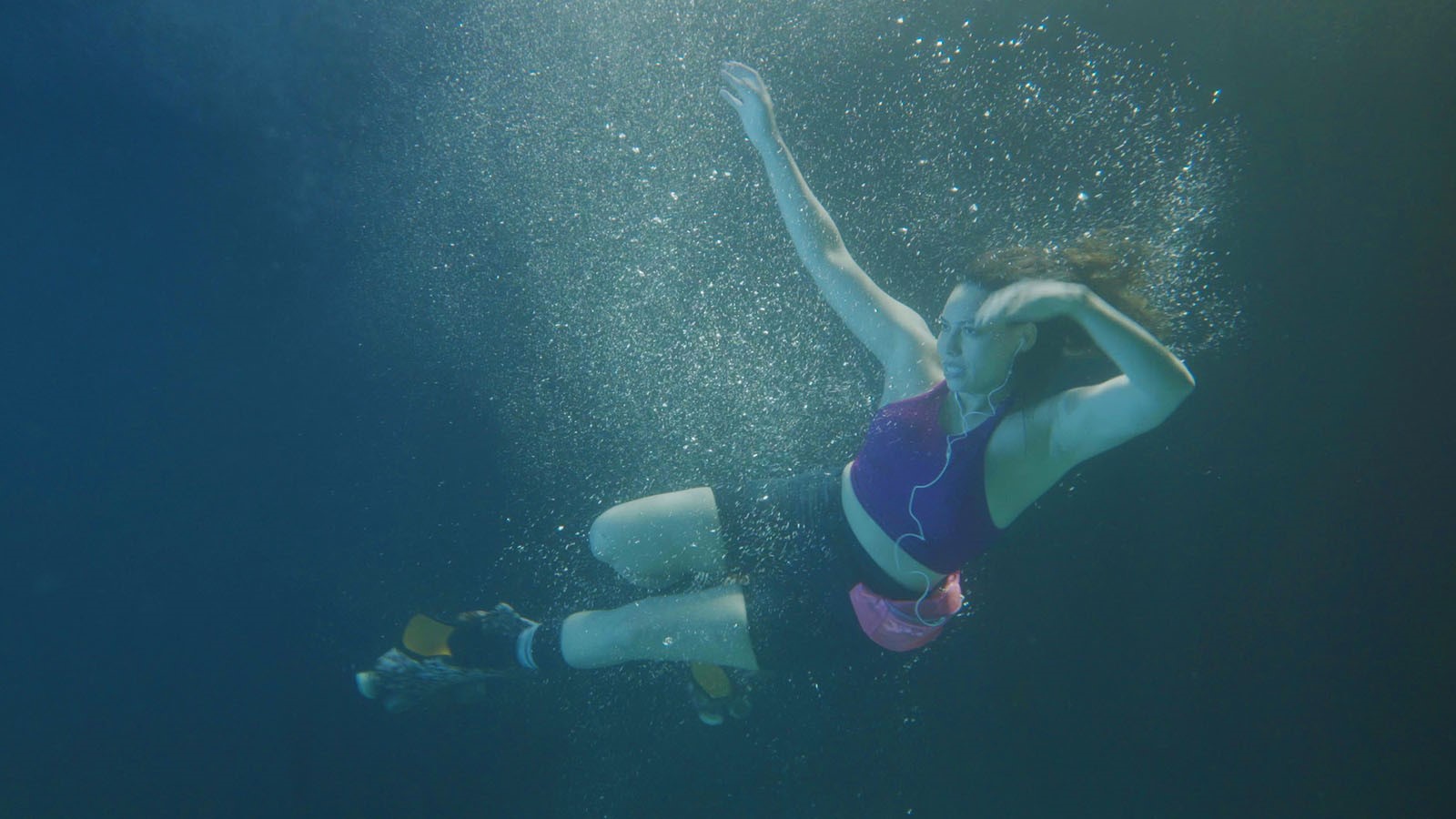
Director Kelley Kali also stars in the film as Danny a single mother who was recently widowed. She and her 8-year-old Wes (Wesley Moss) have been living in a tent by the side of the road for some time in absence of a steady income from deceased Sam. Danny reminds Wes to keep their “camping” a secret before dropping her off with a friend, donning her roller-skates in absence of car, and setting out to make the last few hundred dollars for an apartment security deposit. As she traverses L.A. under the scorching sun, she becomes increasingly desperate to procure the necessary funds after a client shorts her. Eventually, with the help of a little weed, she gives in to a friend’s inquisition and betrays that everything is not fine. Unfortunately, her defense mechanism of answering “I’m fine” proves justified when even in the people who proport to care about her she finds he no solace.

More than anything, I’M FINE (Thanks for Asking) captures thefeeling of futility that accompanies poverty. For Danny it seems that everything that could go wrong does because she has nothing so every misstep has significant consequences that no amount of good luck can overcome. This hopelessness is best visualized by a moment where Danny stumbles in a puddle and the film cuts to a shot of her fully submerged in water while her envelope of cash floats out of grasp. While striking, this sequence also betrays the flaw in the film. Danny’s misery is the point, but the film does feel a little overindulgent in the melodrama at times. It is not significant enough to sour the picture, but enough to call out.

The most significant thing that I’M FINE (Thanks for Asking) has going for it is that it represents a slice of America largely ignored by Hollywood. As a houseless woman of color, Danny’s story is often told as a charity case through the lens of an affluent white person if at all, but Kali and Molina portray her as a full person who is so much more than her housing status. She is a loving mother who would do anything for her child and is just as worthy of a cinematic depiction as anyone.

SIFF 2021: The Pink Cloud

The Pink Cloud Is a Beautiful Pandemic Nightmare About What's Lurking Inside

In the opening seconds of The Pink Cloud, director Iuli Gerbase explains that her first feature was written in 2017 and shot in 2019 and that any similarities to real life events were merely coincidental. While these caveats are not uncommon in films, to put a message like this front and center implies a significant link between the film’s presence and real-life events. In this case, it turns out that Gerbase inadvertently predicted the quarantine reality that would consume the world between the film’s inception and release.

The film begins with the titular cloud descending upon a young dog walker and taking its first life. Later that morning Giovana (Renata de Lélis) and Yago (Eduardo Mendonça) are woken up from their one-night stand by the sound of sirens alerting the city to the unprecedented emergency. The two thirtysomethings despite being unacquainted the morning prior are then forced to quarantine together until the cloud goes away. As the days together turn to weeks, weeks to months, and months to years, the relationship between the pair originally only searching for an uncomplicated fling is tried, broken, and repaired only to be tried and broken again.

Despite being conceived in a pre-COVID world, it would be impossible to evaluate The Pink Cloud without making parallels to the real-life quarantine that has impacted much of the world over the past 12 months. Giovana and Yago’s experience with the imposed quarantine resonates with the world experience of the audience in a way that Gerbase could never have anticipated. She perfectly encapsulates the feeling that, while the reason for a quarantine may be valid, the tedium from a life in quarantine is not without serious mental consequences of its own. The characters all struggle to attain the acceptance stage of grief because as time progresses hope seems fruitless.

Any year prior to this, The Pink Cloud would likely receive festival-only buzz wherever it was shown. Iuli Gerbase shows substantial skills as a first-time director, but her film is enough outside the formula of what breaks out of festivals for it to reach a wider notoriety. However, since the film was able to perfectly tap into a collective trauma her debut is permeating the cultural zeitgeist as the first great COVID film.

SIFF 2021

My first film festival that I’ve had any sort of pass for in almost five years (the last one was TIFF 2016) is also the first time that I’ve dedicated myself to watching a significant number of films from my city’s festival. While the normal theaters these films would show in are a walk or quick bus away, COVID has forced this film to be 100% virtual. In the theater or not, I’m excited to watch festival movies and find the hidden gems.

Aggregated here are the reviews for each film I watched in the order I watched them.

The Pink Cloud (2021, Dir. Iuli Gerbase) – ⋆⋆⋆⋆

I’M FINE (Thanks for Asking) (2021, Dir. Kelley Kali and Angelique Molina) – ⋆⋆⋆

Summer of 85 (2020, François Ozon) – ⋆⋆½

The Dog Who Wouldn’t Be Quiet (2021, Dir. Ana Katz) – ⋆⋆⋆⋆

Goddess of the Fireflies (2020, Dir. Anaïs Barbeau-Lavalette) – ⋆⋆⋆⋆½

Valentina (2020, Dir. Cássio Pereira dos Santos) – ⋆⋆⋆⋆

There Is No Evil (2020, Dir. Mohammad Rasoulof) – ⋆⋆⋆½

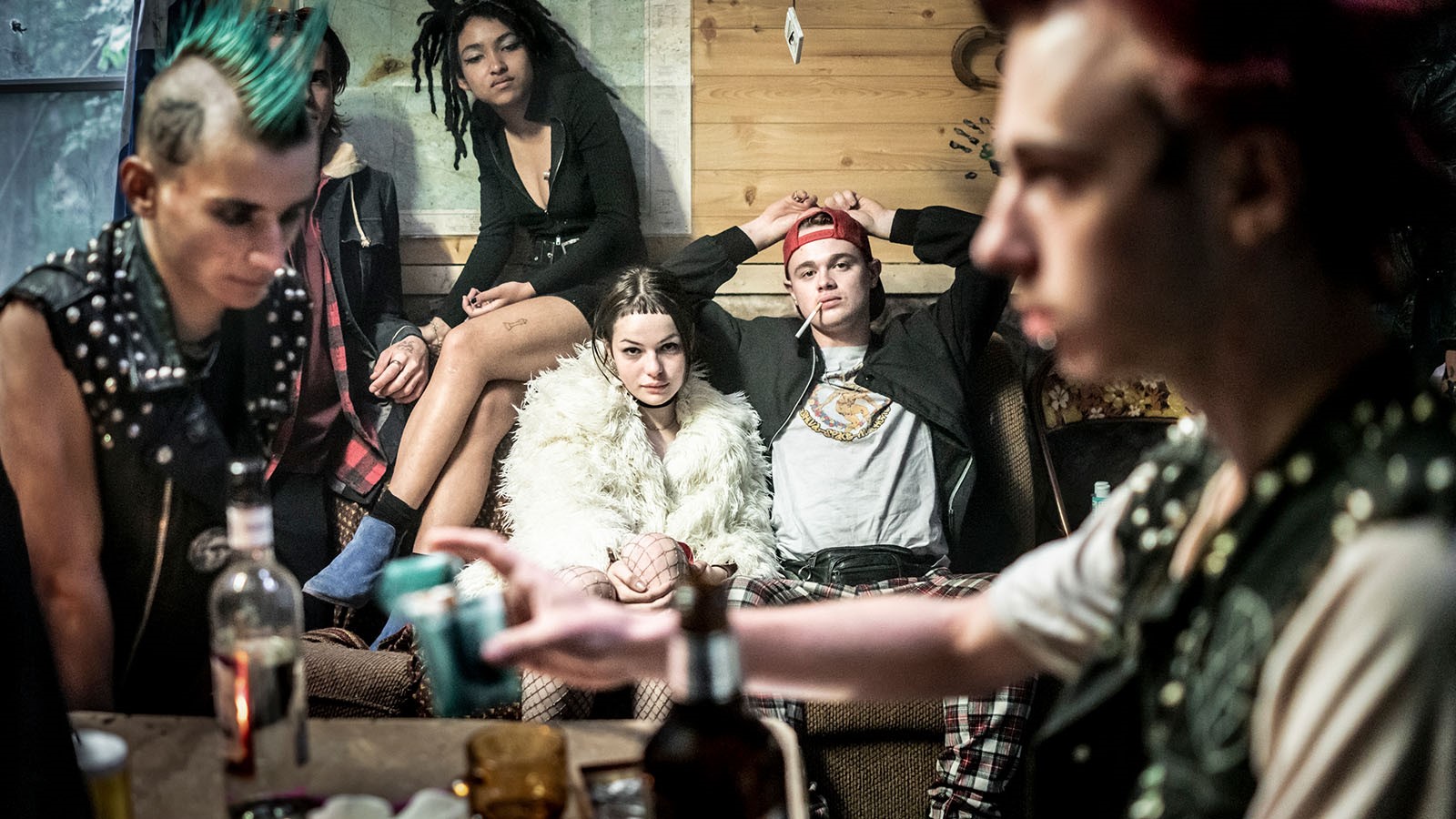
Bad Tales (2020, Dir. Damiano and Fabio D’Innocenzo) – ⋆⋆⋆

Charter (2020, Dir. Amanda Kernell) – ⋆⋆⋆⋆½

Summertime (2021, Dir. Carlos López Estrada) – ⋆⋆½

Bebia, à Mon Seul Désir (2021, Dir. Juja Dobrachkous) – ⋆⋆⋆

Little Girl (2020, Dir. Sébastien Lifshitz) – ⋆⋆⋆⋆

Get the Hell Out (2020, Dir. I.-Fan Wang) – ⋆⋆
—– Also includes Mom Fight (2019, Dir. Mickey Finnegan) – ⋆⋆⋆

Slalom (2021, Dir. Charlène Favier) – ⋆⋆⋆½

Beans (2021, Dir. Tracey Deer) – ⋆⋆½
—– Also includes Bub (2021, Dir. Oriwa Hakaraia and Te Mahara Tamahana) – ⋆½

Waikiki (2020, Dir. Christopher Kahunahana) – ⋆⋆⋆
—– Also includes PIIKSI/Huia (2021, Dir. Joshua Manyheads and Cian Elyse White) – ⋆⋆⋆

Sweat (2020, Dir. Magnus von Horn) – ⋆⋆

The Earth is Blue as an Orange (2020, Dir. Iryna Tsilyk) – ⋆⋆⋆

Strawberry Mansion (2021, Dir. Kentucker Audley and Albert Birney) – ⋆⋆⋆½
—– Also includes The Other Morgan (2021, Dir. Alison Rich) – ⋆⋆⋆

Wisdom Tooth (2019, Dir. Liang Ming) – ⋆⋆⋆½

Rebel Objects (2021, Dir. Carolina Arias Ortiz) – ⋆

Topside (2021, Dir. Logan George and Celine Held) – ⋆⋆⋆⋆
—– Also includes Huntsville Station (2020, Dir. Chris Filippone and Jamie Meltzer) – ⋆⋆⋆

Too Late (2021, Dir. D.W. Thomas) – ⋆⋆⋆½
—–Also includes Unholy ‘Mole (2019, Dir. David Bornstein) – ⋆⋆⋆

The Spy (2019, Dir. Jens Jonsson) – ⋆½

The Teacher (2019, Dir. Ming-Lang Chen) – ⋆⋆

Ma Belle, My Beauty (2021, Dir. Marion Hill) – ⋆⋆⋆

Fly So Far (2021, Dir. Celina Escher) – ⋆⋆⋆

The Perfect Candidate (2021, Dir. Haifaa Al-Mansour) – ⋆⋆⋆½

God Exists, Her Name is Petruya (2019, Dir. Teona Strugar Mitevska) – ⋆½

Son of Monarchs (2021, Dir. Alexis Gambis) – ⋆⋆⋆
A 2021 Film Journey: Day 97

Today marks the final day of my interlude between completing my Oscar viewing and the beginning of SIFF. Before jumping into today’s feature, which was another choice of a film that I’d been wanting to watch for a while, I want to talk a bit about my plan for the next 11 days of the festival. Rather than an informal blog post at the end of each day like I’m doing now, I’m hoping to write something more akin to mini reviews for the films that I watch. I’ll likely aggregate a day’s worth under this post category for continuity’s sake, but I won’t be doing double work.

Russian Ark (2002, Dir. Aleksandr Sokurov)

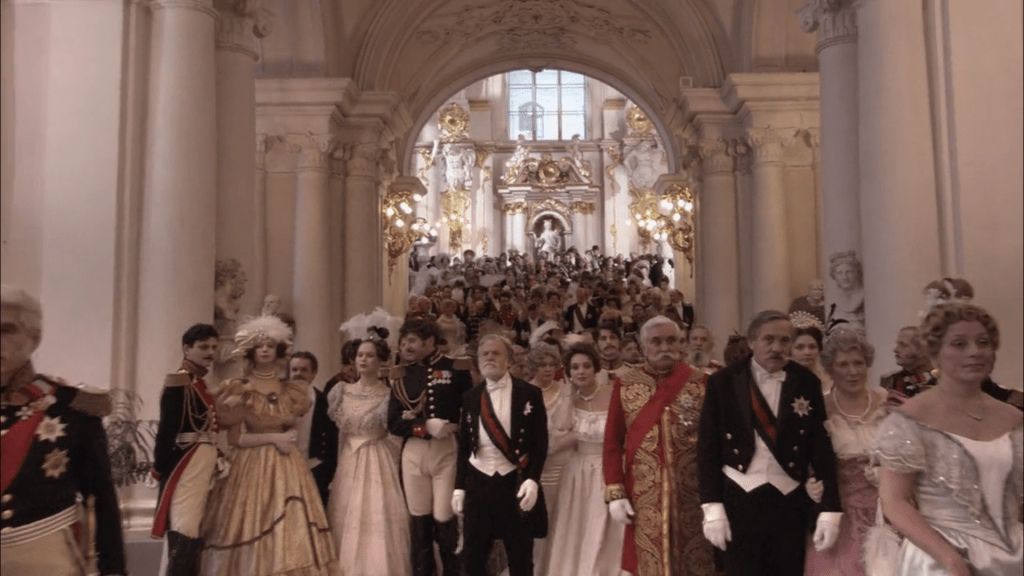
I don’t believe I’ve ever felt less cultured by a film before. Aleksandr Sokurov’s technical tour de force is a love letter to Russian Empire and the art housed in the Saint Petersburg Winter Palace. Taking place over a 96-minute single shot, the film traverses eras from the 1800s to present day as the palace is used for operas, a ceremonial imperial audience, a ball, and museum attendance. Each of these moments represent an important moment in Russian history that I wish my subpar US school system prepared me to appreciate more.

More than anything else, what stands out when watching Russian Ark is the spectacle of it all. The single take gimmick is the showiest aspect of the spectacle. As the Steadicam moves at a rather deliberate pace, the impressiveness of the single shot filmmaking is less about any singular difficult moment and rather at the grandiose scope of it all. The final 20 minutes in particular as the camera weaves through hundreds of dancing extras all meticulously costumed for a period ball is breathtaking in it’s beauty. When the music finally ends and the hundreds of actors all proceed to exit the palace bringing the camera with them, it’s as if the film is taking a bow with one final acknowledgement of the technical feat that was accomplished over the last hour and a half. Even with a lacking at best knowledge of the Russian Empire’s history, these moments sold the occasionally opaque film for me.

A 2021 Film Journey: Day 96

Today again I found myself with a little decision paralysis in picking what to watch. With the entire cinematic library as an option, it was hard to know where to begin. I only have three days between the conclusion of Oscar viewing and the start of SIFF, so like yesterday I chose a film that was of personal interest even if it wouldn’t be considered a blind sport by any traditional metric. The main difference between today’s viewing and yesterday’s is that yesterday’s film was the last film I hadn’t seen by a director, while today’s film was the second I’ve watched from a director I’ve want to see more from.

Hotel by the River (2019, Dir. Hong Sang-soo)

Hotel by the River Review: Hong Sang-soo Almost Makes a Rom-Com | IndieWire

As blockbusters stuffed to the gills with loud action set pieces occupy an ever-increasing market share of the world’s films, I’m thankful that directors like Hong Sang-soo are around to create wonderful works of slow cinema. Movies that the most people would turn off after five minutes from boredom are frequently my favorites. The lethargic pacing creates a meditative experience that enhances my personal viewing experience. Hong builds on the natural meditative qualities of the film’s pace with a complete lack of non-diegetic music and black and white cinematography. This allows for limited distractions for the audience encouraging self-reflection.

While the specifics of the story, the little that there is, is largely unimportant the themes are the heart of the film those being fear of change. In this way, the hotel reflects a purgatory where the characters hide from progress. Ko Young-hwan (Gi Ju-bong) has been staying for them for two weeks and suffers from visions of death and creative blockage. A-reum (Kim Min-hee) fakes a burn injury and is distraught over a recent breakup. Both characters are visited by friends and family, but others are unable to convince them to movie on. When Ko Young-hwan is forced to leave the purgatorial hotel before he’s ready, he retaliates in a definitive way. Hotel by the River was wonderful experience for viewers with the patience to appreciate its minutia.

A 2021 Film Journey: Day 95

After almost a month straight of watching Oscar shortlisted or nominated films, I almost didn’t know what to do with myself today. With no feeling of obligation to watch any specific thing, I chose to cross off a film from my personal list. It’s not especially a blind spot because I don’t think it’s seen as a seminal piece of the cinematic landscape, but it was the only film I had yet to watch by a director I appreciate more and more with each additional film’s first viewing or re-watch of any of his other works.

Millennium Actress (2001, Dir. Satoshi Kon)

Millennium Actress (2001) directed by Satoshi Kon • Reviews, film + cast •  Letterboxd

We’ll never know how much amazing cinema we lost with the untimely passing of Satoshi Kon. He only made four feature films before unexpectedly passing away from pancreatic cancer at the age of 46, but each one is brilliant in its own way. Much of what makes Kon’s films so spectacular is the editing in his films. He makes frequent use of match cuts to blur scenes and realities together. This combined with shot durations shorter than physically possible lends a frenetic energy to each of his works.

Millennium Actress makes clear use of this cinematic signature by blending an aging actress’s life story with the films that she starred in. When the presumed flashback is first betrayed as a scene from one of her films, the speed of the story begins a constant acceleration as each film receives slightly less time, and the barriers between filmography and memory blur. While this could come across as muddled and confusing in search of the character’s truth, this is not a fault of Kon’s. Rather, the muddled events between Chiyoko Fujiwara’s career and life reflect the duality of her life. Satoshi Kon’s style works perfectly to express the complexities of the human experience in this mock biopic.

A 2021 Film Journey: Day 94

Normally I’m still finishing up watching the Oscar nominees as late as the morning of the ceremony, but today a full three weeks before this year’s event, I’ve finished watching everything on the lists. I don’t believe that I started substantially ahead of any prior year, but rather the combination of this film watching project and no new releases in theaters has kept me singularly focused on this set of films.

Greyhound (2020, Dir. Doug Roland)

Critique du film « Greyhound » : court ? Oui. Passionnant ? Et comment ! -  digitec

I appreciated this much more than I thought I would. Much of my Oscar viewing this year has had me considering on the cinema landscape has changed in my lifetime. The Oscar bait picture, while not completely dead has no real room anymore. Within the first 10 minutes of the film, I was worried that Greyhound was going to fall into that trap as a film out of time. In those minutes, Captain Krause (Tom Hanks) and Evelyn (Elisabeth Shue) discuss their shared love and plans for the future. With this framing, I anticipated a 90s style sprawling love story through a lens of war, but after this initial scene, the romance component was dropped for the remainder of the film for all intents and purposes.

Instead of relying on the schmaltz set up in the initial scene, the film relies on 80 plus minutes of continuous tense set pieces that are as exhausting to watch as they are for the characters. This relentless pacing is what elevates Greyhound beyond the Oscar bait premise. By staying so one note and continuously elevated, the film takes on an almost experimental stance eliminating much of the three-act structure for continuous action. And while it doesn’t quite succeed on that level, its uniqueness is much appreciated.

The Life Ahead (2020, Dir. Edoardo Ponti)

The Life Ahead movie review & film summary (2020) | Roger Ebert

Make that two for two on films that subverted my expectations tonight. When I viewed Eurovision Song Contest: The Story of Fire Saga I commented on how the films nominated exclusively for best original song are the bane of Oscar film watching. The Life Ahead, however, felt like the kind of film I would catch at an arthouse theater and attempt to champion in vain. While the nominated song was fine, the movie itself was the standout. The film is essentially a coming-of-age story for they young Momo (Ibrahima Gueye) as he’s forced to carry out the last wishes of Madame Rosa (Sophia Loren) his ailing caretaker. The emotions expressed by the film are well earned even if the film verges on melodrama at times. In full disclosure, I’m going to keep this post rather short, because the character of Lola (Abril Zamora) has me intrigued enough to write a longer piece on the film. For now, just know that the film gets a recommendation from me.

A 2021 Film Journey: Day 93

I’m in the homestretch of my Oscar viewing of the year, and I should easily be able to finish up with time to spare before my film watching is consumed by SIFF for a week and a half. Today I chose to focus on the last untouched category that I have and watch all of the live action shorts. This is a category that has been pretty bleak since I started watching them all in 2012, and nothing I’ve seen in the years since is has lived up to 2012’s winner Curfew (Dir. Shawn Christensen), but here’s hoping for this batch to break both of those trends

Feeling Through (2020, Dir. Doug Roland)

Feeling Through short film

This was a good start for not having all of the films be incredibly bleak this year. In fact, Feeling Through was downright heartwarming. The story of a homeless teen Tereek (Steven Prescod) finding a passing meaning in life by helping Artie (Robert Tarango) a deafblind man catch his bus. In fact, the heartwarming aspect may be a bit of the film’s downfall as it short feels a little twee at times taking away from the dark reality of the characters circumstances. This doesn’t make the short bad, but it deprives if of any real commentary on Tereek’s predicament.

The Letter Room (2020, Dir. Elvira Lind)

Watch The Letter Room - Stream Full Movies Online with Topic

Okay, this one was excellent. Not quite to the level of Curfew, but The Letter Room will be a short that I remember after this Oscar season and that’s saying a lot for this category. Oscar Isaac plays Richard a corrections officer for death row who is transferred to the mail room to read through all incoming and outgoing correspondence. Through this intimate contact, the inmates are humanized for him, and he develops a connection to each of them even if only one way. The third act presence of Alia Shawkat is what really sells the short. Her vulnerability in the face of a system that destroyed her life is wonderfully realized, and further cements Richard’s viewing of inmates as humans first.

The Present (2020, Dir. Farah Nabulsi)

Farah Nabulsi on Twitter: "Our Palestinian film, The Present- one of only 2  Arab films just selected in competition at the Brussels Short Film  Festival. Only 62 International films were selected from

One of the best ways to demonstrate oppression is to show how even the most mundane of activities are impacted. The Present taps into that vulnerability when setting its sight on the Israel’s apartheid of Palestine. Yusef (Saleh Bakri) and his young daughter Yasmine (Mariam Kanj) only want to bring home a new fridge as a surprise for their wife/mother but living in an apartheid state makes the simplest of actions something that has a possibility of having a gun pointed at their heads. This film emphasizes how telling a specific story can be enlightening on a universal level.

Two Distant Strangers (2020, Dir. Travon Free and Martin Desmond Roe)

Two Distant Strangers' Picked Up by Netflix With April Release Date -  Variety

Is the Groundhog Day (1993, Dir. Harold Ramis) framing device the best for telling a police brutality narrative? I get what filmmakers Travon Free and Martin Desmond Roe were trying to accomplish. By utilizing that framework, it represents the feeling of inevitability many black men must face living in America. The talk-it-out-with-your-oppressor turn the second half of the short makes muddies the message to the point that. While even that approach doesn’t work in the end, by focusing on it so intently the message is muddied. I’m always in the market for more media on the BLM topic, I just don’t think Two Distant Strangers has a cohesive message to succeed as a short.

White Eye (2020, Dir. Tomer Shushan)

Israeli short film 'White Eye' focusing on African migrants nominated for  Oscar | The Times of Israel

The single shot film has always been a wonderfully showy gimmick in filmmaking, but in 2021 we are a long way removed from Hitchcock’s Rope (1948). As the long shot has become increasingly less difficult to accomplish, though still not easy, the implementation of the technique needs to be considered less the film be showy for the sake of being showy. A long shot is normally implemented to build tension or to create a meditative state in the viewer, but White Eye doesn’t implement it for either effect. Instead, it feels like a directorial boast while leaving the underlying film feeling slight.

A 2021 Film Journey: Day 92

For today’s films I’m closing a cultural blind-spot that I never really had much interest in closing and It’s Oscar nominated sequel. I’m not going to lie I’ve been secretly dreading this viewing experience. I know that the Borat films have a lot of critical acclaim, but they heavily utilize a type of humor that makes me extremely uncomfortable watching. Regardless I’ll consider this me attempting to broaden my horizons.

Borat: Cultural Learnings of America for Make Benefit Glorious Nation of Kazakhstan (2006, Dir. Larry Charles)

Borat 2'—Everything We Know About Sacha Baron Cohen's Secret Sequel

The first Borat film was about why I expected. While I’d never watched it before, much of the punchlines have been circulating for a decade and a half now so those bits offered none of the punch they may have back then, and I found the undercover set pieces just as comfortable as I thought I would. While I may have had to pause at various moments from discomfort, I do think that I understand the film. It does what all great comedy does and that’s punch up and thereby uncovers the seedy underbelly of the jingoist American culture. While the comedy works, despite my discomfort, I think the film lacks the heart to make it a really successful film. Thankfully, that shortfall was answered by its sequel.

Borat Subsequent Moviefilm (2020, Dir. Jason Woliner)

An Oral History of the Giuliani Scene in 'Borat 2' | IndieWire

The introduction of Maria Bakalova as Borat’s daughter Tutar elevates Borat Subsequent Moviefilm from a comedic novelty to a fully realized film with a character arc. The film is still as biting as ever in its unmasking of the US’s racist culture. It’s arguable that the commentary hits even harder in 2020 when America’s racist nature is more front and center than ever. Yet even with the unending commentary potential, the film focuses more on its personal story which allows the film to stand alone as cohesive story rather than only a collection of cringe inducing vignettes.

It makes sense that Borat Subsequent Moviefilm received one additional Oscar nomination over its predecessor for the supporting performance by Maria Bakalova. Her arc from gaslit teen to someone making decisions on her own brings a level of humanity that the first film was missing. Her presence even causes Sacha Baron Cohen’s Borat to undergo a transformation, something lacking from the first movie. These cinematic breaks from the schtick helped make the film a less uncomfortable experience for me to watch too, but it’s the heart they provide the film that makes the sequel the superior film.