Barbara Forever: Kisses on Nitrate

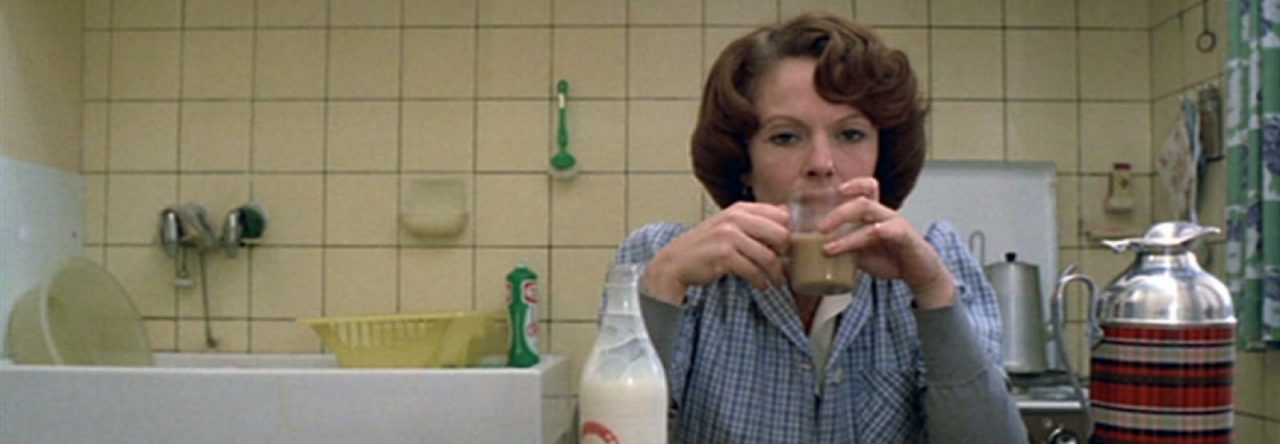
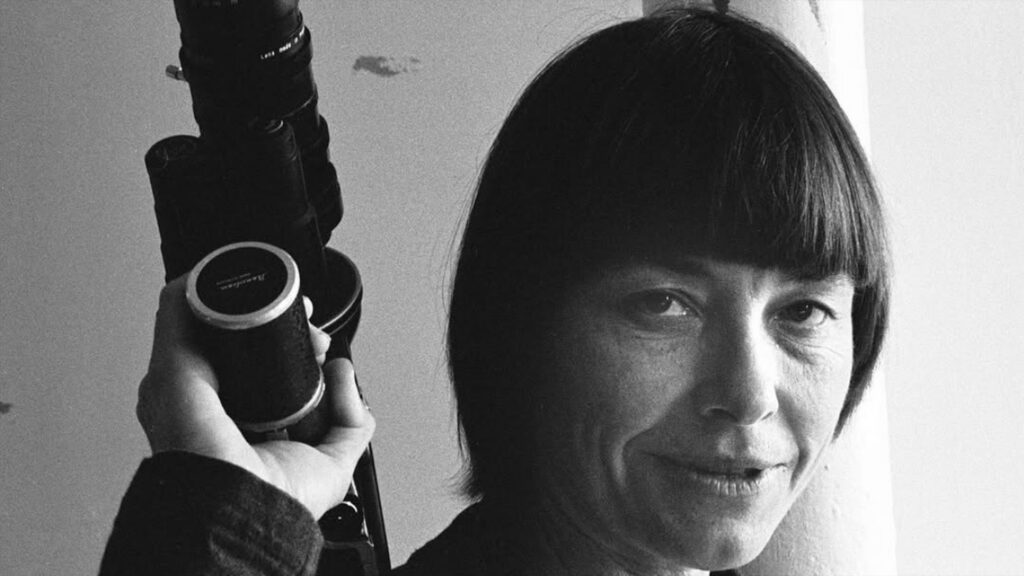
Barbara Hammer was a legendary filmmaker who could be seen as the American equivalent to Chantal Akerman as the pioneer in lesbian filmmaking from lesbian directors. As a queer woman making films which included nudity and sex, it took her years to finally receive the recognition she deserved as a profound artist, but in the modern era she is considered a cult icon with queer women looking to see themselves and how they love on screen.

Byrdie O’Connor directs Barbara Forever in what has become an increasingly popular style. A postmortem look into an artist by using a combination of their professional archive, personal home recordings, and memories from loved ones. Hammer makes an especially interesting topic for a documentary in this design as a combination of her artistic medium of choice being film and her experimental stylings provide variety and flavor to the imagery on screen.

As a counter cultural figure, Hammer’s story might have a limited audience, but a moment from the film documenting a time in which she spoke to an elementary school class and presented them with the concept of experimental filmmaking proves that the power of art can captivate any audience if they are willing to give it a chance, though as many of her films include explicit lovemaking between women some curation is important when showing her work to children.

While eventually the postmortem reflection documentary may reach the same staleness that plagues talking-head documentaries, as long as they can continue to use firsthand footage and center a person as fascinating as Barbara Hammer, they have a long life ahead of them.

Tell Everyone: Cool Hand Amanda

Finnish director Alli Haapasalo (Girl Picture) directs Tell Everyone, a period piece of a defiant woman, Amanda (Marketta Tikkanen), who is shipped off to a remote island that houses women society has decided it would rather not deal with. Amanda and her collection of designer dresses from Paris spark life into the captive residents to the displeasure of the medical professional in charge, Big Greta (Krista Kosonen).

Tikkanen is the standout performer as Amanda. She brings an infectious energy to the screen which makes it readily believable that her impact on the other woman would be so great. She knows that she is too good for the cards that she has been delt, but rather than that lead to a level of arrogance and superiority, she believes that those in the same situation as her also deserve more, especially a young woman she befriends, Little Greta (Aamu Milonoff).

Tell Everyone features beautifully lush cinematography by Jarmo Kiuru who previously shot Girl Picture with Haapasalo. Combined with Anna Vilppunen’s costume direction for Amanda’s designer dresses, and the look of the film works as both a contrast in juxtaposition with the situation the women find themselves in while meshing perfectly with the color that Amanda brings to her reality.

Despite all the things the film does well, I do have one complaint and that is about the film’s structure and pacing. The film has a very defined climax, but rather than working towards a close from that defined moment, the film extends a decent amount further and introduces another plot point to traverse which the film would have been stronger without.

Story issues aside, Tell Everyone headlined by Tikkanen captivating performance brings a feminine perspective to a tried-and-true story premise and is well worth the viewing.

I Love Booster: Opening Night of SIFF 2026

Caveat for this review: I viewed this as part of the opening night celebrations for the Seattle International Film Festival 2026 which was screened in a theater not designed for films, and this left the acoustics lacking and dialogue difficult to comprehend. I will revisit the film when it has it’s official release.

Coming off of his 2018 masterpiece Sorry to Bother You, which has grown to be a film I consider one of the most important of the 21st century, it’s fair to say that my expectations for I Love Boosters were through the roof. Riley is an extremely blatantly socialist filmmaker who in both of his films has focused intensely on how the ruling class exploit the working class, and the importance of taking collective action against ruling class to enact change. This far left ideology exists in not the films subtext, but the text proper. I Love Boosters even ups the explicitness by having one of it’s characters speak the phrase “dialectical materialism”.

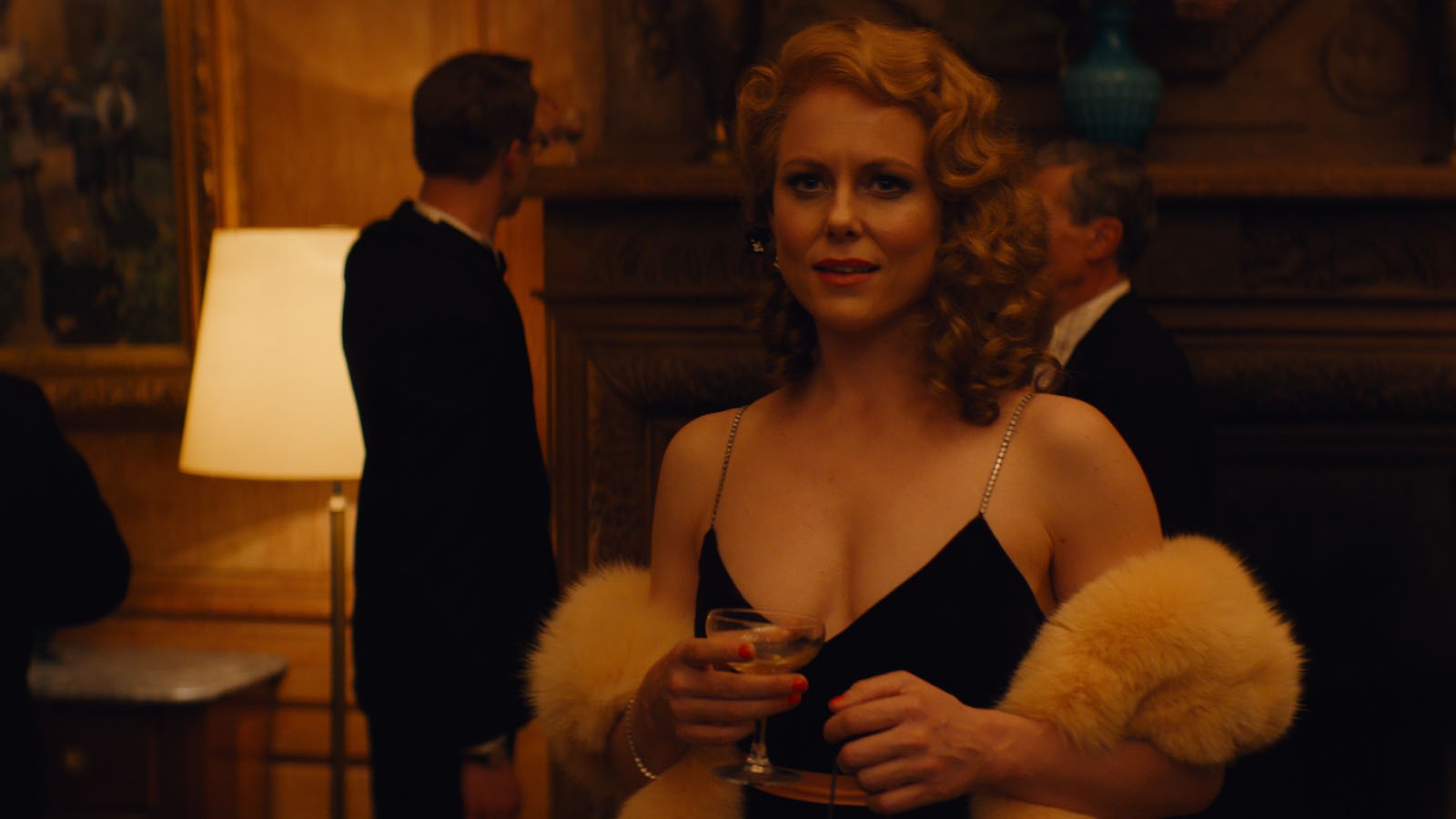
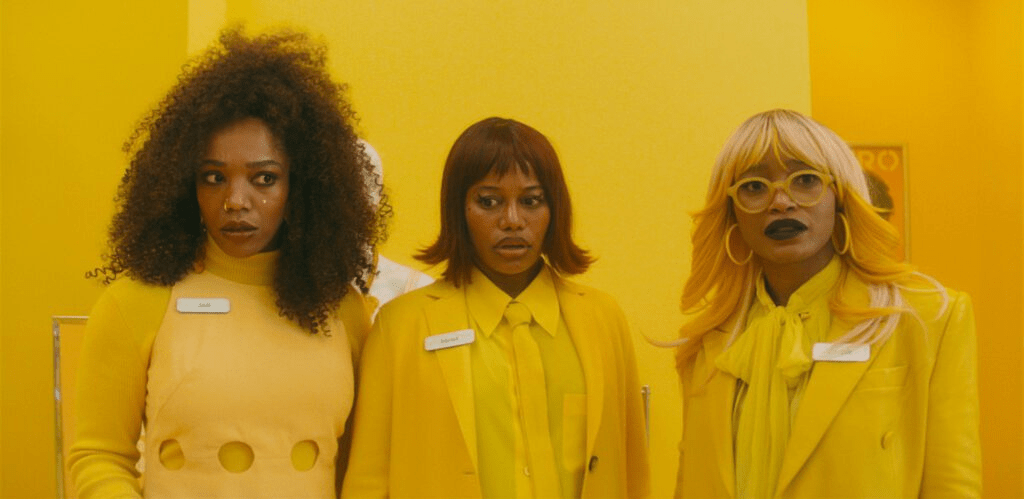
Keke Palmer, Naomi Ackie, and Taylour Paige star as boosters, or people who steal designer clothing to resell for a living. They have a special vendetta against street clothing designer, and culture appropriator, Christine Smith (played marvelously by Demi Moore) as they witness her stealing designs and exploiting her retail workers. The “Velvet Gang” meet up with an exploited worker from one of Christine’s Chinese sweatshops portrayed by Poppy Liu and along with a stolen piece of technology seek revenge on the acclaimed designer.

Riley once again creates an especially surreal world to tell his socialist allegory, and fills it with beautiful costumes, designed by Shirley Kurata, and stop motion imagery to help the communist theory palatable and even enjoyable to the average viewer including a supporting part from LaKeith Stanfield who is a perfect match for Rile even though the director continues to not allow him to exist as a normal human throughout both films.

If Sorry to Bother You was so far ahead of it’s time in 2018 that it still feels like the cutting edge of political satire today, I believe I Love Boosters will feel similar in 2034.

SIFF 2021: Son of Monarchs

Son of Monarchs: A Biologist Looks For Tranquillity In His Work [Review]

In Son of Monarchs, Mexican director Alexis Gambis heavily utilizes the butterfly imagery from its lead character’s childhood and profession for its metamorphosis symbolism. While the thematic imagery may be on the nose, the accompanying film is filled with the appropriate complexity and nuance to play off the obvious imagery.

Mendel (Tenoch Huerta) is a Mexican man living in New York where he is working on mapping the genome of the monarch butterfly. This passion of his came from his childhood living in the butterfly forests of Michoacán. Son of Monarchs focuses on Mendel as he travels back and forth between his two homes and attempts to process trauma from his childhood while coming into his own. Every piece of information he discovers from altering the genes of his butterflies, corresponds to a new repressed moment from his childhood making itself aware.

Son of Monarchs greatest strength is how it blends the surface level metaphors with haunting imagery and complex themes. The butterfly is one of the most recognizable symbols for a period of change or transition. While such heavy reliance on obvious symbolism could lead to a movie feeling like something straight out of film school, Gambis avoids this pitfall in two ways. First is to give butterflies a narrative purpose in the story beyond that of pure symbolism. Mendel’s home is known for the presence of monarch butterflies that turn the forest orange, so his memories of and adult interest in them gives the symbol more credence. The other technique implemented in film is to use the symbol for a more complex situation than a surface level transition. Mendel’s transition is not from childhood to adulthood as would be the simple metaphor, but instead is a transition from repression to acceptance. The juxtaposition between simplistic symbolism and complex themes creates an accessible intelligent whole.

Son of Monarchs tells a complex story rich with beautiful imagery and mature themes. The imagery of the butterflies both in the wild and under a microscope create a haunting dichotomy, and perfectly fit into the film’s themes and message.

SIFF 2021: God Exists, Her Name is Petrunya

God Exists, Her Name Is Petrunya review – asks big questions, doesn't  answer them | Berlin film festival 2019 | The Guardian

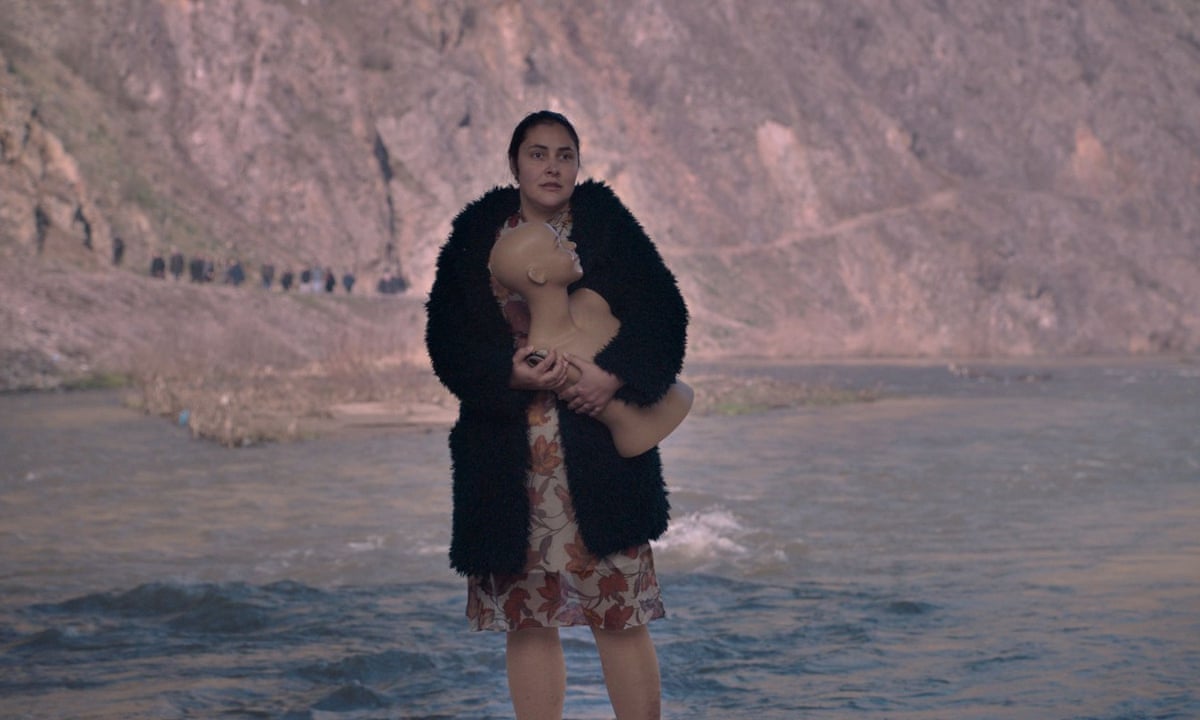
In her newest film God Exists, Her Name is Petrunya, Macedonian filmmaker Teona Strugar Mitevska sets lofty topic goals on which to comment. As the title hints at, the film explores the relationship between religious orthodoxy and women, but Mitevska also comments on the ever-decreasing job market and how it exacerbates the generational gap.

Zorica Nusheva plays Petrunya, an unemployed woman in her mid-thirties who finds her college degree in History to be more of a hindrance than a boon when job seeking. After a humiliating job interview set up by her aunt goes nowhere, she walks home past an ongoing religious ceremony where a priest throws a cross into a river and men jump of a bridge in competition to retrieve it. Despondent from another failure, Petrunya becomes impulsive and jumps into the water with the men and comes away with the cross and the scorn/ legal ire of the crowd.

For a film that attempted to touch on as many topics as God Exists, Her Name is Petrunya did, it ran out of things to say shockingly quick. The second half of the film takes place in a police station where Petrunya is being held despite not being under arrest. The purpose of the set is for the police to act as a narrative catalyst between Petrunya and the people who think she wronged them as well as the people who let her down. While reasonable in theory, the film becomes repetitive to the point of monotony as the same scene happens over and over again with a different secondary character and slightly different topic being the only variation. While the argument may be that each topic Petrunya is addressing stems from the same hole, that does not justify the staleness in direction. The argument can be made in a more engaging manner. Instead, the film just felt lazy.

God Exists, Her Name is Petrunya is a film that wanted to say a lot, but in attempting to it ended up saying little. Parallelisms can be drawn in cinema through a multitude of editing and plotting techniques, but the film utilizes an extremely flat repetition which stops the film in its tracks at the halfway mark and ceases to produce anything of interest. The film’s goals weren’t flawed, but its execution was.

SIFF 2021: The Perfect Candidate

The Perfect Candidate” to Launch on VOD in UK, in Lieu of Theatrical  Release | Women and Hollywood

In 2012, Haifaa Al-Mansour made history as the first female filmmaker in Saudi Arabia. Her film Wadjda blended the personal with the cultural by telling a girl’s story in the extremely patriarchal country. Almost a decade later, Al-Mansour continues to tell stories focusing on this blend, but rather than the school age Wadjda, her new film The Perfect Candidate focuses on a young professional woman’s struggle in a country slowly progressing with women’s rights.

Dr. Maryam Alsafan (Mila Al Zahrani) is the attending physician at her local clinic. She receives some resistance to her care from the more religiously orthodox members of her community, but she is largely appreciated as a local medical alternative to the hospital in the city miles away. When an issue with her travel permit prevents her from attending a medical conference, she is inadvertently thrust into a city council political campaign that tests how much her community truly respects her rather than simply placates her.

Maryam’s political campaign is a captivating subject for a film. While it was never her intention to run, once thrust into it she takes to the challenge immediately. She and her sisters put together political commercials, and she immediately identifies paving over the flooded dirt road in front of her clinic as her highest priority. This priority comes in contrast to what the men assume her campaign would focus on. The men see only her gender and assume she must be running on a platform of more progressive women’s issues. In this assumption, they betray their own understandings of the treatment they offer her and all women. This interplay is the film’s strength. It creates a nuanced and complex story about the needs of women living in Saudi Arabia and how men see the women around them.

The Perfect Candidate is a narrative that appears simple upon first blush, but it has layered cultural underpinnings providing significant depth. Haifaa Al-Mansour is already a proven name in world cinema, and her newest film proves she belongs in the modern canon.

SIFF 2021: Fly So Far

Fly So Far

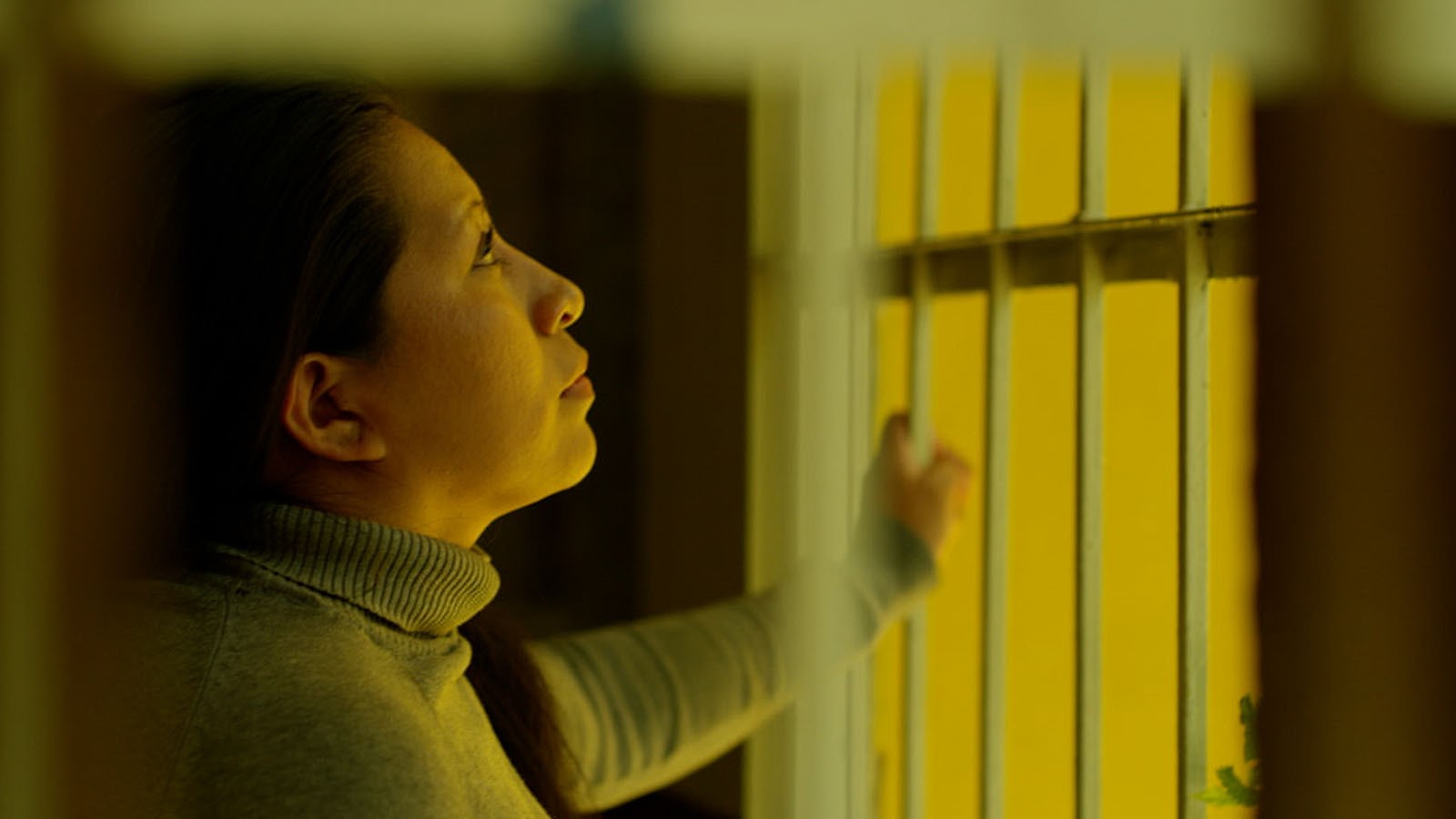
El Salvador has some of the most regressive abortion laws in the world. Abortion is illegal for all reasons including in cases where the mother’s life is in danger. While on paper the Salvadorian government does at least not persecute women for miscarriages, in practice those cases often have their details manipulated to arrest the mothers for supposedly killing their babies. Fly So Far documents a group of 17 such women, Las 17, fighting for their freedom.

First time filmmaker Celina Escher uses the power of numbers to build her case in the opening third of the film. As each member of Las 17 retells the story that led to her imprisonment, distinct patterns emerge. These women were all in medical duress, and after losing consciousness they awoke to find themselves in handcuffed to a hospital bed. The repetitious nature of these story solidifies the assumption that the cruelty against these women is purposeful.

With this strong basis of governmental guilt as a basis, Fly So Far narrows its focus onto Teodora Vásquez one of the 17. After ten years imprisoned for her miscarriage, she is finally able to appeal her sentence, and does so with the backing of Amnesty International’s legal support. The remaining two thirds of the film focus almost entirely on Vásquez, her personal legal trials and what she attempts to do for the other 16 once freed.

The stratification of the film into two separate viewpoints proves to be both a boon and a bane to its success. Vásquez is the only woman initially released, so focusing on her rather than the 17 makes the most logistical sense, yet Escher’s decision to tell multiple stories of imprisonment rather than just Vásquez’s brought substantial power to the opening arguments. The narrowing of perspective is a sound decision, but the implementation of the transition was slightly flawed. The first section of the film uses animation as a story telling technique, and while it was necessary for recreations in the first third and not essential once the filming began, this difference (combined with the focus change) left the film feeling like two connected parts rather than a cohesive whole.

Fly So Far is a strong first documentary from Celina Escher. While there may be some cohesion issues within the film’s focus, the story Escher attempts to tell with her film is clear and well argued. Teodora Vásquez and the rest of Las 17’s stories are important, and Escher delivers a solid film for them.

SIFF 2021: Ma Belle, My Beauty

Polyamorous Love Story 'Ma Belle, My Beauty' Sells After Sundance Bow -  Variety

Reunions with past loves are complex in the best of circumstances. In her debut feature Ma Belle, My Beauty, director Marion Hill applies this universal truth to relationship with added eccentricities initially and a breakup that was anything but the clean.

Bertie (Idella Johnson), Lane (Hannah Pepper), and Fred (Lucien Guignard) were previously in a polyamorous relationship together. Years later, Bertie and Fred are monogamously married, but when Bertie becomes emotionally distant following the death of her father, Fred calls on Lane in hopes she can help. When talking with Bertie gets nowhere, Lane begins an ill-advised fling with Noa (Sivan Noam Shimon), a friend of the couple, in hopes of getting a rise out of the unengaged Bertie.

The use of a polyamorous relationship is well implemented by Hill. It is neither played for a joke nor seen as something impossible to maintain. When Noa asks Lane how she delt with sharing Bertie, she remarks that “it is easy to get along with someone who loves the same person you do”. The shared partner provides something in common between the two, and even after Lane split from the other two, she and Fred share a friendship that is at its strongest when looking out for Bertie.

Ma Belle, My Beauty is a frustrating movie in a directorially intended way. Bertie is an excruciatingly passive character. While Lane’s presence sparks some occasional outbursts, Bertie primarily sulks regardless of Lane’s actions. Similarity, Lane is not without her own frustrating moments. After the slightest rebuff from Bertie, Lane jumps straight into attempting to provoke her ex by starting a fling with Noa. Neither character is fully sympathetic. Watching these two flawed characters stumble through the film evokes a exasperated response and that is exactly the impact Hill was seeking.

Marion Hill’s first film show a significant understanding of the complexities of human emotions and how to capture relationships on screen. The film does not offer any simple answers to questions that seldom have them and is for the better because of it.

SIFF 2021: The Teacher

The Teacher (2019) | MUBI

Set in Taiwan, the only Asian country to have legalized gay marriage, director Ming-Lang Chen paints a picture of a world where, regardless of political progress, bigotry and ignorance still largely shape the acceptance of diverse people. For his characters on the disenfranchised side of the cultural schism, additional strife is magnified by the division and results in their entire world comes tumbling down.

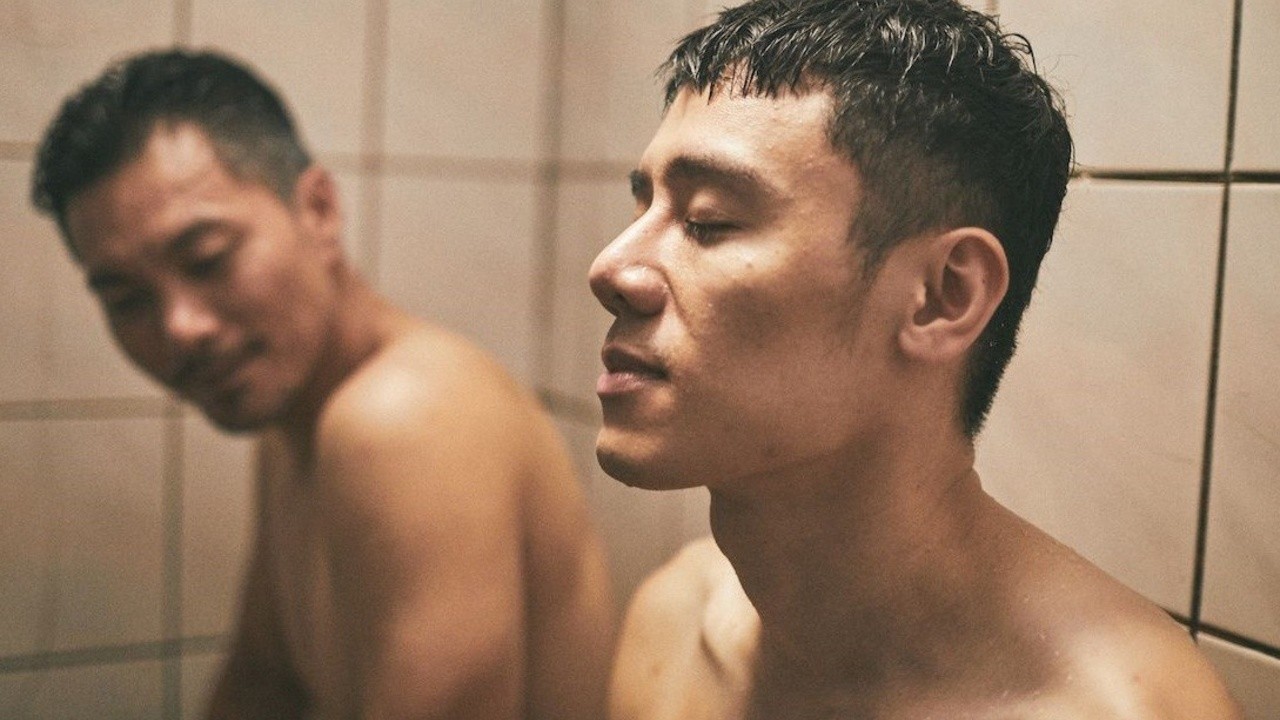
Kevin (Oscar Chiu) is a civics teacher who, upon discussing the country’s ongoing marriage equality debate with his students, finds his personal life of increased interest to the school administration. Kevin is not closeted about his sexuality with himself or his family, but he understands that his relationship with Gao (Chin-Hao Chang) could lead to difficulties for him going forward. This ensuing dilemma is further complicated when Gao, who Kevin has been with for some time and has been sexually intimate with, informs Kevin that he is HIV positive.

At the core of The Teacher is the relationship between Kevin and Gao. This is introduced before all else when the two first have a bathhouse encounter before eventually building to something more personal. After the point of attack, however, the relationship becomes unintentionally murky as other aspects of Kevin’s life receive equal if not more screen time. It becomes difficult to tell the gravity of the emotional connection between the pair. Kevin’s mother, who is nothing but accepting of her son’s sexuality, has never met Gao, and Gao keeps details about his HIV status and ex-wife hidden from Kevin. None of these secrecies are things that could not be useful in telling a similar story, but they do not work with the climax of this film.

Any expansion of queer representation in Asian cinema is an important step to universal acceptance. The Teacher shows no hesitations in providing such representation. While some of the entrenched systems in the film take umbrage with the leads’ relationship, the film gives the characters enough support to show endorsement of the cultural changes. Unfortunately, the central relationship to the film falls apart muddling the message. The Teacher is a welcome show of queer respect but a lacking film.

SIFF 2021: The Spy

Director Jens Jonsson’s feature The Spy is a biopic of a woman in need of more recognition. The Norwegian actress turned spy Sonja Wigert has an effectively empty English Wikepedia so Jonsson’s interest in giving her her due is understandable. Unfortunately, the biopic format feels repetitive as always irrespective of the topic.

Ingrid Bolsø Berdal plays Sonja starting with the 1940 premier of her film in recently occupied Norway. Despite her father’s participation in the resistance Sonja is ambivalent to the war and is willing to work with the Germans if they would allow her to make her dream film. When her apparent slight against a German officer ends in her father’s imprisonment, Sonja takes a Swedish government official’s offer to become an undercover spy in exchange for his help in arranging her father’s escape to Sweden.

The Spy is an extremely conventional film. While the Sonja is a figure who is worthy of having her story told, Jonsson does little to elevate the material into an interesting film. The screenplay hits traditional espionage plot points, but the tense moments lack the appropriate framing to deliver the anxiety to the audience. At one-point Jonsson apparently understood that the film never built appropriate stakes, so the cruelty of Sonja’s target is explained via voiceover letter reading with no accompanying imagery. Each decision is flat an unobjectionable creating an adequate but uninspired film.

While the uninventive storytelling and filming may have stopped The Spy from ever being a great film, technical issues completely sink the film. Specifically, the films sound is a complete mess. The loud sounds in the mix are extreme enough that they start to distort and crack at moments. Another issue present in the audio was that a few lines were completely missing. Characters mouths would open, and subtitles would pop up, but the audible lines did not make it through the editing.

Sonja Wigert lived a fascinating life that she was never able to share with others before her passing in 1980. Unfortunately, The Spy does not deliver on the potential of her story. A combination of unimaginative storytelling and technical flaws results in a feature undeserving of Wigert’s legacy.