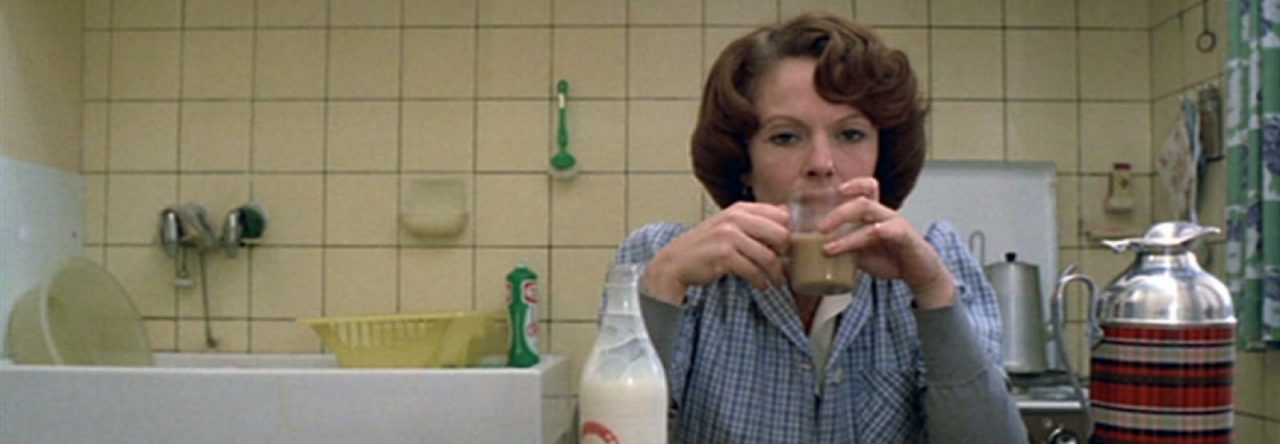
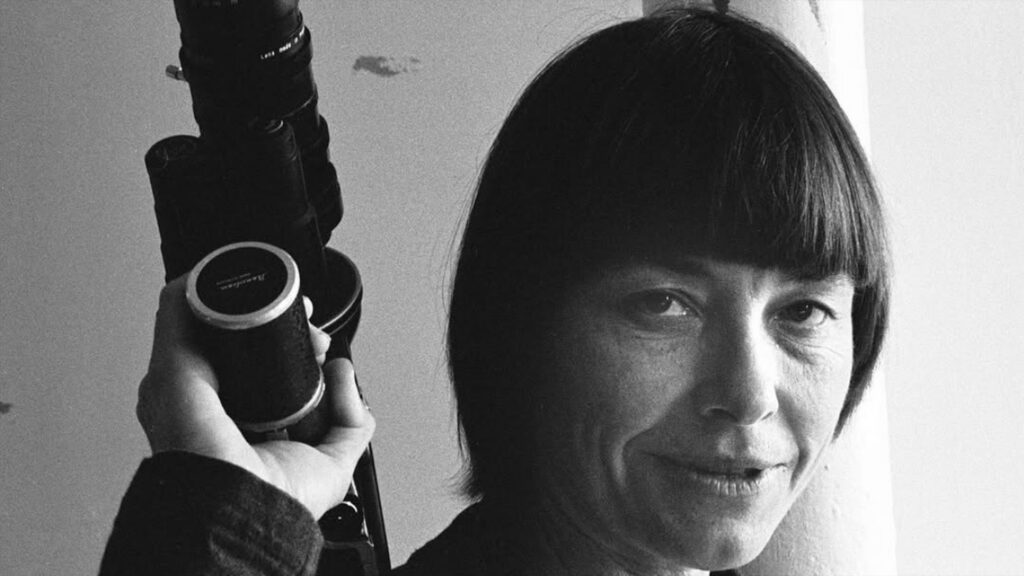
Barbara Hammer was a legendary filmmaker who could be seen as the American equivalent to Chantal Akerman as the pioneer in lesbian filmmaking from lesbian directors. As a queer woman making films which included nudity and sex, it took her years to finally receive the recognition she deserved as a profound artist, but in the modern era she is considered a cult icon with queer women looking to see themselves and how they love on screen.
Byrdie O’Connor directs Barbara Forever in what has become an increasingly popular style. A postmortem look into an artist by using a combination of their professional archive, personal home recordings, and memories from loved ones. Hammer makes an especially interesting topic for a documentary in this design as a combination of her artistic medium of choice being film and her experimental stylings provide variety and flavor to the imagery on screen.
As a counter cultural figure, Hammer’s story might have a limited audience, but a moment from the film documenting a time in which she spoke to an elementary school class and presented them with the concept of experimental filmmaking proves that the power of art can captivate any audience if they are willing to give it a chance, though as many of her films include explicit lovemaking between women some curation is important when showing her work to children.
While eventually the postmortem reflection documentary may reach the same staleness that plagues talking-head documentaries, as long as they can continue to use firsthand footage and center a person as fascinating as Barbara Hammer, they have a long life ahead of them.
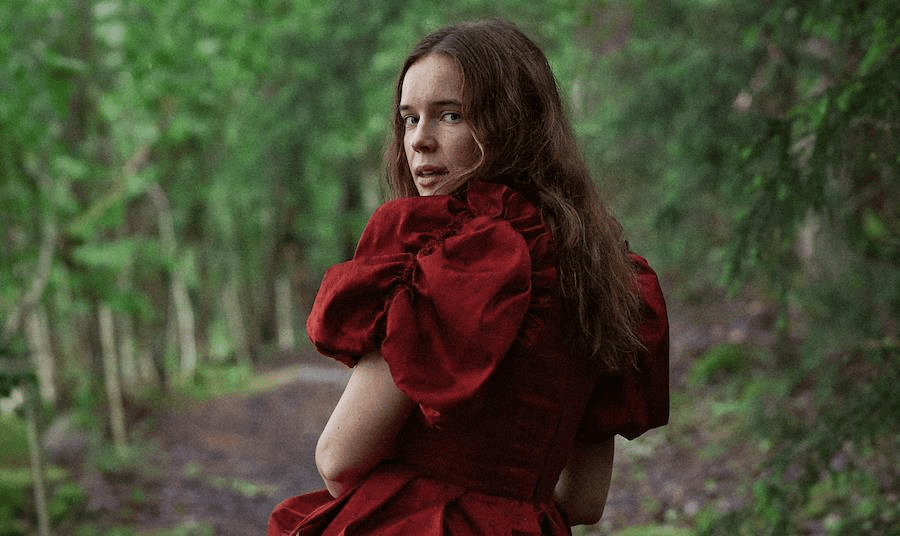
Finnish director Alli Haapasalo (Girl Picture) directs Tell Everyone, a period piece of a defiant woman, Amanda (Marketta Tikkanen), who is shipped off to a remote island that houses women society has decided it would rather not deal with. Amanda and her collection of designer dresses from Paris spark life into the captive residents to the displeasure of the medical professional in charge, Big Greta (Krista Kosonen).
Tikkanen is the standout performer as Amanda. She brings an infectious energy to the screen which makes it readily believable that her impact on the other woman would be so great. She knows that she is too good for the cards that she has been delt, but rather than that lead to a level of arrogance and superiority, she believes that those in the same situation as her also deserve more, especially a young woman she befriends, Little Greta (Aamu Milonoff).
Tell Everyone features beautifully lush cinematography by Jarmo Kiuru who previously shot Girl Picture with Haapasalo. Combined with Anna Vilppunen’s costume direction for Amanda’s designer dresses, and the look of the film works as both a contrast in juxtaposition with the situation the women find themselves in while meshing perfectly with the color that Amanda brings to her reality.
Despite all the things the film does well, I do have one complaint and that is about the film’s structure and pacing. The film has a very defined climax, but rather than working towards a close from that defined moment, the film extends a decent amount further and introduces another plot point to traverse which the film would have been stronger without.
Story issues aside, Tell Everyone headlined by Tikkanen captivating performance brings a feminine perspective to a tried-and-true story premise and is well worth the viewing.
Caveat for this review: I viewed this as part of the opening night celebrations for the Seattle International Film Festival 2026 which was screened in a theater not designed for films, and this left the acoustics lacking and dialogue difficult to comprehend. I will revisit the film when it has it’s official release.
Coming off of his 2018 masterpiece Sorry to Bother You, which has grown to be a film I consider one of the most important of the 21st century, it’s fair to say that my expectations for I Love Boosters were through the roof. Riley is an extremely blatantly socialist filmmaker who in both of his films has focused intensely on how the ruling class exploit the working class, and the importance of taking collective action against ruling class to enact change. This far left ideology exists in not the films subtext, but the text proper. I Love Boosters even ups the explicitness by having one of it’s characters speak the phrase “dialectical materialism”.
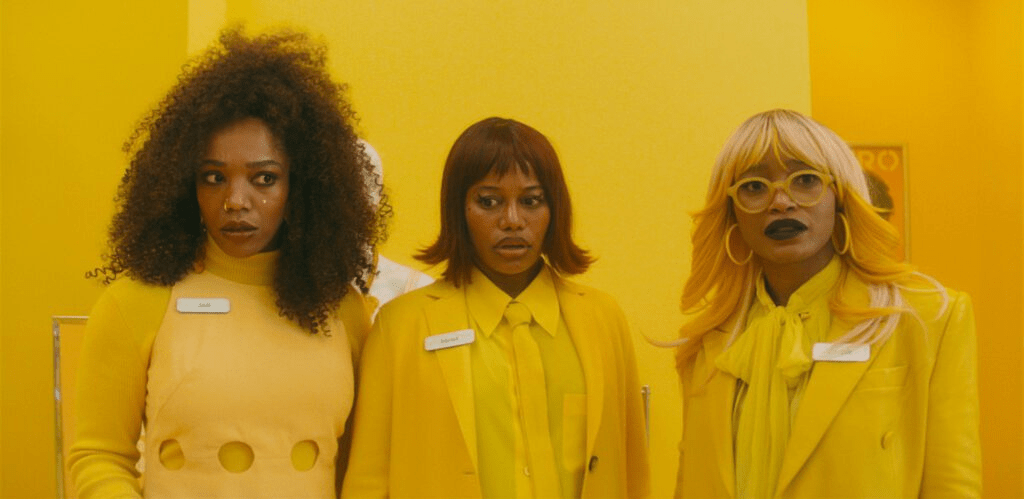
Keke Palmer, Naomi Ackie, and Taylour Paige star as boosters, or people who steal designer clothing to resell for a living. They have a special vendetta against street clothing designer, and culture appropriator, Christine Smith (played marvelously by Demi Moore) as they witness her stealing designs and exploiting her retail workers. The “Velvet Gang” meet up with an exploited worker from one of Christine’s Chinese sweatshops portrayed by Poppy Liu and along with a stolen piece of technology seek revenge on the acclaimed designer.
Riley once again creates an especially surreal world to tell his socialist allegory, and fills it with beautiful costumes, designed by Shirley Kurata, and stop motion imagery to help the communist theory palatable and even enjoyable to the average viewer including a supporting part from LaKeith Stanfield who is a perfect match for Rile even though the director continues to not allow him to exist as a normal human throughout both films.
If Sorry to Bother You was so far ahead of it’s time in 2018 that it still feels like the cutting edge of political satire today, I believe I Love Boosters will feel similar in 2034.
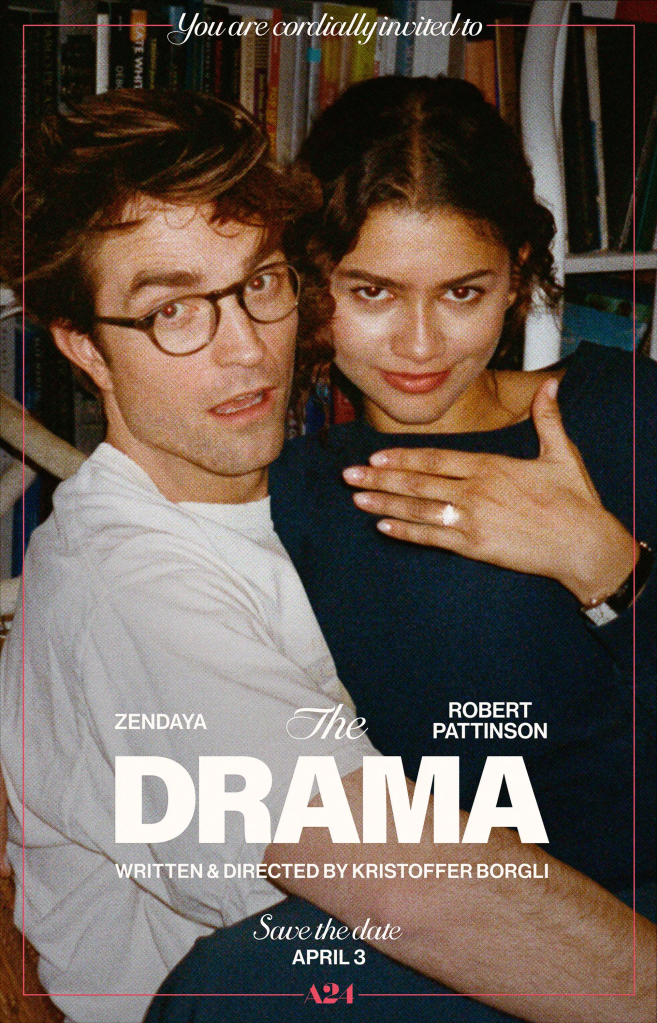
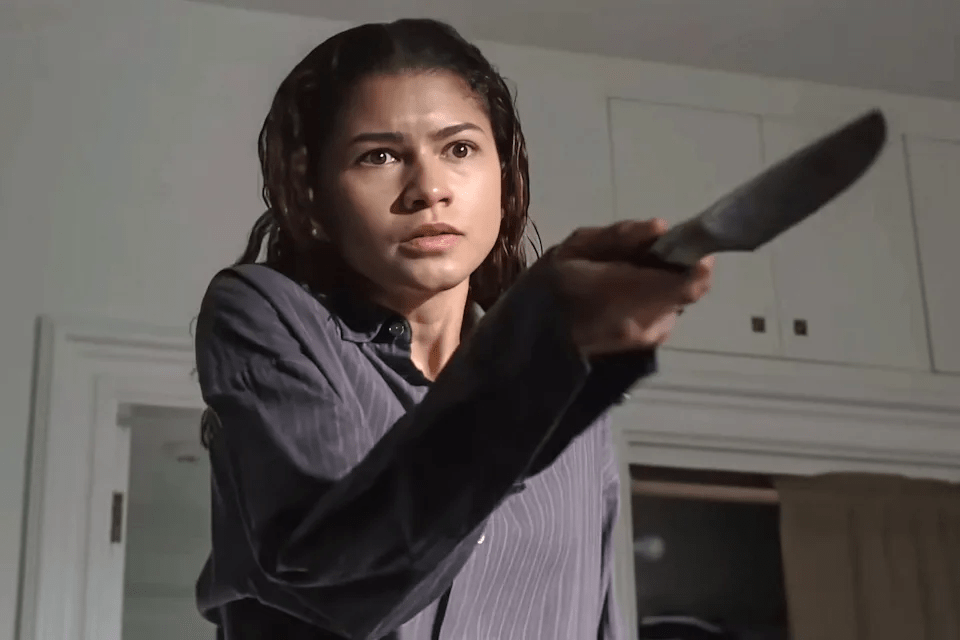
Working against the Hollywood norm of spoiling the entire film in the trailers, A24 very specifically kept the major reveal a secret throughout the advertising of Kristoffer Borgli’s The Drama. This review, however, will not be as respectful of that secrecy, so if you would like to still be surprised when watching the film, my short notes are that the film is well made with special accolades going to Borgli and Joshua Raymond Lee for their editing, but I have issues with the film’s viewpoint on Emma’s (Zendaya) “drama” and it’s focus primarily on how that affects Charlie (Robert Pattinson).
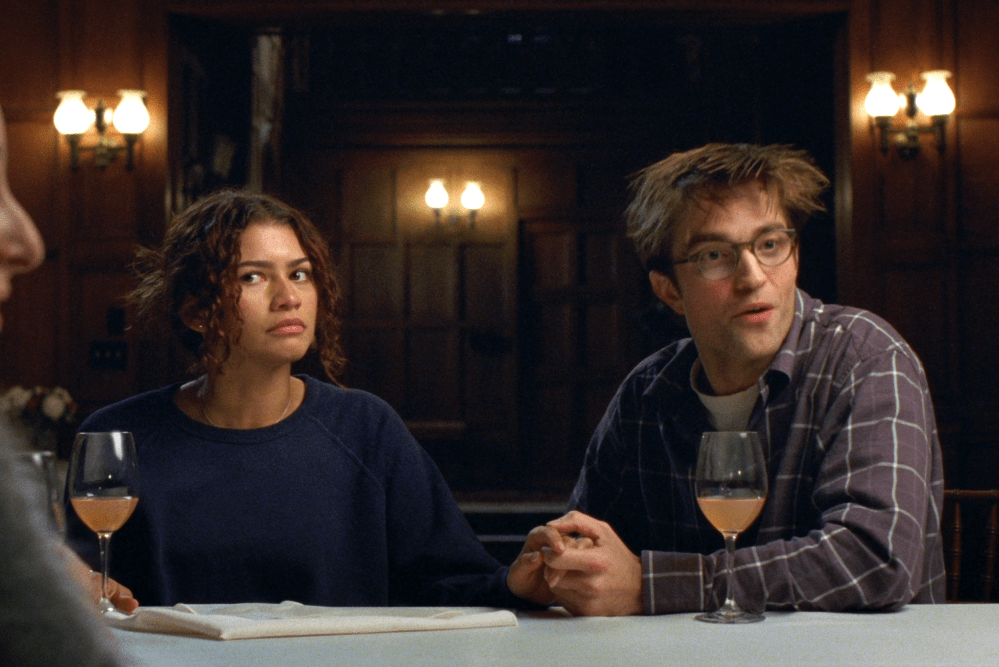
Emma and Charlie are an engaged couple a week from their wedding date. They are busy making the final decisions and preparing their speeches for the reception with the help of their best friends, fellow couple Rachel (Alana Haim) and Mike (Mamoudou Athie). One evening while giving the reception dinner one last taste test and inebriated on tasting wine, Mike and Rachel share that before their wedding, they told each other the worst thing that they ever did. The four go around the table sharing, but when Emma shares that she nearly committed a school shooting the mood sours and the night ends abruptly.
The rest of the film follows Emma and Charlie (mostly Charlie) as they must deal with the repercussions of this unearthed history. Charlie becomes largely frightened by Emma, now suddenly seeing her capacity for violence. Rachel shuts Emma out calling into question what will happen to their wedding party. At one point, Charlie irrationally scared and emotionally insecure begins talking to coworker Misha (Hailey Gates) about “the drama” and ends up crying before aggressively kissing her and initiating sex. All the tension builds to the climax at the wedding reception where Charlie cracks, unable to hold everything in.
Where The Drama works best is in its technical aspects especially the editing. The film shoots multiple ways different scenes could play out and inserts them all into the film as a way of showing the mindset of the characters. Emma and Charlie’s fears as to what the other is thinking become especially clear because of this technique. Beyond that editing trick, the entire film feels very polished and well put together, though leaves enough of an edge for it to feel real.
While the technical aspects of The Drama are largely unimpeachable, when it comes to Borgli’s writing and direction the issues arise. While the film is being sold as having co-leads between Zendaya and Pattinson, Pattinson is the film’s protagonist and most of the plot revolves around how “the drama” is affecting him. This centering of Charlie frames Emma’s past as a problem for him to deal with, largely removing her trauma from the equation.
When Rachel and Mike tell (not ask) Emma and Charlie that the four of them will share the worst thing that they ever did, Emma instantly looks uncomfortable by the prospect and never agrees to the promise. After Rachel and Mike share, and Charlie’s answer is ignored and told he isn’t participating anymore, Emma feels pressured into divulging her memory. Once she does, outside of a couple instances of nervous vomiting that night and again in the morning, the question of how being forced to relive her trauma affects her is never explored. The film seems to think that the only repercussions she receives come in the form of wedding drama. How reliving this trauma and losing her support system in the process affects her mental health is a question that Borgli has no interest in exploring.
Instead of expanding on the feelings of the woman who is reliving her trauma and seeing her future disappear because of it, the film largely obsesses over how difficult that is for the man about to marry her. Charlie shows no empathy to Emma (despite mentioning twice how important a quality that is to him). Instead, he is frightened of her (in a way that is played for laughs but comes across as heartless) despite her never showing him a violent side of her before. In addition to his fear, he spends much of his time focusing on maintaining his friendship with Rachel and Mike over prioritizing the needs of his fiancé. He is so emotionally affected by learning that about Emma’s past that he cheats on her in the midst of a crying fit. The entire experience of dealing with Emma’s past is centered on Charlie’s feelings, which I found to be rather insulting. The need to explore the impact that a complete emotional upheaval from a woman has on her male partner rather than spend time with her and her feelings is rather chauvinist.
Even when Charlie finally receives the consequences of his behaviors during the wedding reception, Borgli rewards him by having Emma coming back to him, no apologies necessary. I could see an argument that the final scene is another Charlie daydream taking place only in his head but given how much the rest of the film is on his side, it seems like the ending being literal is what Borgli intended.
Another concern that I have with the film is its seemingly villainization of mental health struggles. It never dawns on Charlie, Rachel, or Mike that Emma may have been hurting as a child. They all jump to assuming psychopathy. While bullying and depression are not an excuse for a mass shooting by any measure, the fact is that Emma didn’t go through with it despite coming close, and the reason she didn’t was because someone reached out. Charlie almost understands when at one point he comments on the number of school shootings in America and how many other people must have gotten close, but instead of exploring the mental health epidemic, he (playing a British man in the film) laughs it off as a cultural thing. That was the only time that Emma’s motivation as something other than psychopathy is considered by those three.
Men praising other men for ignoring or disrespecting the feelings of the women in their life and rewarding them for barely making it over the bar sitting on the floor is a long cinematic tradition, but that doesn’t mean it is not disappointing every time. The Drama had a lot of potential and could have been a fascinating character study had it chosen to follow Emma, the character that inciting incident happened to. I do think it could have flourished, though most likely had it been directed by a woman.
In flipping The Brutalist roles with her husband Bradey Corbet, Mona Fastvold creates a feminine take on America’s poisonous soul that destroys creative or enlightened immigrant when they attempt to place roots here. While Corbet’s turn to direct focused on a fictional architect who felt convincingly real to the extent that many people questioned if he was, Fastvold’s The Testament of Ann Lee depicts a real person who feels too fantastical to believe.
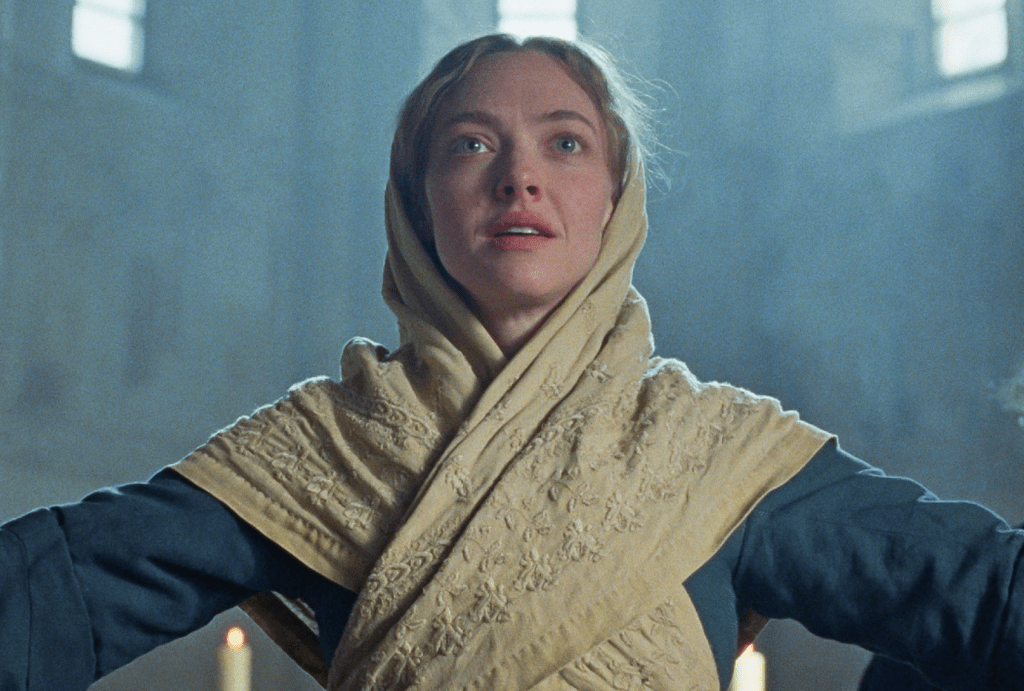
Amanda Seyfried plays the titular religious leader as a wide-eyed, curious, and approachable mother to her congregation. Despite her position atop the Shaker movement and the proclaimed second coming of Jesus Christ she doesn’t seek power, has no interest in controlling her followers for personal gain, and truly only wants to spread her beliefs and visions for the benefit of others. While some may criticize Ann Lee’s perpetual purity as the film lacking character development in its protagonist, in my opinion, that was not Fastvold’s goal. The film is less about the life of Ann Lee and instead about the bliss that she brings her believers as well as the world’s refusal to allow something so pristine and genuine to exist.
The Testament of Ann Lee takes no definitive position on the woman and the Shaker’s position that she was the rebirth of the messiah, though I have seen some critics impose their own assumptions of this crux of the film. While I assume that Fastvold is not personally a Shaker with those beliefs – the film’s credits inform that the Shaker movement is down to only two current believers – but to Fastvold’s purpose Ann Lee is a perfect symbol of the good in humanity for contrasting against the rigid and unaccepting world.
Not only does Ann Lee represent a purity which the patriarchal world she was a part of, that we still are a part of, feels compelled to destroy. It instinctively despises and uproots such a feminine ideal before it can spread or thrive. This femininity is not solely expressed by the gender of the film’s protagonist – though the 18th century Sharkers not only allowing women to preach but lead their church was a level of progressive feminism that it would take literal centuries to return – it is also expressed in the filmmaking. The Brutalist shot in gorgeous 70mm was a feast for the eyes though as the title implies, the views were rather brutal with lots of harsh lighting clearly showing every inch of László Tóth’s architecture. The Testament of Ann Lee was also shot in 70mm, yet it has a completely different feel to it. Instead of the harsh lights that consume the former’s film, Fastvold’s picture is lit with warm candlelight and creates a much more welcoming demeaner.
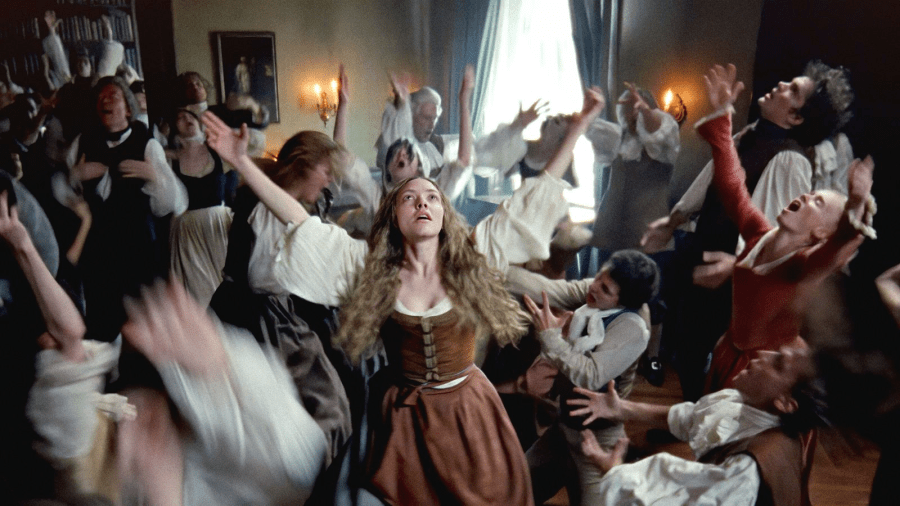
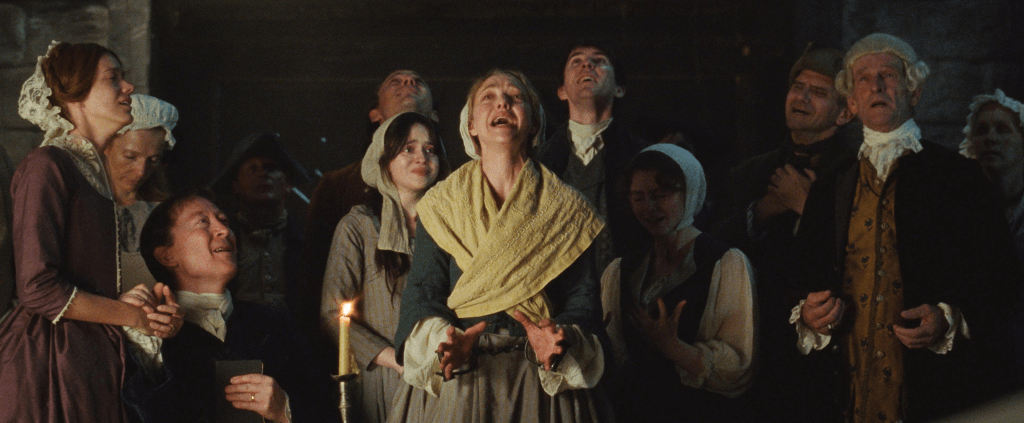
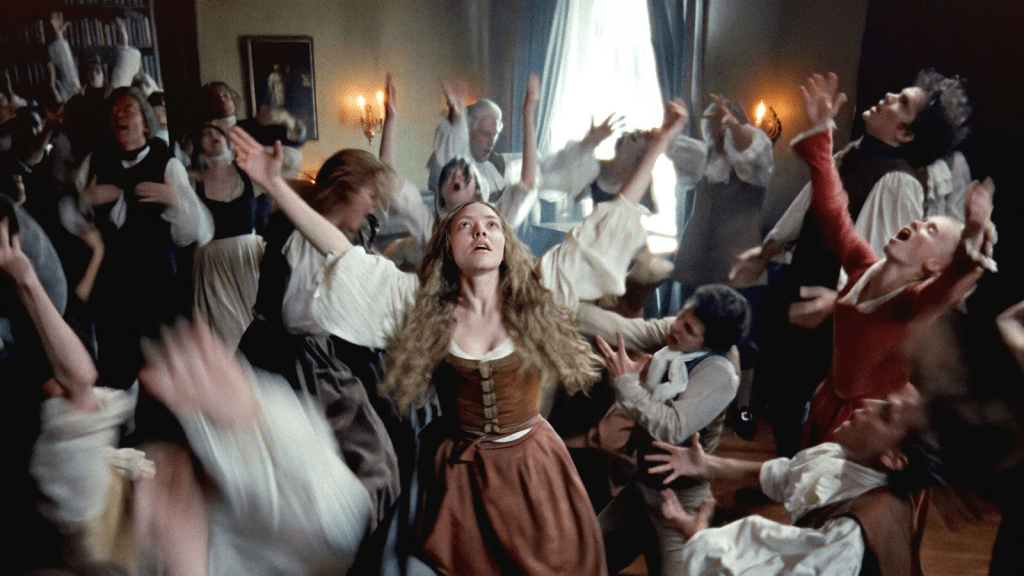
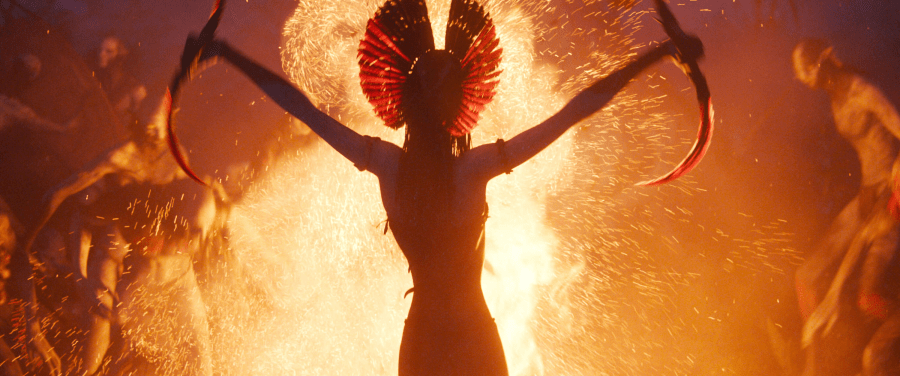
Though arguably the directorial decision that marks the film as the feminine alter ego of The Brutalist is that it is a musica, though not a traditional one. The film is peppered with the Shaker’s worship sessions, all of which include music and dance. Celia Rowlson-Hall’s choreography for the film is brilliant as different worships flow from improvisational (at least in appearance) to showy structured moments flawlessly. While the scene scored to “Worship” shows this fluidity the clearest, the “All is Summer” prayer on the boat to America is the standout. Fastvold uses Rowlson-Hall’s choreography with cuts between seasons to create a mesmerizing, singular number.
In addition to Rowlson-Hall’s choreography, these musical and dance moments fully succeed because of the contributions by composer Daniel Blumberg who is fresh off his Oscar win from, as one might guess, The Brutalist. His score uses the bones of actual Shaker hymnals to create the soundscape that floods the majority of the film. He taps into the inherently rhythmic essence of the Shaker’s prayers to propulse the film forward. Each individual aspect of The Testament of Ann Lee builds it into a pure cinematic experience. Blumberg’s score, Rowlson-Hall’s choreography, William Rexer’s cinematography and Fastvold’s direction all blend together into a singular piece worthy of one of the Shaker’s three-day marathon prayer partie
Sorry that I disappeared for a couple of weeks. Life is never easy around the holidays. There was no way that I wouldn’t be back to talking about the only blockbuster of the year to which I was looking forward.
The thirteen-year gap between the first and second Avatar films represents me at very different points in my cinematic journey. In 2009, I was a college student who had recently been introduced to my first Kurasawa and Bergman films. Having my first taste of arthouse cinema, I was predisposed to be exceptionally snooty about Avatar. I saw it in theaters once and dismissed it for being a shallow story that had been told dozens of times previously. In 2022 when the Way of Water came out, my tastes had evolved. While I still tend to prefer an arthouse film over a blockbuster, I can appreciate a film that puts its craft before the screenplay as a piece of visual art. This led me to seeing Way of Water in the theaters three times because while James Cameron had not improved his screenwriting ability in the decade, seeing the visuals on the biggest screen and in 3D was a necessity for me.
Now three years later, I went into Fire and Ash excited to see what visuals Cameron would create to elate my eyes. While the Sully story is still not the strength of the films, I was also interested in some of the themes that Cameron was exploring and hoped that he would expound upon them.
With his third entry in the Avatar series, Cameron has distilled his skills to their purest form, and that is both a compliment and a criticism. To start with the negative, the screenplay to Fire and Ash is easily the worst of the three. Despite the three-hour plus run time, it still feels like the plot is rushing constantly, and many of the plot points that it is rushing to are rather groan worthy. It rehashes the exact same story between Jake (Sam Worthington) and Lo’ak (Britain Dalton) as in the Way of Water, and every character seems to be rehashing things from that film to some extent.
On the other hand, Fire and Ash is one of the most gorgeous pieces of celluloid I have ever had the privilege to see. Having never fallen for the gimmick of 3D outside of a few exceptions, the Avatar films are the only two movies I’ve seen this decade in the 3rd dimension and would highly recommend it to anyone. While just as full of CGI as the average superhero film, Cameron manages to bring depth to his images by shooting them in a more naturalist framing and lighting than the other blockbuster which use a heavy reliance on wide shots with flat lighting to make the CGI easier. Cameron has always been dedicate to his craft and the crystal clear picture with the depth of 3D in the various Pandoran biomes has never been more spectacular.
The last thing to touch on is a theme that Cameron has been developing I the three films so far. Cameron has been interested in exploring the theme that diverse groups are stronger together than apart. Specifically, that the Navi and Humans when working together can overcome either individually. In depicting this theme, however, Cameron has flirted with and occasionally crossed the line into a traditional white savior narrative. This was especially problematic in the first and while it never fully escaped that narrative in the second, the third does lean back into the problematic side.
James Cameron continues to be appointment watching, and while this does feel like the weakest of the three Avatar films, I still cannot help but endorse seeing it on the big screen. Blockbusters made from a place of passion and desire to create art simply don’t exist anymore outside of his hands. While I can quibble with this film’s story and themes, it is still the most visually spectacular thing that I’ve seen in theaters at least since The Way of Water. Cameron has made a lifelong fan in me and I hope that we do get the 4th and 5th entries into this series.
When films cross the two-and-a-half-hour mark, that tends to be the point at which terms like bloat and poorly edited come into play. However, there exists a second line somewhere around the four-hour mark where the running time becomes a feature of the film rather than a bug. When one is locked in a room with the same few people for such an extended period (and it is essential that films this long be watched in one day with no more than a few intermissions), they become less characters on the screen and more personal acquaintances or even friends.
Julia Loktev’s five-and-a-half-hour epic of a documentary My Undesireable Friends: Part 1 – Last Air in Moscow is one such example of a film using its marathon length as an important part of the filmmaking. Through five chapters, the film makes a record of the last five months of TV Rain, the last independent, oppositional news organization in Russia, before they were forcefully closed after Russia’s invasion of Ukraine. While a 90-minute documentary on this subject would be informative and if done well impactful, Loktev’s decision to be as expansive as she was brought a power with it by getting to know a wide array of characters intimately.
TV Rain employee “foreign agent” Anna Nemzer
Loktev is a Soviet-born American filmmaker who in October 2021 traveled to Moscow to create a documentary about Russia’s recent branding of oppositional journalists as “foreign agents” including her friend Anna Nemzer. Anna introduces Loktev to the contributors to TV Rain for which she has a show. The handful of journalists who originally were branded with the foreign agent label wear it with a combination of pride and fear and many use the required language they are required to include on every post for ironic purposes.
One of the genius decisions of the film is the chapter flow. Each individual chapter is presented in a cinéma vérité or slice of life manner. Most of the filming takes place in cars, the TV Rain studio, or people’s apartments, and each hour-long section seems most interested in giving the viewer a peek into the life of an oppositional journalist at that exact moment in time. When zooming out, however, the film takes a concrete shape. The initial two chapters provide a background for the people and the circumstances which they inhabit. The third chapter is a bit of a break from the intensity. Things are obviously still tenuous in each journalist’s life, however even as the walls close in they are able to enjoy the New Years holiday together. That moment is a welcome reprieve before the final two chapters leading until the very moment that the TV Rain employees are forced to vacate the soon to be under siege studio and exile themselves from the country.
Ksenia Mironova
My Undesirable Friends is an engrossing cinematic experience starring journalists whom having spent so much time with I feel intimately connected to. The film teaches about the horrible human rights violations Putin is behind while keeping things personal. I cannot wait to dedicate another five plus hours to the topic when part II is released.
I honestly thought about making that my entire review for Chloé Zhao’s return from the Marvel verse with Hamnet; her performance was just that good. Stoping after that would both somehow undersell Buckley’s acting masterclass and be disrespectful to the rest of the cast and crew that makes Hamnet a uniquely special film so I shall continue.
Hamnet is a fictionalized telling of the love and grief of William Shakespeare (Paul Mescal) and his wife Agnes (Buckley) who is often known as Anne in history but in some records and this film as Agnes. Maggie O’Farrell adopted her novel of the same name with Zhao which tells the story of Agnes and William’s three children and creates a story for the circumstances that preceded the creation of Hamlet, filling in the gaps in history. While William is obviously the most famous character in the story, the film is primarily Agnes and her children’s story as long sections of the film take place while Shakespeare is in London leaving Agnes to take care of their first child Susanna (Bodhi Rae Breathnach) and later their twins Judith (Olivia Lynes) and Hamnet (Jacobi Jupe).
Zhao’s unique directorial vision is used to create a poetic feeling to the film. She makes liberal use of unannounced time jumps, both large ones between scenes and short ones contained within a scene. While these jumps can be slightly disorienting to begin with, they are employed to bring the most important moments and shots to the screen. It is not necessary to see William walk to Agnes and lie down with her, cutting directly from a conversation to them lying together results in amplifying the direct cause and effect. She also uses repetitious shots of nature which call back to the rumors of Agnes being born of a forest witch and create a mesmerizing pace that keeps the audience entranced.
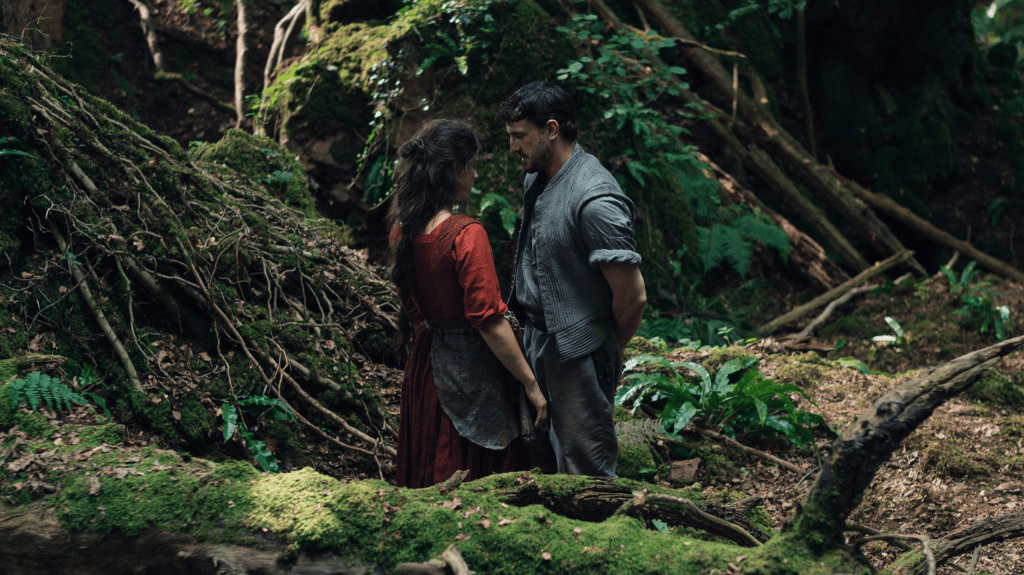
Jessie Buckley and Paul Mescal as Agnes and William
As not so subtly hinted at above, Jessie Buckley not only gives a career best performance, but the decade’s best performance as Agnes. She mixes bombastic yet true to life moments of pain and suffering, with subtle emotions captured in nothing more than a twitch from an otherwise still face in silence. Agnes is so much more than just the little known wife of the world’s greatest playwright. Under Zhao’s direction and Buckley’s embodying of the woman, William fades to the background (despite another excellent turnout from Mescal) and the story of this woman, her love, and her grief matter more in this moment than the dozens of eternal plays and sonnets.
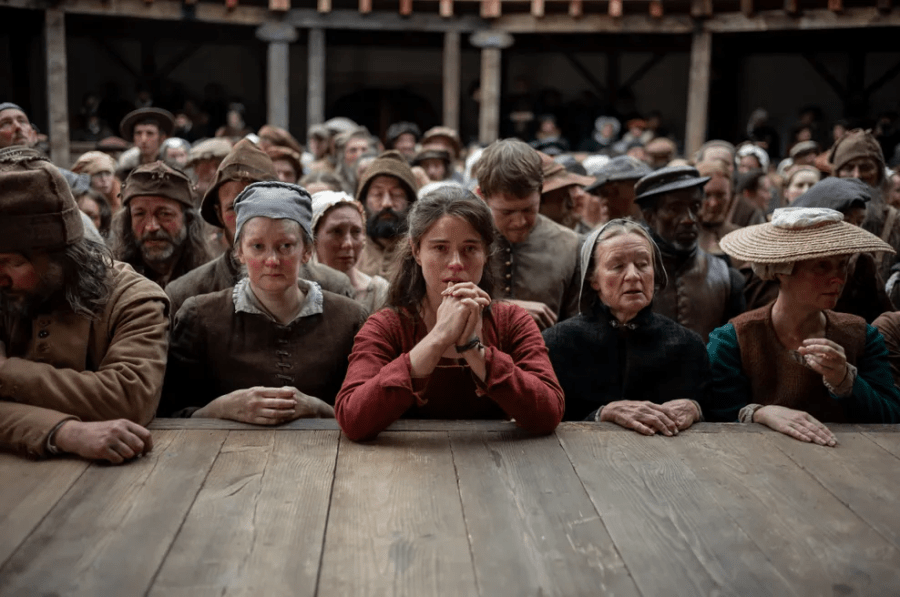
Agnes (Jessie Buckley) at the Globe Theater
Behind an unmatched acting feat by Jessie Buckley, an engrossing story and adaptation by Maggie O’Farrell, and the directorial elegance of Chloé Zhao, Hamnet is an example of the power that cinema can impart. Equal parts engrossing and devastating the film is an emotional experience to behold that will leave an audience changed. My only advice, outside seeing the film as soon as physically possible, is to double, no triple the amount of tissues you think you need to bring along.
The newest film by Greek auteur/ provocateur Yorgos Lanthimos with his muse Emma Stone. Bugnoia, is a remake of the film I reviewed yesterday, Save the Green Planet! the 2003 Korean science fiction film by Jang Joon-hwan. Along with Jesse Plemons, who joined the director’s stable of actors with last year’s Kinds of Kindness, Lanthimos takes the at times farcical Korean genre blur and engulfs it in his signature pitch black satire.
Bugonia follows its predecessor’s basic plotline closely with cousins Teddy (Plemons) and Don (Aidan Delbis) who are convinced of an alien conspiracy and that Michelle (Stone), a CEO of great import, is one of said aliens. One afternoon after chemically castrating themselves to avoid distraction, Teddy and Don camp out at Michelle’s home and kidnap her. While interrogating and torturing her, Teddy’s mixed motives come to the surface.
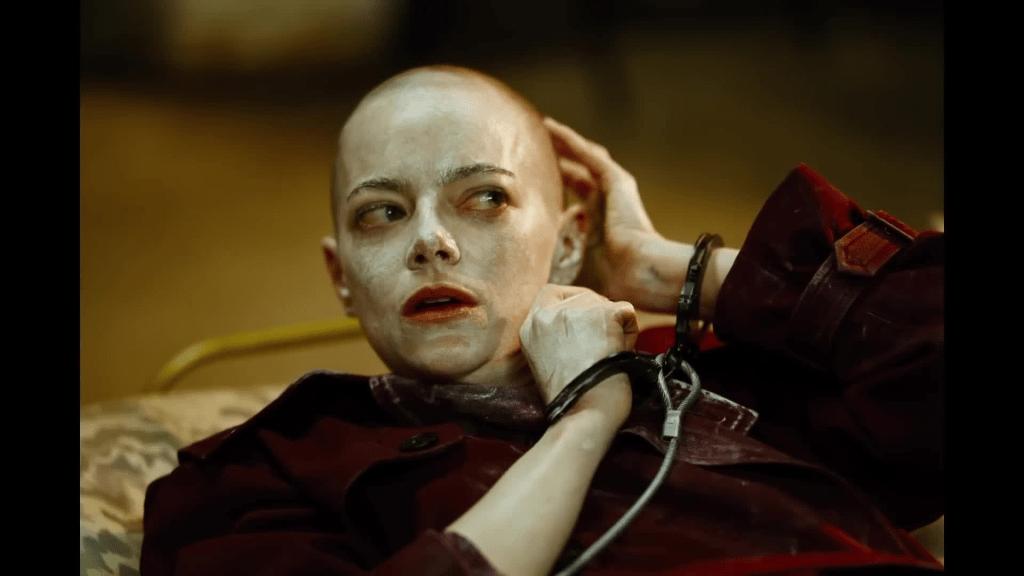
Emma Stone as Michelle after being kidnaped and having her hair shaved
12 years further into our world’s post-capitalism decline, the themes that Jang Joon-hwan brought to the science fiction story are much more apparent in day-to-day life, and Lanthimos brings them to the forefront. Whether she be an alien or just a corporate monster, Michelle and the corporation she runs are destroying the planet. Teddy, like many activists speaking against kleptocracy today, is demonized and ostracized by the ruling class who control public outlook.
All three of the lead actors gave excellent performances. Stone captures the controlled mannerisms of an executive who has undergone extensive training to come across as considered and polite. She uses phrase like “can we have a dialogue?” in meticulously paced patterns that reflect corporate speak but come across as alien to the blue-collar cousins who have captured her. Plemons, as the lead conspiracy theorist, is initially convincing in his resolve, but as Michelle puts the pieces of his past together, he becomes violent and emotional.
The standout of the film, however, is Aidan Delbis in his first feature film. He begins the film by playing Don as a simple character who is easily manipulated by Teddy. Delbis shows that Don is unable to completely dehumanize Michelle like Teddy and struggles with the torturous conditions that Teddy is doing to Michelle. After a major turning point in the film, it becomes apparent that Don is not simple, rather he is stunted from emotional loss in his past. This revelation unlocks the layered nuance Delbis had been seeding in his performance from the start, and brings out the lone moment of true sympathy from the viewer.
Aidan Delbis as Don in his first film role
While Bugonia does not reach the highs of some of Lanithmos’ prior films, a middling picture from the auteur is still an excellent release worth viewing. And while most of the acting accolades will end up going to the two star actors, I hope that this film becomes a jumping off point for Delbis’ career.
Between being in a sapphic cinema mood and then needing to catch up on 2025 films my watchings this week have followed an understandable progression, so watching a random 2003 Korean film must seem strange if you do not immediately know why this film makes sense for me to watch today, you will understand tomorrow.
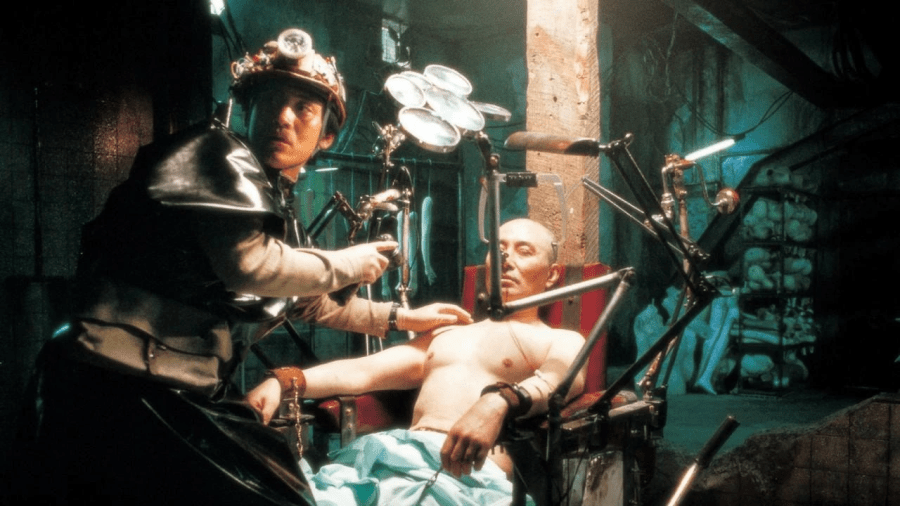
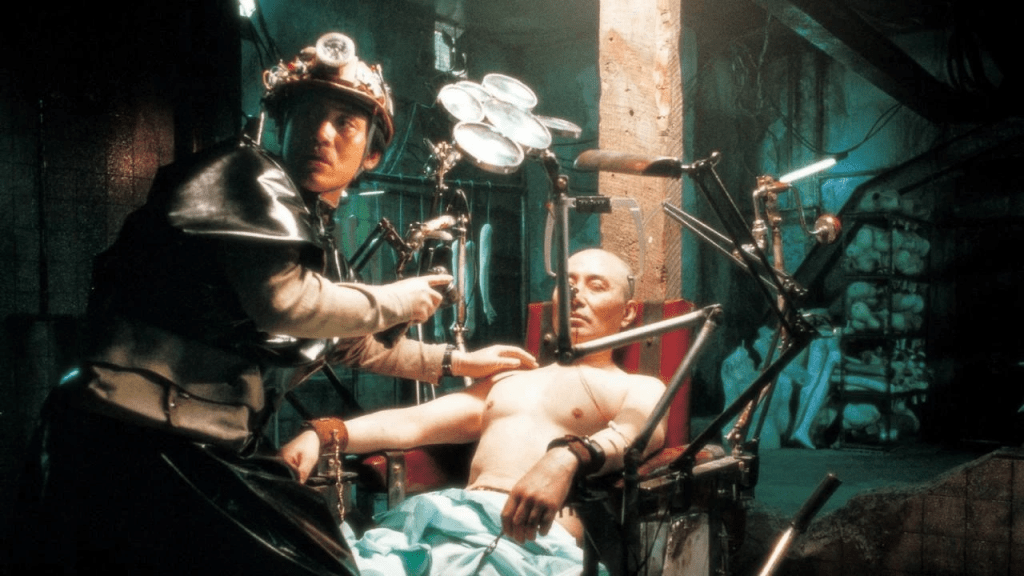
This was an odd one. The film starts not exactly en medias res, but also devoid of any setup to inform the viewer of the world in which the film exists. Primarily following Byeong-gu (Shin Ha-kyun) who appears to not exist in the reality of the people around him. Convinced that aliens exist in the everyday world disguised as human, he along with his partner Su-ni (Hwang Jung-min) kidnap an important executive, Kang Man-shik (Baek Yoon-shik) whom the believe is an alien with a direct line of contact to the alien’s prince.
Byeong-gu (Sin Ha-kyun) with the captured Kan Man-shik (Baek Yoon-shik)
I will admit that as an American cinephile I have seen my fair share of Korean films, however, they are primarily the ones that get exported to the US which are skewed heavily to the arthouse variety. Save the Green Planet! is not a traditional high art film but is instead an example of the Korean cinema that is created for the Korean masses. Director Jang Joon-hwan plays with tones in a way that is unfamiliar to a US audience but blends soap, action, horror, martial arts, and science fiction in a way that is undeniably entertaining. Complete with dated, cheesy special effects and extreme overacting, the film would make for an excellent camp movie night.
Over the top entertainment aside, the film has an aspect that needs to be addressed. While Kang Man-shik’s fiancé is mentioned at times, Su-ni (and Byeong-gu’s comatose mother) is the only woman who appears in the film and her characterization is unfortunate. Su-ni acts extremely childlike. She plays with dolls and is obsessed with the song “Somewhere Over the Rainbow”. This combined with the childlike demeanor results in her coming across as someone developmentally disabled. Byeong-gu’s treatment of her, and the films eventual fridging of her feels rather problematic and does hamper the experience of watching the film.
Su-ni (Hwang Jung-min) with her doll
Wild and undefinable, Save the Green Planet! fits most of the criteria to exist among the great cult movies. Unfortunately, its treatment of women leaves a sour taste in one’s mouth and prevents it from getting a full-throated endorsement.