SIFF 2021: Topside

Topside (2020) - IMDb

At a greyhound station in the middle of Texas, directors Chris Filippone and Jamie Meltzer capture the first moments of freedom that former convicts experience in their documentary short Huntsville Station. Rather than pass any judgement on why the men were incarcerated, the film focuses on the overwhelming and often silent joy of the people on the outside of society. In this way it makes a perfect companion for the feature it was attached to.


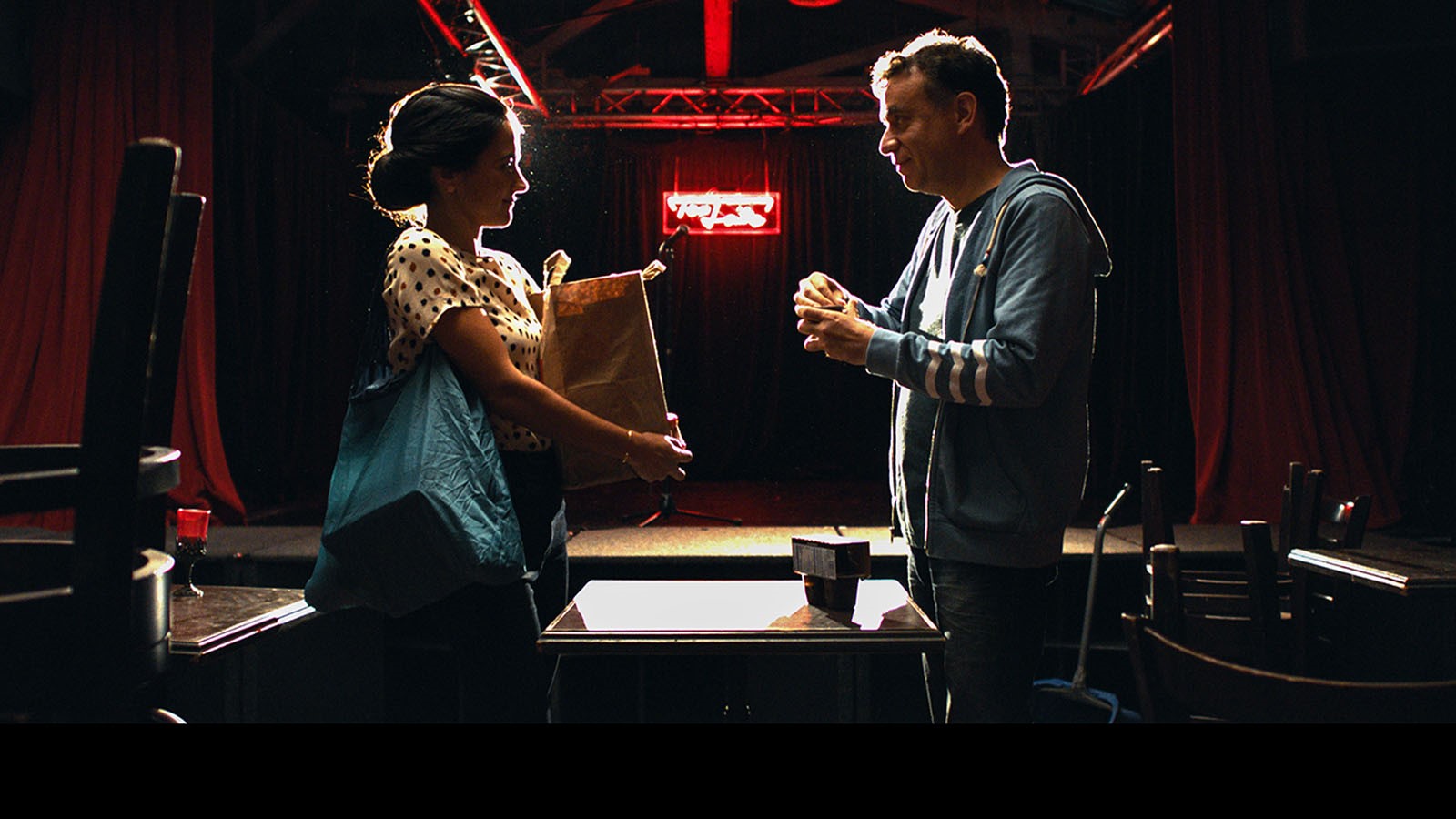
Husband and wife filmmaking pair Logan George and Celine Held have made a handful of short films over the last few years, but with Topside they make their feature debut. In their Safdie Brothers influenced film, they shine a spotlight on the lives of unhoused people living in the underground tunnels in New York City.

Five-year-old Little (Zhaila Farmer) has lived her entire life in a makeshift community in the abandoned subway tunnels with her mother Nikki (played by one of the directors Celine Held). When an upcoming renovation to the tunnel requires the pair to vacate abruptly, Little is greeted with the harsh florescent lighting and sensory overload that she had never been forced to endure previously. With no concrete plan or next steps, the pair traverse a uniquely terrifying version of the city.

Topside asks a lot emotionally of its audience. Nikki is an addict whose supplier arranges for her to sleep with men in exchange for her fix. In her current state, it is understandable to believe that she should not be in charge of Little. Little herself show signs of being stunted. She has never had any education and living so long underground has left her with little to no understanding of the world. Though, for all the reasons why their relationship is unhealthy, they share an undeniable love, and a daughter and mother’s bond is precious.

The emotional turmoil of the film comes to a head in the film’s elongated climax. These minutes star Nikki exclusively, and Held’s acting becomes a major selling point of the film. The camera holds tight on the staring actress while her appearance becomes increasingly disheveled and her performance distraught.

Topside is an excellent first feature from the directorial pair. Celine Held proves to be a triple threat as her performance stands out in addition to co-writing and co-directing the film. While some moments may briefly dip into manipulative melodrama, they are few and far between. Instead, the emotional extremes explored in the film are largely warranted, and the climax is a devastating piece of cinema.

SIFF 2021: Rebel Objects

Rebel Objects

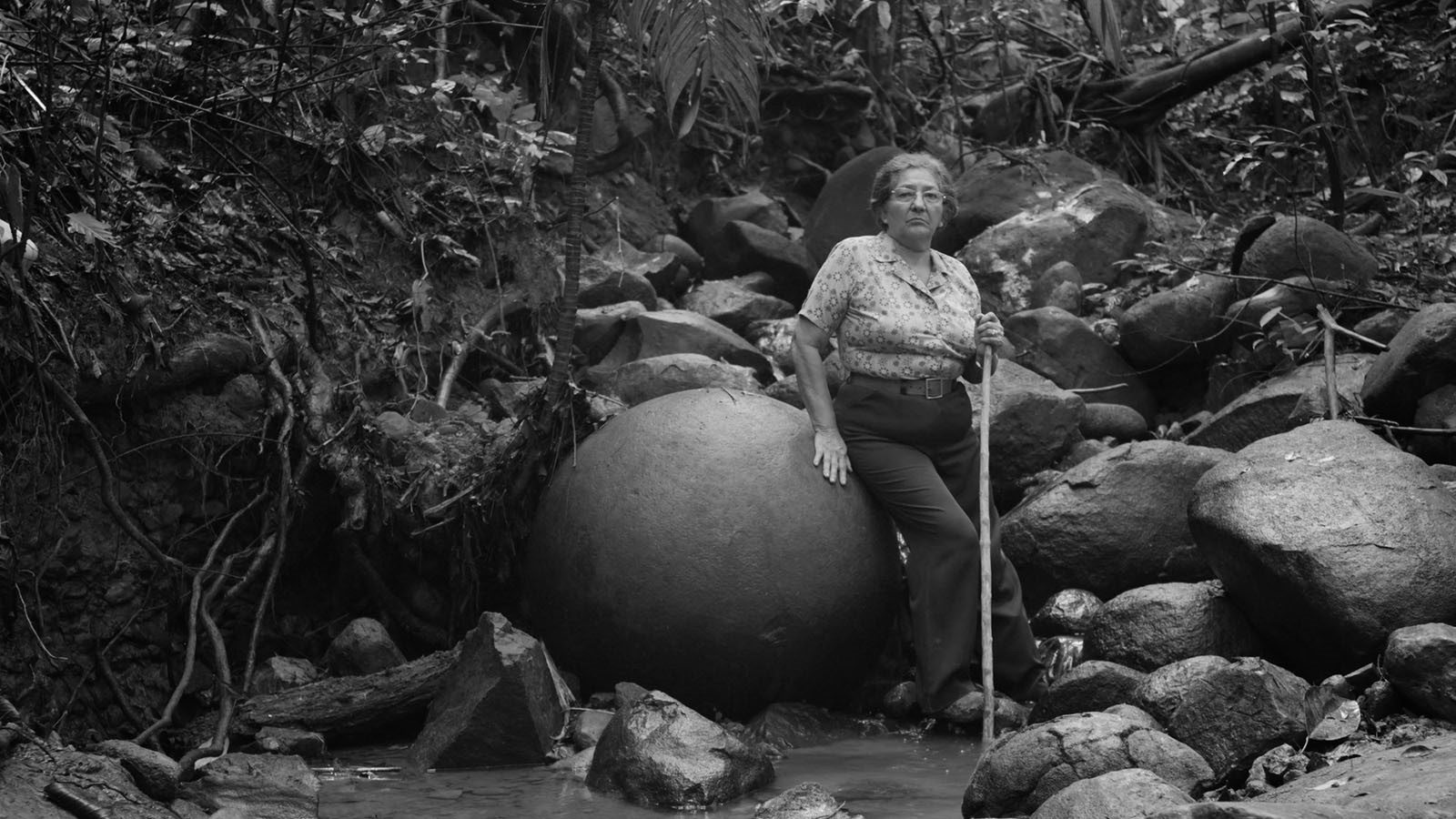
Anthropologist Carolina Arias Ortiz’s first foray into documentary film making is a deeply personal memoir complete with family slides and naval gazing hyperbole. Rebel Objects, which is primarily about Ortiz’s return to her childhood home of Costa Rica to mend relations with her dying father, aggrandizes the experience through various film making techniques and a heavy reliance on cultural lore.

Despite clocking in at under 70 minutes, Rebel Objects attempts to be two separate documentaries blended thematically. The first film inside Rebel Objects is a History Channel-esque conspiracy theory laden history of the spherical stones that have existed in Costa Rica for centuries. The film even makes constant allusions to their potential extraterrestrial nature. While Ortiz herself does eventually acknowledge the racist undertones in attributing great works of non-white people to aliens, this is included as an afterthought in the last five minutes of a film that has given the conspiracy plenty of credence already.

The second, and better, film within the film is Ortiz’s return home to repair the relationship she has with her father. The anthropology aspect of the film pairs well with these moments. Shots of Ortiz piecing together broken pottery parallels with her reassessing memories from her past. It is just unfortunate that these moments are broken up with the spherical conspiracy theories.

Another misfiring of the film is the black and white cinematography. Ortiz likely made this choice to add a level of mystery when discussing the spheres (she even includes a horror movie score at times) and to invoke nostalgia in the personal exploration moments. While these decisions make sense in paper, they failed in execution. Pictures of the spheres were primarily captured in medium shots or the occasional closeup, but neither of these options provided the contrast needed to accentuate the stones. Instead, the stones became the same color of the surrounding foliage camouflaging them. The black and white photography works slightly better from a nostalgic perspective, but her family pictures being in color made the present-day video footage feel like creating a memory that was never there to begin with.

For a first time creating a movie, Carolina Arias Ortiz attempted to bring a personal and expansive story to the screen. While Rebel Objects ended up being more of a mess than anything, her decision-making process is theoretically sound even if they failed. Rebel Objects is a film that can be skipped, but Ortiz likely has something better in her waiting for a sophomore attempt.

SIFF 2021: Wisdom Tooth

Wisdom Tooth | IFFR

In his debut film Wisdom Tooth, Liang Ming blends a crime thriller with a coming-of-age story all told through the lens of poverty. Accompanied by gorgeous photography of a snowy northern China fishing village, the film leans heavily on its eclectic cast to tie everything together.

Xi (Xingchen Lyu) is an undocumented teenager who works as a maid and lives with her brother Liang (Xiaoliang Wu) whom she loves deeply. After a mix-up in the public showers, they meet Qing (Jiajia Wang) who quickly becomes an older sister figure to Xi and love interest for Liang. The three along with the siblings’ friend Dong (Weishen Wang) must navigate their existence when an oil spill poisons the fishing population impacting each character’s wellbeing in interconnected ways. This complex narrative is all conveyed through Xi’s young impressionistic eyes and reflects her youthful, scattered focus.

Liang Ming bit off a lot with his first feature. Wisdom Tooth attempts to balance multiple genres with tangled plot points and four unique co-leads. This results in an expectedly messy film, though messy in this case is not synonymous with bad. Using Xi as the film’s focal point. The sporadic energy that comes from being so young supports the convoluted premise. Even when side plotlines are dropped without any conclusion, it is because Xi’s attention moved elsewhere. As the film progresses, its point of view is eventually entirely within Xi’s perspective. Latter scenes give way to her daydreams net displays them as reality. Eventually, Xi’s comprehension of life loses grounding to deliver an intense, dreamy climax.

As an actor himself (Shadow Days 2014), it makes sense that Ming Liang’s greatest strength as a director is focusing on his characters. All four leads standout through the multilayered plot, but Xingchen Lyu’s Xi is what holds the film together. While her character did not bring structure to the muddled film, it did provide a purpose to the chaos.

SIFF 2021: Strawberry Mansion

Strawberry Mansion' Blurs Dystopian Dreams Of Monetization, Consumption &  Love Into A Quirky Lo-Fi Surreal Swirl [Sundance Review]

Written by, starring, and directed by Alison Rich, The Other Morgan is the short film that was programmed with Strawberry Mansion. Centered around an absurd premise, the reason Rich’s character is the “other” Morgan, the short blends a twee tone with enjoyable character acting to create a largely entertain film. The ludicrous premise of the short makes it a well chosen pairing for the following feature.


Taking heavy influence from Terry Gilliam’s Brazil, directors Kentucker Audley and Albert Birney created their own take on the surrealist portrayal of bureaucracy in Strawberry Mansion. Set in the 1980’s idea of the near future, the film playfully blends live action with stop motion and animation to create a unique look for the dream heavy feature.

James Preble (played by director Kentucker Audley) works for the government to audit people who have not paid the taxes on their dreams. The eccentric Arabella, or Bella for short, (Penny Fuller) alerts Preble that she has never paid taxes on her dreams, so that he will come out to her home for an audit. Upon arriving at her remote location, Preble is greeted with over 2,000 VHS tapes each containing one of Bella’s dreams. While meticulously viewing each of them, Preble becomes enamored with Bella’s younger dream self (Grace Glowicki) and eventually stumbles into a conspiracy theory within the dream state.

Focusing so much on dreams, Strawberry Mansion leans heavily into a style above substance hierarchy. The plot may be simple to a fault, but the sensory experience more than makes up for it. The production design of each dream looks artificial and cheap but in a way that is endearing. From Preble’s all pink one room home to Bella’s sound studio field, the artificiality enhances the dream aesthetic rather than detract from it. While the mise en scène helps to sell the directors’ unique world, Dan Deacon’s perfect, haunting synthesizer score brings everything together.

Implementing significant homages to many of the 1980’s trippier features, the Strawberry Mansion nails the most important aspects in creating a surrealist cult film. Any widespread adoption or commercial success may be out of the film’s reach, but headlined by a perfect score, it will fit nicely into midnight, cult screenings for years to come.

SIFF 2021: The Earth is Blue as an Orange

The Earth Is Blue as an Orange - Archive - Zurich Film Festival

In The Earth is Blue as an Orange, director Iryna Tsilyk provides her twist on the current events documentary. Ostensibly exploring the ongoing conflict in Ukraine, Tsilyk focuses on the intimate implications of the war rather than reasons behind it. The Earth is Blue as an Orange offers no explanation of the terrible situation engulfing its subject’s lives but paints a picture of the life changing impact it has on a family attempting to live the most normal life that they can.

Anna is a single mother who along with her four children lives in a small town near Donbass, Ukraine which is under constant bombings. To maintain morale, she and Mira, her aspiring cinematographer daughter, write and shoot an original movie in their hometown. The shelled remains of buildings around the town provide interesting on location sets, and the tanks patrolling the city make capturing dystopian b-roll as simple as pointing a camera out the window. The family project helps them make the best of their unenviable predicament.

The Earth is Blue as an Orange represents the change towards a more Gonzo style of documentary filmmaking that has become increasingly popular. By foregoing the traditional hallmarks of many documentary films, Tsilyk delivers a feature that may be devoid of hard facts but tells a personal story. While the viewer may have no better understanding of what the conflict is about, through Anna and her children’s struggles, the impact of the conflict is clear. This stylistic choice treats a documentary as film rather than a news report, and in doing so creates a film with a longer lasting impression.

While the narrative film created by the family is never shown, its meta quality in context with The Earth is Blue as an Orange is readily apparent. Anna and Mira’s film is about a family coping with living in a war zone. While Tsilyk may be literally creating a documentary about the pair’s film production, the fictional film itself is a coping mechanism for living during the conflict. The line between each movie blurs until they are one in the same: a unique and extremely cinema literate package.

SIFF 2021: Sweat

Sweat' Review | Hollywood Reporter

Sweat is Swedish director Magnus von Horn’s take on influencer culture. The three-day character study of a fictional workout trainer with 600,000 followers plays with themes of artificiality and parasocial relationships that affect many real influencers. More than just the personal aspects, Sweat looks into the potential extreme repercussions of having a personality so public facing.

Sylwia (Magdalena Kolesnik) is a fitness guru and influencer who hosts packed workout sessions, sells workout tapes, and advertises the products of her many sponsors. After giving a recorded workout in a mall one day, she meets with her manager who relays some concerns one of her sponsors had with her uncharacteristically personal post the night prior that had since gone viral. She reminds him that she has always had carte blanche with her social media accounts and he agrees. This singular post, however, portends the increased breaking of character caused by the events in the rest of the film.

Von Horn makes some risky direction decisions that pay off well in Sweat. Sylwia’s constant need to film herself with a phone no more than an arm’s reach away is paralleled in the cinematography with uncomfortably tight closeups. These shots are held extreme enough that, as Sylwia moves, the camera loses focus on her reflecting the loss of self that she experiences through her constant vlogging. Small decisions like this set the groundwork for a film exploring how cracks can form under the constant need to wear a mask. While these moments hint at genius, they are regrettably lost in the screenplay’s implementation of a somewhat standard stalker plot which moves Sylwia’s character in a direction antithetical to the smaller decisions.

There is a great film somewhere in Sweat. The moments where Sylwia’s perfect exterior cracks from the day-to-day grind of her chosen profession are personal and revelatory. These combined with the unique cinematography give a glimpse into what the film could have been. Unfortunately, the more narratively conventional plot points result in a safer though less interesting film.

SIFF 2021: Waikiki

Waikiki — Urbanworld

Played with Waikiki as part of the festival, was PIIKSI/Huia the short film from Joshua Manyheads and Cian Elyse White. The short shows Sophie Williams as she auditions for her nation’s top ballet academy and blends traditional pointe ballet with dancing channeled from her indigenous roots. The film shares these themes with the paired feature propping up the message of both.


Christopher Kahunahana’s debut feature film opens with a seemingly picture-perfect scene. Many tourists are sitting at dinner watching a live hula performance in front of a picturesque Hawaiian landscape. This artificial performance provides unrealistic starting point for a film that dives into the commodification of indigenous people and the shared trauma that they experience.

After the hula performance ends, Kea (Danielle Zalopany), one of the dancers, leaves to apply for an apartment before returning to the van in which she is currently living. After resting some, she prepares herself to go out as an escort to make the last money that she needs for the security deposit. This last job ends violently when Kea’s ex Branden (Jason Quinn) shows up and aggressively removes her from the karaoke bar and her john. Angry and scared, Kea breaks away to her van, and while frantically driving hits Wo (Peter Shinkoda) an unhoused person. Feeling guilty, Kea takes Wo into her van and to keep him safe over the next few days. When she is denied the apartment and loses her van Wo ends up being her guide forward.

At about the two thirds mark, Waikiki breaks away from a traditional narrative and begins to earn the Lynchian moniker that some have bestowed upon it. The film proceeds with frequent quick cuts between different times and realities, all of which are used to convey trauma both personal and cultural. The dizzying dream like direction of the extended climax brings significant depth to the film’s exploration of indigenous people’s place in the current world and will likely require repeat viewings to fully comprehend.

While Waikiki may become inaccessible to many as the narrative breaks away to a freeform surrealist experience, the result is a nuanced film that explores its serious themes in a unique manner. The terror of Kea’s traumatic breakdown is perfectly juxtaposed with the paradise setting to reflect upon the impact of colonization. Kahunahana delivers and excellent first feature raising an underrepresented groups voice.

SIFF 2021: Beans

Beans' Review | Hollywood Reporter

Packaged with Beans was the New Zealand short film Bub. The short observes a young boy who finds himself alone in his grandmother’s house. The short is cute, and the young boy’s acting is extremely realistic. Beyond that, though, there was little substance to the short. Bud is an interesting sequence, but it does not stand alone even as a short film.


Mohawk director Tracey Deer drew upon her personal experiences in creating her narrative feature debut. Set amid the Oka Crisis, Beans is a coming-of-age story heavily influenced by external situations. The film’s themes of racism and violence permeate into the pubescent girl’s demeanor and alter her personality more than hormones along ever could. In using such a volatile setting, Deer explores the impact of hate on the most innocent.

Tekahentahkhwa (Kiawentiio), who goes by Beans, is a 12-year-old Mohawk girl who begins the film interviewing for a prestigious prep school off her reservation. After presumably bombing the interview, she and her mother Lily (Rainbow Dickerson) return to the reservation and participate in an early protest against the Quebec government’s seizing of Mohawk land to build a golf course. Things take a turn towards the violent and Beans is rushed home. Over the next weeks, Beans’s natural preteen rebellion bring her into close contact with the fighting. Under the constant reminder of white supremacy from the ongoing crisis, her coming-of-age is corrupted into something significantly more sinister.

Beans is not a subtle movie. The white Quebecers are over the top in their expressions of hatred. They decline to speak in dog whistles and instead spit blatant white supremacist ideas in the Mohawk people’s faces. Similarly, the impact that these events have on Beans are exaggerated. Her immediate violent turn is extreme and not realistic in the most literal sense. For Deer though, the exaggerations are the point. Indigenous stories are seldom told, and indigenous treaties are frequently broken to little coverage. Beans may wear its message on its sleeve, but when no one listens to a quiet telling of a people’s story, they have no choice but to yell.

In a world without context, Beans as a film screams its message rather than unveil it through the cinematic language. However, Tracey Deer knows that her people’s story has gone unheard for so long that an aggressive storytelling stance must seem necessary to her. When there is so much ignorance otherwise, sometimes a blunt instrument is the most effective.

SIFF 2021: Slalom

Slalom movie review & film summary (2021) | Roger Ebert

For her feature film making debut, Charlène Favier chose to tackle a sensitive though timely topic. Slalom focuses on the intimate relationship formed between a mentor and mentee, and how this power dynamic can be exploited by the mentor. The film blends slow and sometimes arduous scenes of increasing abuse with loud and kinetic ski races for a perfectly balanced feature.

Lyz Lopez (Noée Abita) enrolls in a strict skiing academy where the coach Fred (Jérémie Renier) immediately pegs her as the student with the greatest potential. He dedicates extra time to help Lyz train, grooming her to be a champion and also just grooming her. From the moment she arrives, he finds ways to touch her, all under the guise of a trainer keeping the trainee’s muscles warm and ready. Lyz being only 15 and completely separated from her mother as a supportive figure stays stoic as his advances intensify. She tells herself that winning the European Championship is worth any trauma.

Slalom is an extremely singular story. Everything important to the plot is either done by or to Lyz. Because of this, it is imperative that the lead actress delivers a solid performance, and Abita does just that. The range of demeanors that her character adorns requires an extensive amount of precise body language and the puffy snow attire complicates the ask even more. Through all the acting challenges, Abita succeeds and then some. In less than 100 minutes, she transforms from timid upon enrolling, to arrogant after her first major victory, and finally to someone completely dissociate from the world due to the trauma she has endured.

Headlined by a superb performance from up-and-actress Noée Abita, Slalom has a lot going for it. Between Abita’s acting, the extraordinary ski cinematography, and a screenplay that handles the subject with the grace it deserves, Slalom is an excellent representation of an unfortunately common occurrence.

SIFF 2021: Get the Hell Out

Get the Hell Out Review: A Taiwanese Zombie Movie About Braindead MPs |  IndieWire

Packaged with Get the Hell Out was Mom Fight a fun short from Mickey Finnegan Staring Jennifer Khoe and Michaela McAllister as two moms fighting over the last action figure that their kids have been begging for. What follows is a well-choreographed playful fight scene stuffed with innovative weapons created from other toys. It was well paired with the feature as a preparation for Get the Hell Out’s exaggerated but playful violence.


New filmmaker I.-Fan Wang bursts onto the scene with Get the Hell Out, an over-the-top zombie comedy. Tagged as a political satire, as many zombie films are, Wang enhances the Romero standard with buckets of fake blood akin to an Argento and videogame antics in the vein of Edgar Wright. All these aspects mix into an overstimulating whole.

In hopes of preventing a dangerous chemical plant from being constructed over her hometown, Hsiung (Megan Lai) manipulates Wang (Bruce Ho) a submissive security guard to get her in the room for discussions about the plant. Before her plan can come to fruition, the chemical plant explodes spreading a form of rabies that transforms the infected into zombies. It is only a matter of time before the zombies break into parliament and all hell breaks loose.

I.-Fan Wang’s approach to the making Get the Hell Out was to amplify the style above all else. Each character introduced gets their own freeze frame with their name and title/nickname scrawled in giant letters. The gore is over the top in a wonderfully campy way. During major fights he adds flashing videogame overlays to accentuate the gravitas of the moment. None of these decisions are in and of themselves bad, but they should be sparingly as moments of flare. Get the Hell Out does not appreciate the call for self-control and instead fills every frame with a flashing overlay. This combined with the constant shaky cam creates a nauseating experience.

Get the Hell Out set out to be a balls-to-the-wall comedy horror experience, and while it succeeded at that, it was not without fault. At times I felt close to getting sick watching this film. The sickness was not because of the excessive gore which I found more playful than anything, but because of the throw everything at the wall mentality of the direction. A steadier camera would go a long way to fixing this issue, but some restraint in the effects would likewise be helpful. Hopefully in Wang’s next film he will mature and make something just as fun but easier on the eyes.