Time completely escaped me today. Work was busy and after running multiple long meetings my body just turned off for a while. Thankfully, I awoke from my stupor in time to fit another Oscar shortlisted international film in.
Two of Us (2021, Dir. Filippo Meneghetti)
This movie was much bleaker than I anticipated from the initial setup. Two of Us introduces itself as a fun story of a senior lesbian couple preparing to sell their separate apartments and move together to Rome. All that remains before selling everything and moving away is for Madeleine (Martine Chevallier) to come out to her children. This premise is tailor fit for a sincere, heart-warming romantic comedy. Instead, Madeleine has a stroke leaving her in a partial vegetative state and any semblance of joy evaporates from the film.
With Madeleine rendered speechless for the rest of the film, Nina (Barbara Sukowa) is forced to navigate Madeleine’s family who think of her as nothing more than a neighbor and friend if she is to stay with the woman she loves. Separated from her partner, Nina becomes increasingly desperate in her attempts to stay connected to the point at which it ruins her life. Sukowa captures this spiral brilliantly. Her body language reflects this deterioration by mimicking a woman who hasn’t slept for increasing periods of time.
If Sukowa’s performance is showy in its deterioration, Chevallier gives an equally compelling but completely different performance. Her character being in a post stroke state, every action that Chevallier performs is incredibly subtle yet undeniably there. The slightest cracked smile when in the presence of Nina means everything to her lover looking for any sign that Madeleine is still there. The two contrasting performance sell this depressing romance.
As promised, I’m back on my Oscar prep regimen. The actual nominations come out in less than a week, at which point I can plan out my viewings in earnest (with a necessary break for the Seattle International Film Festival April 8 – 18). Regardless I’m going to continue focusing on the short lists in the meantime even if some of them don’t have their name called on Monday. Anyway, tonight’s viewing got a late start, so it’s going to be another short entry today.
Better Days (2019, Dir. Derek Tsang)
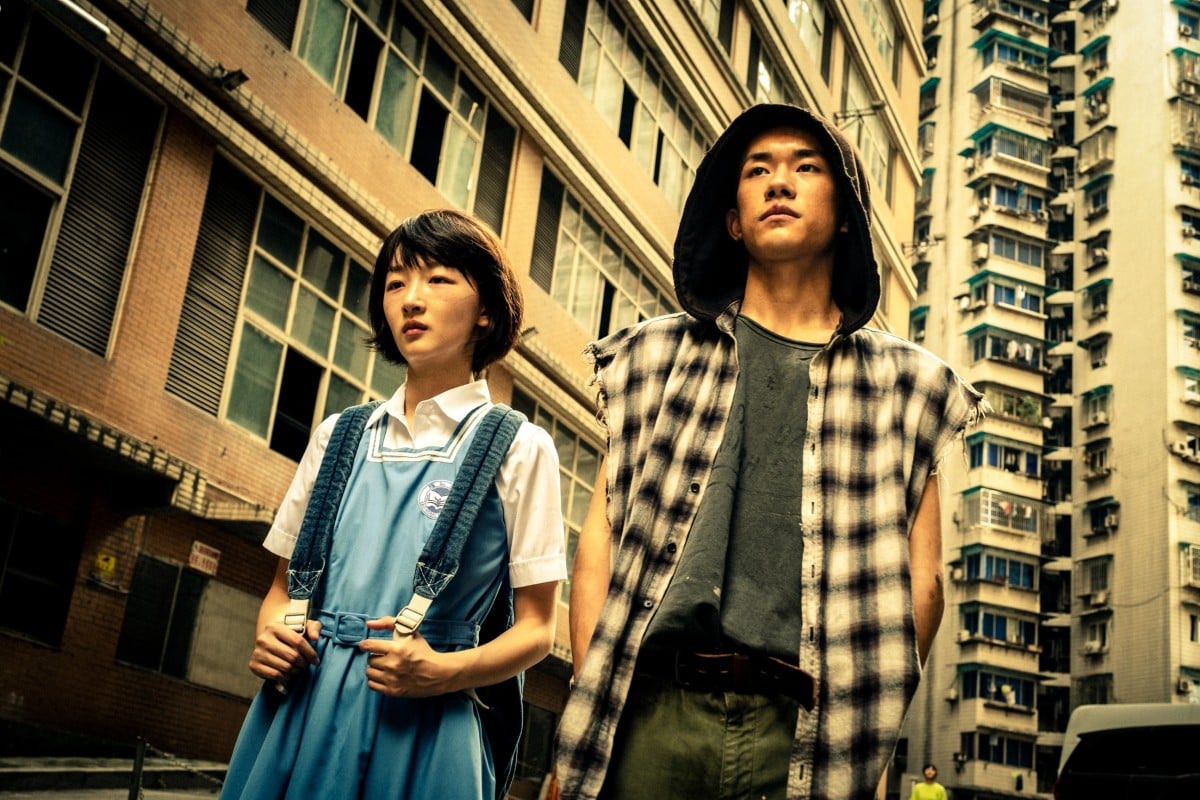
Everywhere I look, this film is listed as a 2019 film, but it’s on the short list for this year, so here we are. Better Days is an exceptionally dark look at the worldwide bullying epidemic. The film opens with the most drastic repercussions of bullying as a young woman, Hu Xiaodie (Yifan Zhang) commits suicide by jumping off her high school building. Chen Nian (Dongyu Zhou) is the only one who approaches Hu Xiaodie’s body to offer her some dignity. This action symbolizes the passing of the bullied torch to Chen Nian. By chance, she runs into a young man named who goes by Xiao Bei (Liu Beishan) who ends up agreeing to act as her protection creating a circle of bullying.
Good intentions aside, the film is a bit of a mess. Early on, Better Days while decisively a drama took on a horror tone to depict the bullying. With a combination of long tension building shorts and rapid intense cuts, the film could fit perfectly with modern horror films. While this decision worked well for a while, eventually the film pushed this element too far with comical horror sound effects only to completely drop the direction decision for the second half of the film. Pacing was another issue that holds the film back. Around the one hour mark it felt on pace to be a standard three act structure for a 90 film. The rising action had concluded, and it was time for the climax. However, the film wasn’t even halfway done at that point and instead of jumping to the climax, it began a new film, this time a romance melodrama. None of the individual decisions in the film are necessarily flawed but combined, they don’t make a cohesive whole.
I’m taking another break from my Oscar prep today, but I’ll be back to that tomorrow. Because it’s International Women’s Day, I wanted to take a moment to watch a film directed by a woman. Specifically, I wanted to fill in one of my largest woman-helmed blind spots. Specifically, with the Oscars on my mind It only felt reasonable to watch one of the six films directed by women that received a best picture nomination.
The Piano (1993, Dir. Jane Campion)
I’m genuinely shocked that this film received a best picture nomination in 1994. Not because it was undeserving; on the contrary, it immediately jumps near the top of my favorite films for the year. Rather my surprise is at academy of almost 30 years ago extending a nomination to a film as emotionally vulnerable and feminine as The Piano.
Campion’s control over the film is palpable throughout. Every action in the film is driven by character emotion rather than plot contrivance. Despite never talking Holly Hunter’s Ada is always a captivating presence. In the absence of spoken words, Ada uses her piano to express her feelings. Each scene of her sitting in front of it expresses multitudes. Through little more than looks and songs, her anguish and infatuation blend into a hauntingly complex whole.
Today’s viewings were a change of pace from my more recent fare. I’ve been in serious need of a cleaning day, and since I was in the midst of a three-day weekend it made sense to choose today. I spent most of the day deep cleaning my kitchen, but thankfully the kitchen has a perfect view of my TV so I could watch something at the same time. In order to mitigate the distraction from cleaning, I chose to watch something that had a greater emphasis on sound than visuals. Thus, I put on a pair of musical documentaries.
Don’t Look Back (1967, Dir. D.A. Pennebaker)
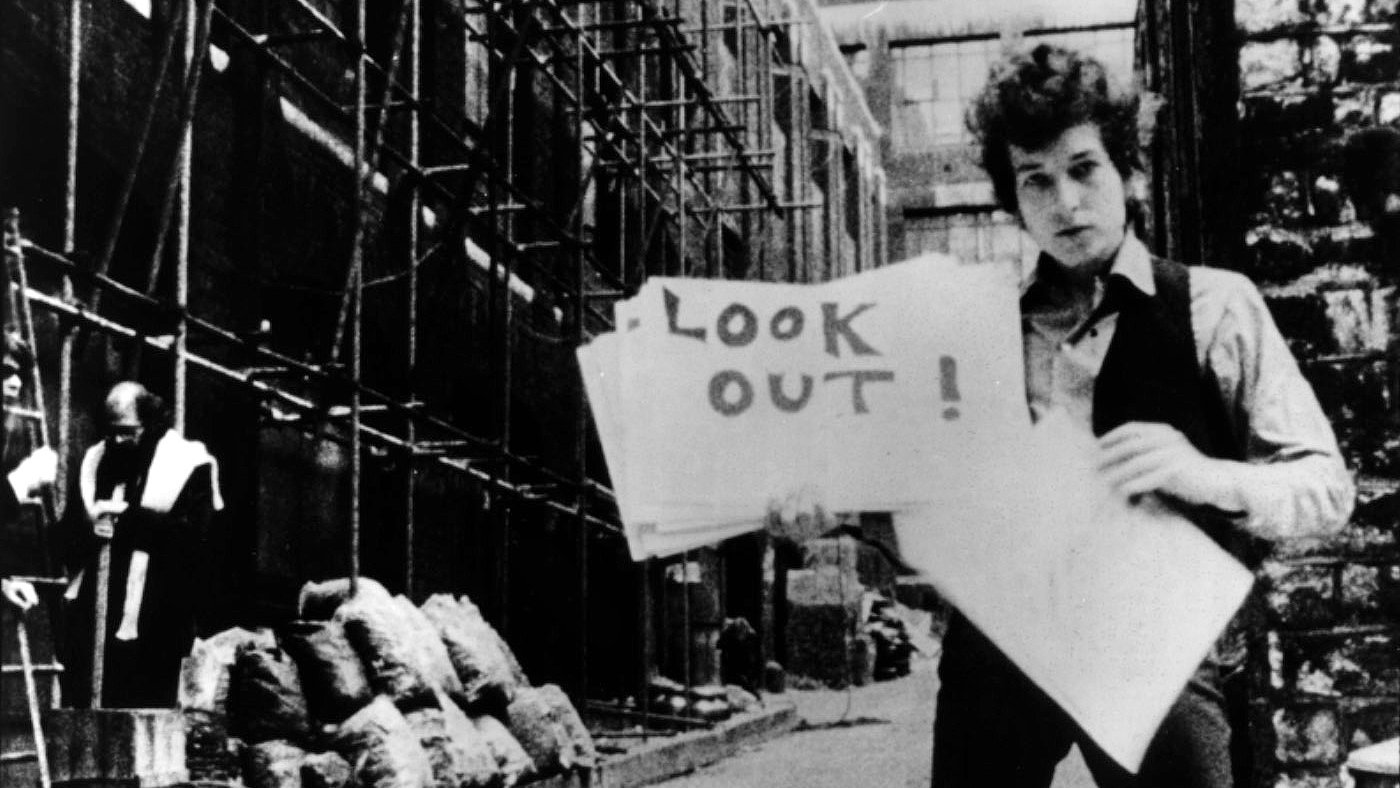
First off was D.A. Pennebaker’s documentary on Bob Dylan’s 1965 England tour Don’t Look Back. The tour coincides with the release of Dylan’s “Subterranean Homesick Blues”, one of the first major deviations in the man’s career. Throughout he’s confronted by fans who question his stylist changes and reporters who try in vain to extract any meaning from the aloof Dylan.
From the recorded live performances in front of hauntingly silent crowds to the never ending afterparties of stoned philosophizing, Dylan’s persona permeates the entire film. Through the unprecedented access the audience is privy to the many sides of Dylan. His virtuosic song writing stands in complete contrast to his more reserved or jokingly masked interactions with others. He tells reporters that he doesn’t think about the meaning to the songs, but the impact they have on others can’t be denied. Despite Pennebaker’s camera focusing on Dylan at all times, he remains an enigma throughout.
The Decline of Western Civilization (1981, Dir. Penelope Spheeris)
While the music of Bob Dylan may not have much sonically in common with the Los Angeles punk scene in the late 70s, The Decline of Western Civilization made for an excellent pairing with Don’t Look Back. 10 years after Dylan was the peak musical countercultural scene, the folk scene felt quant rather than controversial. The hippie culture failed to accomplish anything with its peace protests, and the younger generation turned to punk music as a more aggressive musical outlet.
Director Penelope Spheeris focus on the punk scene of the time by intercutting live performances with interviews of the bands and the fans separately. All sources interviewed point towards the anarchic vibe of punk culture as to what makes it special, for better or for worse. Band managers shake their head in frustration at their inability to control their bands, but without the alcohol and coke binges the movement wouldn’t work in the same way. Spheeris captures both the grit and the passion that make the punk scene what it was.
Tonight, I returned back to preparing for my annual attempt to watch all Oscar nominations. And while I’ve mostly focused on the short lists with the official nominations still a week away, today I went with something a little different. I went with two films that I passed on in January in preparation of my year end list but am confidant will be named multiple times on the 15th.
Mank (2020, Dir. David Fincher)
I didn’t pass on Mank back in January because I didn’t think I’d like it. I think everything David Fincher’s done in at least the last 15 years have been good to great, and yet except for The Social Network (2010) his films are routinely a little too cold for me to love. Mank fits perfectly with Fincher’s other films in that way. Technically he is one of the strongest directors working today. His scenes are all well calculated and precise. Where he doesn’t work for me as well is in his characters. There’s always a distance with his characters. It feels like their story is being told rather than them telling their story.
While the film once again fails to convince me to love it mostly due to the characters, Mank again proves that Fincher deserves the reputation he’s garnered. The film is meticulously pieced together interconnecting scenes from different times to tell an engrossing story of old Hollywood. Every moment fits the films need wonderfully; the two-hour plus film has no fat to trim. Gorgeous black and white photography from Erik Messershmidt combine with another memorable Trent Reznor and Atticus Ross score to add the visual and audial flare to Fincher’s vision.
The Trial of the Chicago 7 (2020, Dir. Aaron Sorkin)
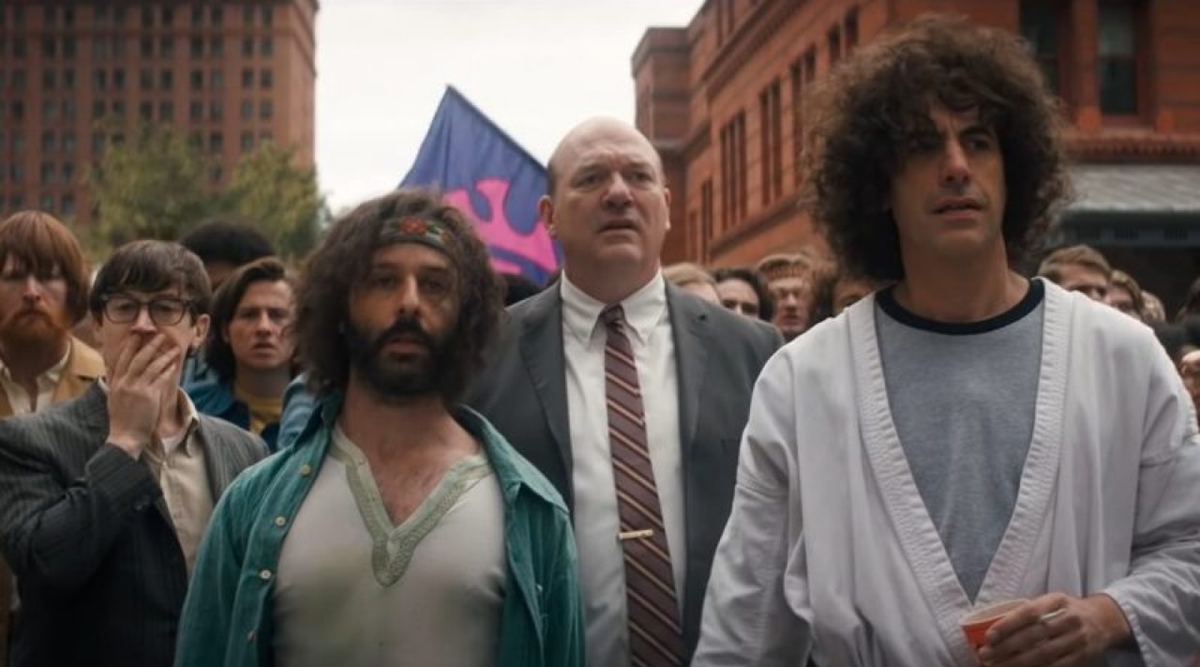
While most of Mank worked for me, very little of The Trial of the Chicago 7 did. Sorkin’s schmaltz has soured over the years, and by touching on a raw subject in police brutality, the film left me worked up rather than satisfied. 2020 was not the year to go halfhearted on complaints against the police. The film is too content to let the eventual acquittal of the Chicago 7 be an appropriate level of justice. Sorkin’s tying everything in a bow was not the treatment this subject required.
This frustration with the film was compounded with the acting. I’ve reached the point where Eddie Redmayne does not work for me. His over-the-top caricature appears a complete farse anymore, and his Tom Hayden came across smarmy. Equally absurd was Jeremy Strong’s portrayal of Jerry Rubin. The stoner comedy bit was too extreme and did not work with the tone of the film. Weirdly the only performance in the film I genuinely appreciated was Sacha Baron Cohen’s Abbie Hoffman. In a film of over the top and out of place comedic characters, the actor known for playing over the top comedic characters was the only one who could find the appropriate tone for the film.
As I mentioned yesterday, I took today off. I’ve been beyond exhausted lately and so an extra day off seemed more than necessary. The fact that today is also my birthday just made the timing serendipitous. Even with the day off, I only made it through two films, but that was mostly due to sleeping in and taking a long afternoon walk. Additionally, while recently I’ve focused on the Oscar short lists, today I ventured into some of the Criterion box sets I’ve picked up somewhat recently by two of my favorite directors.
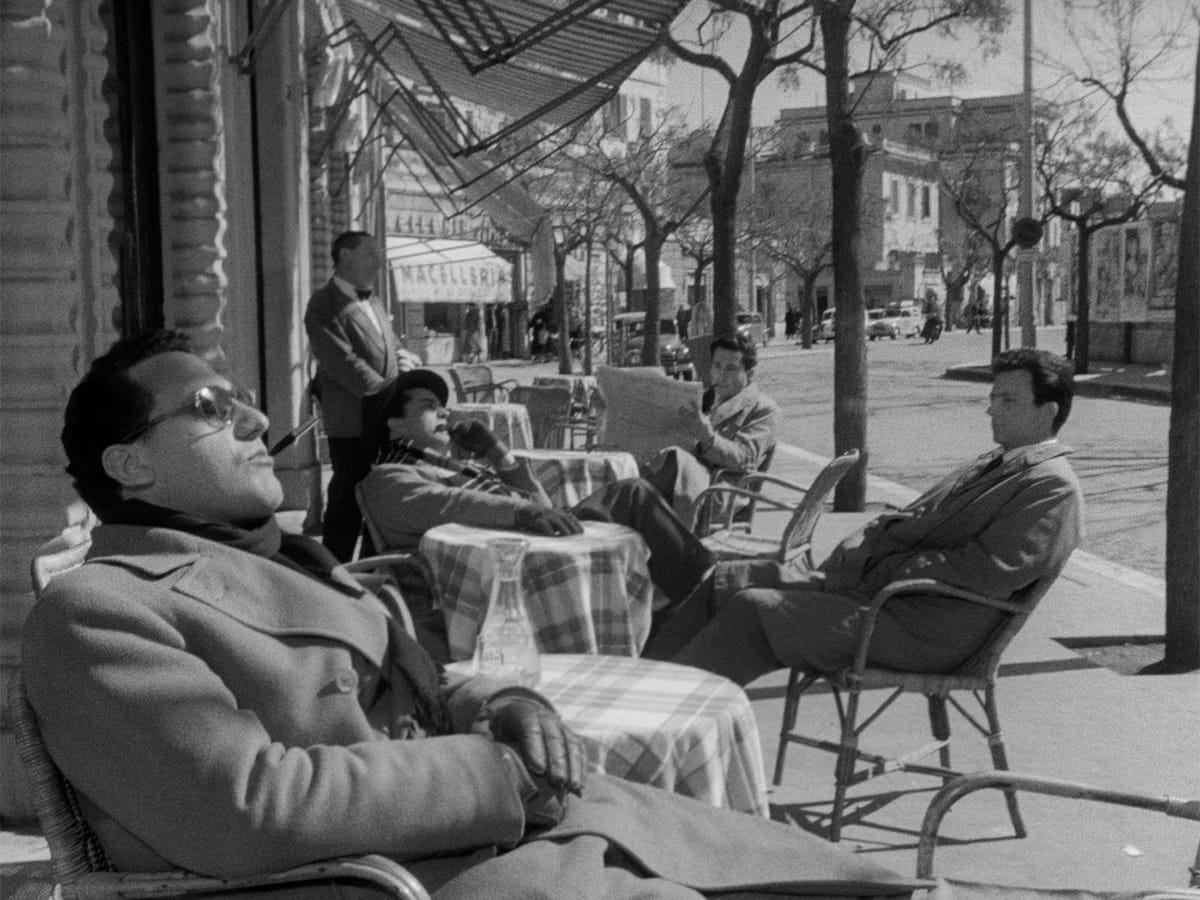
I Vitelloni (1953, Dir. Federico Fellini)
The more films by Fellini I watch, the more I really connect with his filmmaking. Specifically, I connect with his character studies. With five leads, I Vitelloni blends his more focused character studies with his larger ensemble pieces, but the shared place in life of the five young men lend it closer to the individualized film. Each character may have unique passions and problems, but the fact that they are all young men struggling with taking the full step into adulthood gives the characters enough cohesion for the film to feel focused.
For Fausto (Franco Fabrizi), a shotgun wedding with his pregnant girlfriend was insufficient for him to grow up, but his failure acts as the necessary catalyst for the rest of his friends. They are able to use his failure as a mirror to their own shortcomings. Gratuitous partying and womanizing gains a level of grime as they watch their friend destroy his life through their habits. The film acknowledges the joys of youth while pointing it’s characters to the responsibilities they must someday soon embrace.
After a film by my favorite Italian director, I moved to one by my favorite French director.
The Beaches of Agnès (2008, Dir. Agnès Varda)
If you’re not a fan of Agnès Varda, I’d have to imagine that The Beaches of Agnès must seem an insufferable bit of naval gazing, but I adore her and was more than happy to watch her explore her life and work for two hours. And more than just a fascinating subject, Varda’s ability to tell a personal story is second to none and even when turning her camera on herself she prods at the small moments that define a life.
The film enhances the discussions of her life through a blend of recreations and meticulously created art installations. These grandiose productions expose the oversized importance these moments to Varda. Her love of her children and husband, filmmaker Jacques Demy, is ever apparent through the film, but what comes across the most is Varda’s love for life. This also comes across in any of the documentaries where she inserts herself, but because of the self-reflective objective of The Beaches of Agnès it comes across the clearest here. Her unyielding curiosity led her to create some of the most personal films ever shot, and that makes her the exact kind of person deserving of her cinematic attention.
While I for the most part abandoned Oscar short list watching for the day, I snuck in two of the remaining documentary shorts on my list to finish my evening.
What Would Sophia Loren Do? (2021, Dir. Ross Kauffman)
What Would Sophia Loren Do? fits the mold of standard Oscar nominated documentary short that I set out with the first one I watched this year: A Concerto is a Conversation. Like that one, What Would Sophia Loren Do? is a filmmaker sitting down with their elder to discus an aspect of their life. This take is a little more interesting as Nancy Kulik recalls her life through a love of Sophia Loren, but it’s still the run of the mill documentary short that I’ve seen dozens of before.
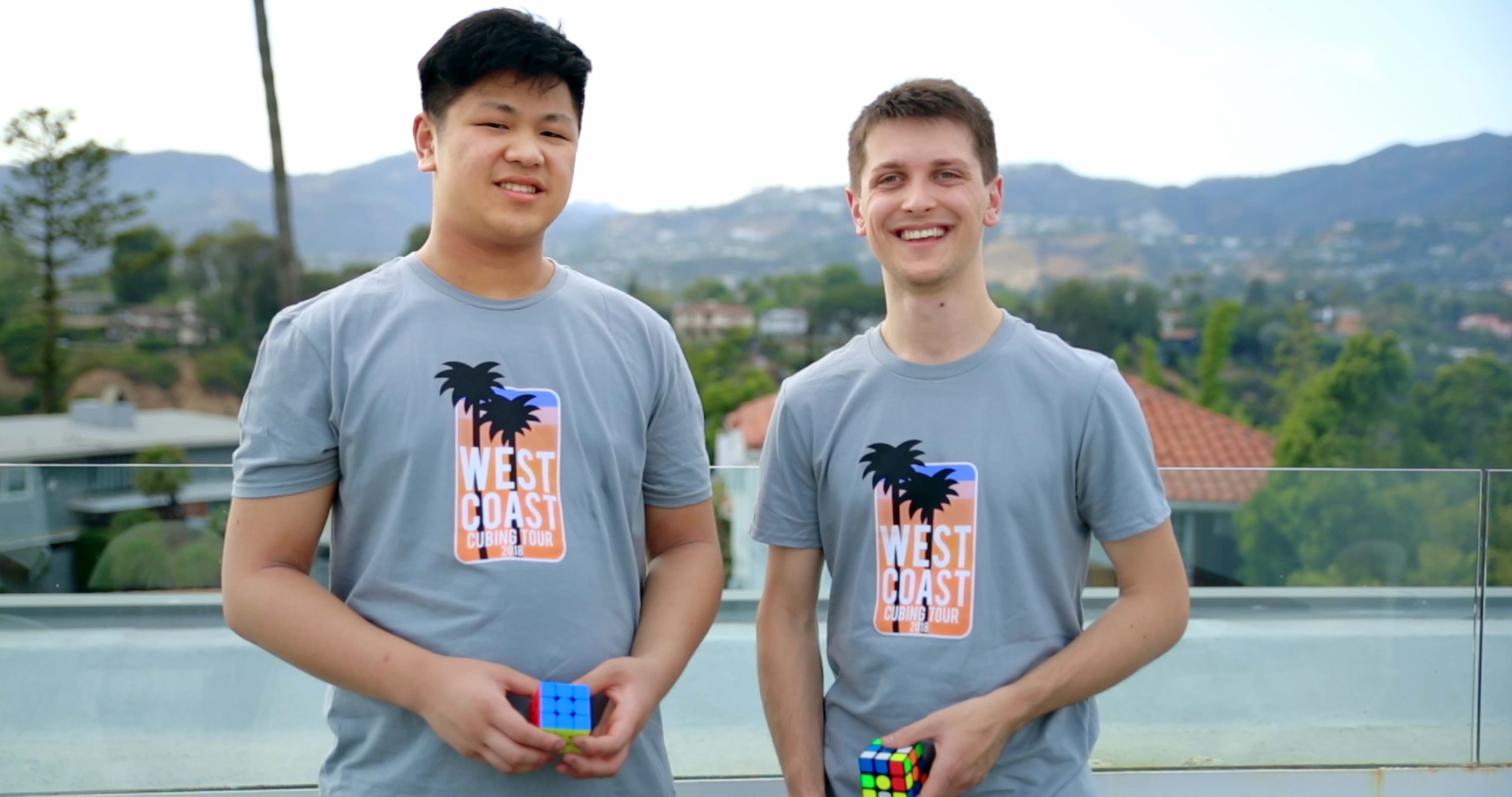
The Speed Cubers (2020, Dir. Sue Kim)
The Speed Cubers likewise mimics a rather standard documentary format. A story of a rivalry, in this case in competitive Rubix Cube solving, is told via interviews about the competitors, Feliks Zemdegs and Max Park, culminating in footage of a world championship. While still a little cliché, this format allows for more dramatic elements elevating the film over a pure interview. Still not my favorite of the options, but it is an interesting topic and well executed short.
Another exhausting day of work for me today, so today is another one film day. However, it almost counts as two as it’s a film that appears on both the Oscar short list for international feature and documentary feature. While that doesn’t really count as watching two films, it’s as close as I was able to get today. I’m taking a personal day tomorrow, so I should definitely have more than one in my entry tomorrow.
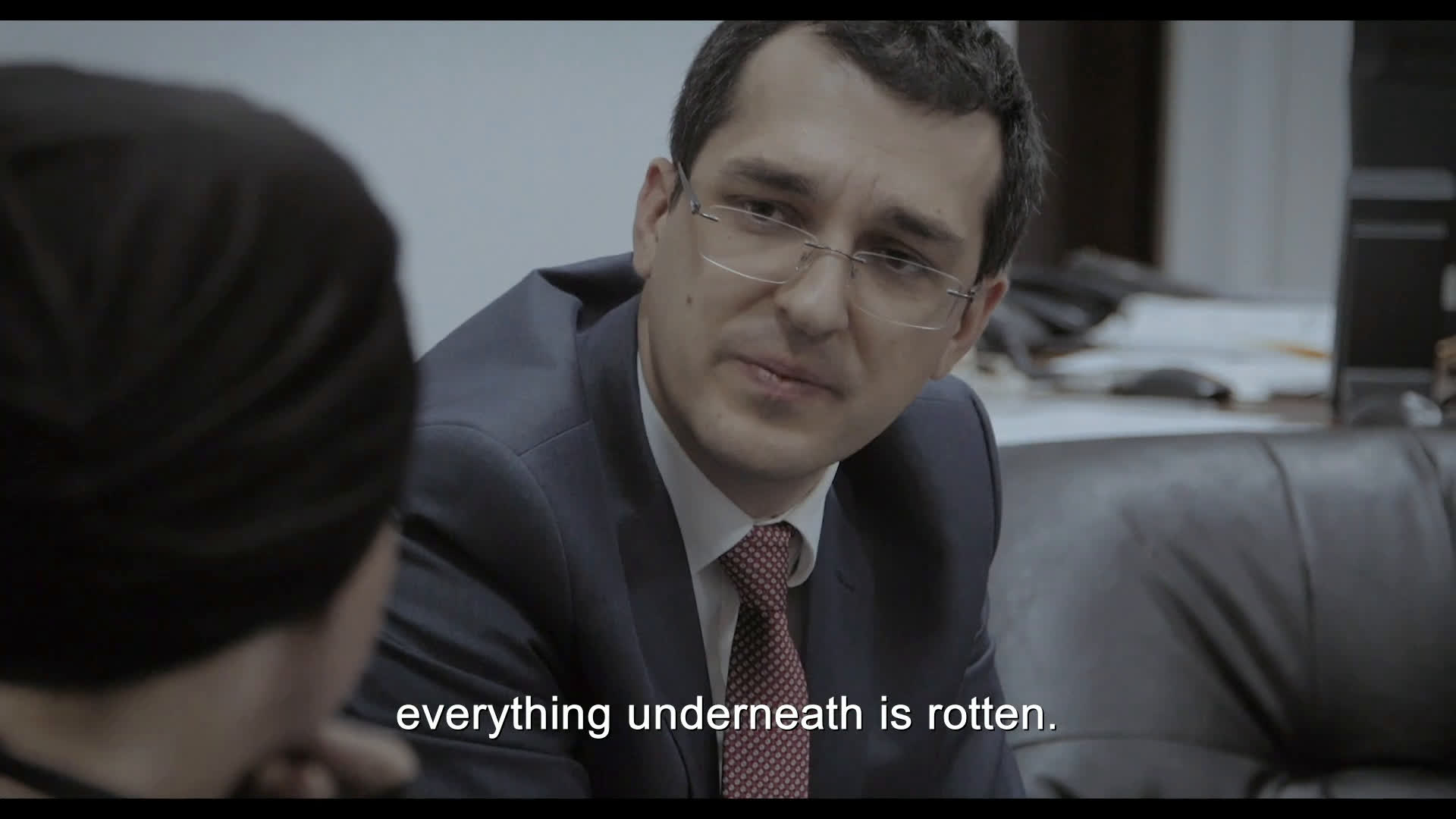
Collective (2020, Dir. Alexander Nanau)
I’ve complained a few times this year already about the dated documentary style of utilizing talking heads to convey a message. If the films I’ve watched prior have frustrated me, Collective exemplifies everything that documentaries can be. Rather than recite facts to the audience over archival footage, Collective allowed the cameras in the room from the beginning to shoot a documentary in the style of All the President’s Men (1976, Dir. Alan J. Pakula). This strategy allows the film to more closely follow the golden rule of cinema: show don’t tell.
A fire in a concert venue, the titular Collective, leads to numerous burn victims who have their care botched. This leads investigators at the Gazeta Sporturilor to uncover extensive corruption that plagued the Romanian medical system. The film does a great job of balancing style with subject. Despite a narrative framing, the film is shot clinically with no non-diegetic sound. While this would be a poor decision in an actual narrative film, by keeping this more sterile technique one never forgets that they are watching a documentary and that the atrocities that are being uncovered are not subject to hyperbole. A wonderful blend of storytelling and informing.
Feeling a lot of mid-week burnout today, so only one movie again today as I attempt to catch up on some sleep. In the meantime, I headed back to the Oscar shortlist for international feature for the second night in a row and will likely frequent over the next week.
La Llorona (2020, Dir. Jayro Bustamante)
Not to be confused with The Curse of la Llorona (Dir. Michael Chaves) from the year prior, La Llorona is a drama first and only embraces the horror genre in earnest during the third act. Instead, the film spends the majority of it’s time telling a story about a war criminal and his family living in a compound constantly surrounded by angry protesters. The audience surrogate is Natalia (Sabrina De La Hoz) a woman who skirts the line between hero and antihero. While she did nothing wrong, she doesn’t abandon her father, even after he is found guilty of genocide. This becomes a sticking point for the film, that innocence needs to be earned, and isn’t awarded to passivity.
Rather than any traditional ghost story, La Llorona is mostly content to focus on the characters with hauntings only peppered in. The subversion of the modern horror genre is exemplified by the entire lack of jump scares. When the film decides to turn on the horror it does so in a completely earned and unsettling way. The ghosts haunting acts as a mirror, reflecting the deeds of the war criminal on him and those who stood by his side. In the final haunting, the ghost justifies herself by showing that she could never do worse than the crimes that brought her to the family. By saving most of the scares for this one moment, it hammers in the terror of these events. The horror is used as an exclamation point to create an excellent drama that just happens to be named for a ghost.
While I wait for the Oscar Nominations to come out in full in two weeks, I’m going to spend much of my time watching films on various short lists in order to leave my Oscar crunch as reasonable as possible. That will end up with me watching films that don’t end up with a nomination but given the inability to watch films in theaters in 2020 I’m more than happy to watch some bonus foreign films.
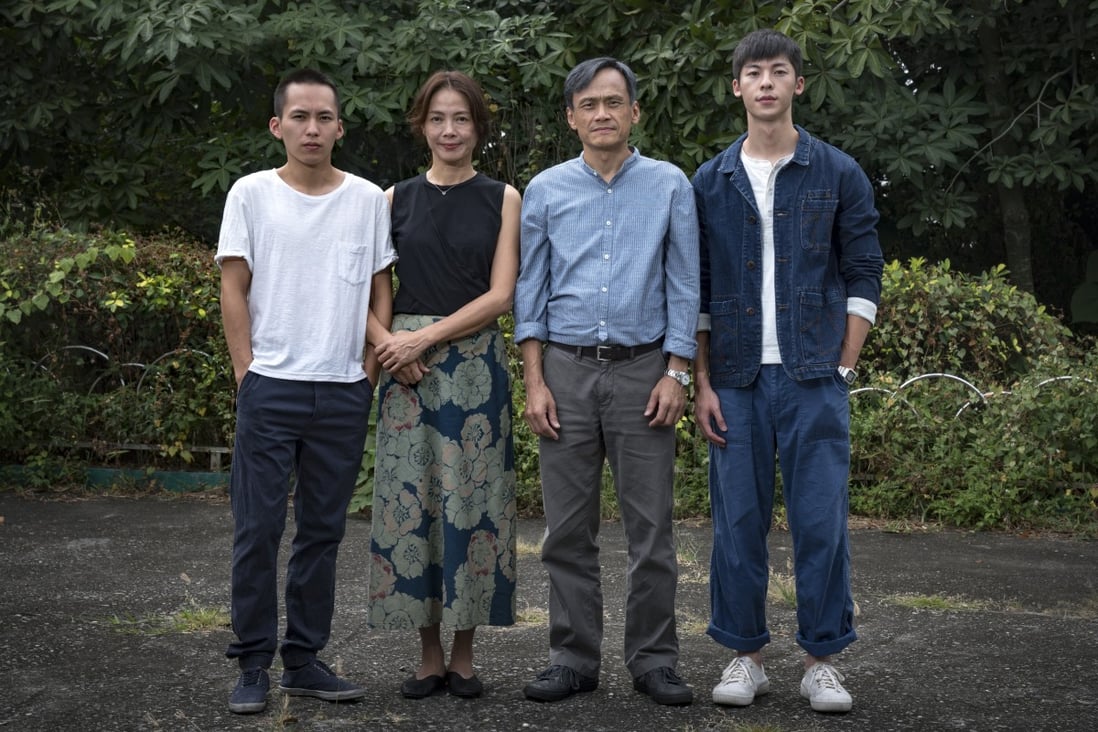
A Sun (2020, Dir. Chung Mong-Hong)
Only one movie again tonight, but this one was two and a half hours long, so I’m not beating my self up over it. A Sun uses its extreme length to explore all manner of family life through its subject, the Chen family. Teenager A-Ho (Wu Chien-ho) begins the film by taking part in an assault and heading to juvenile detention. His older brother A-Hao (Greg Hsu) is the son full of promise who harbors a depressed side. Wen (Chen Yi-wen) and Qin (Samantha Ko) are the two’s parents and make up the majority of the screen time while the two boys are unable to be on screen for their individual reasons.
The family drama verges on some extremely dark topics, yet throughout all the film manages to be deeply funny in a counterbalancing act. Much of this much needed humor comes from Wen the father played miraculously by Chen Yi-wen. The scene that stands out the most from him is when he and his wife are in a room at the detention facility with A-Ho and Xiao-Yu (Apple Wu) so the two of them can be married, and Wen unprompted sticks his arm in an automated blood pressure machine that happens to be in the room with them. Nothing is said about this, it’s just a nervous tick that manifests itself in an absurd way. Small decisions like these prevent the film from becoming a depressing slog.
The more I think about this film, the more I think I may love it. Despite its length, it never felt bloated; every scene contributed to a beautiful whole. It meticulously balanced humor with melodrama and moments of action. This perfect blend of genres elevates the narrative story while still allowing character moments speak for themselves. A Sun is a great example of a film that’s greater than the sum of its parts, but its parts were pretty good on their own as well.
Day 60 and the first day of March. I won’t be watching films under a specific theme like I did for Black History month in February, but much of the next month and a half will be spent watching films that receive an Oscar nomination once those come out in two weeks.
Over the Moon (2020, Dir. Glen Keane and John Kahrs)
While tonight’s film isn’t guaranteed a spot in this year’s list, most predictions have Over the Moon as a pretty dependable prediction for animated feature after two offerings from Pixar and Wolfwalkers make up the sure things. It is clear to me that this film is in a lower tier than the other three though, while not bad per say, Over the Moon is assuredly a mess.
Over the Moon stars Cathy Ang as Fei Fei, a girl dealing with grief over her deceased mother, a bit of a tired cliché in animated kids movies at this point. The film is a musical which is one of the more baffling decisions given the heavier subject matter, and while the first few songs are endearing the absurdity quickly gets the better of the film. An extremely awkward singing ping-pong match left me visibly cringing at the film. A similar tonally dissonant decision is in artistic styles. Much of this film looks like it’s glowing to an excessive amount. Giant glowing aesthetics can work, but they likely weren’t the best decision for a story about a girl learning to let go of the pain in her heart from her mother’s absence.
Watching Over the Moon, it’s clear that Glen Keane and John Kahrs have a great appreciation for Pixar and renaissance Disney films. And while they fumble a little in execution, the love for medium shines through. The overwhelming earnestness of the filmmakers awards it more praise in my book than an equally messy cynical cash grab would earn. I doubt I’ll ever revisit Over the Moon, but I’m not turned off of watching Keane and Kahrs’s next film.








 Woman With A Movie Blog