
Barbara Forever: Kisses on Nitrate

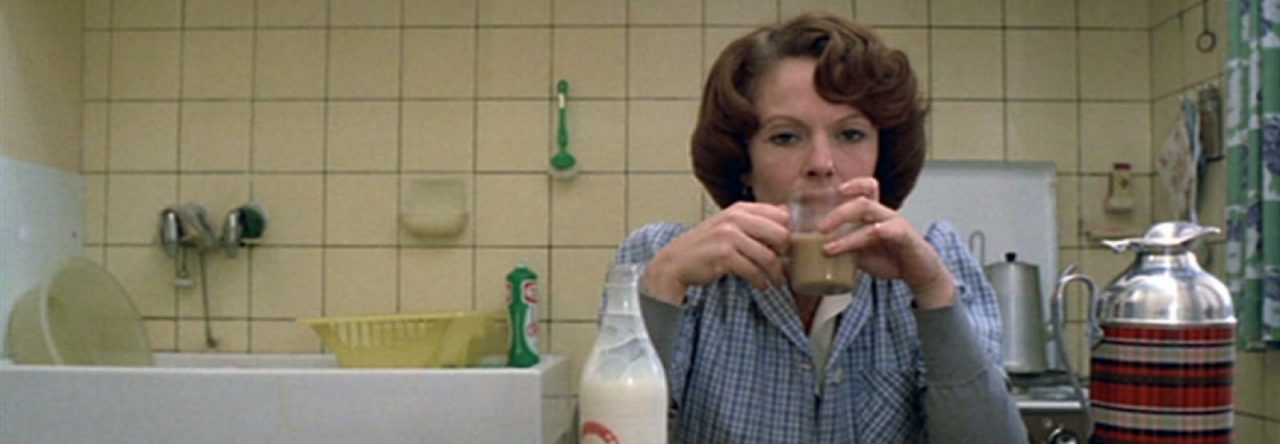
Barbara Hammer was a legendary filmmaker who could be seen as the American equivalent to Chantal Akerman as the pioneer in lesbian filmmaking from lesbian directors. As a queer woman making films which included nudity and sex, it took her years to finally receive the recognition she deserved as a profound artist, but in the modern era she is considered a cult icon with queer women looking to see themselves and how they love on screen.

Byrdie O’Connor directs Barbara Forever in what has become an increasingly popular style. A postmortem look into an artist by using a combination of their professional archive, personal home recordings, and memories from loved ones. Hammer makes an especially interesting topic for a documentary in this design as a combination of her artistic medium of choice being film and her experimental stylings provide variety and flavor to the imagery on screen.

As a counter cultural figure, Hammer’s story might have a limited audience, but a moment from the film documenting a time in which she spoke to an elementary school class and presented them with the concept of experimental filmmaking proves that the power of art can captivate any audience if they are willing to give it a chance, though as many of her films include explicit lovemaking between women some curation is important when showing her work to children.

While eventually the postmortem reflection documentary may reach the same staleness that plagues talking-head documentaries, as long as they can continue to use firsthand footage and center a person as fascinating as Barbara Hammer, they have a long life ahead of them.

Tell Everyone: Cool Hand Amanda

Finnish director Alli Haapasalo (Girl Picture) directs Tell Everyone, a period piece of a defiant woman, Amanda (Marketta Tikkanen), who is shipped off to a remote island that houses women society has decided it would rather not deal with. Amanda and her collection of designer dresses from Paris spark life into the captive residents to the displeasure of the medical professional in charge, Big Greta (Krista Kosonen).

Tikkanen is the standout performer as Amanda. She brings an infectious energy to the screen which makes it readily believable that her impact on the other woman would be so great. She knows that she is too good for the cards that she has been delt, but rather than that lead to a level of arrogance and superiority, she believes that those in the same situation as her also deserve more, especially a young woman she befriends, Little Greta (Aamu Milonoff).

Tell Everyone features beautifully lush cinematography by Jarmo Kiuru who previously shot Girl Picture with Haapasalo. Combined with Anna Vilppunen’s costume direction for Amanda’s designer dresses, and the look of the film works as both a contrast in juxtaposition with the situation the women find themselves in while meshing perfectly with the color that Amanda brings to her reality.

Despite all the things the film does well, I do have one complaint and that is about the film’s structure and pacing. The film has a very defined climax, but rather than working towards a close from that defined moment, the film extends a decent amount further and introduces another plot point to traverse which the film would have been stronger without.

Story issues aside, Tell Everyone headlined by Tikkanen captivating performance brings a feminine perspective to a tried-and-true story premise and is well worth the viewing.

I Love Booster: Opening Night of SIFF 2026

Caveat for this review: I viewed this as part of the opening night celebrations for the Seattle International Film Festival 2026 which was screened in a theater not designed for films, and this left the acoustics lacking and dialogue difficult to comprehend. I will revisit the film when it has it’s official release.

Coming off of his 2018 masterpiece Sorry to Bother You, which has grown to be a film I consider one of the most important of the 21st century, it’s fair to say that my expectations for I Love Boosters were through the roof. Riley is an extremely blatantly socialist filmmaker who in both of his films has focused intensely on how the ruling class exploit the working class, and the importance of taking collective action against ruling class to enact change. This far left ideology exists in not the films subtext, but the text proper. I Love Boosters even ups the explicitness by having one of it’s characters speak the phrase “dialectical materialism”.

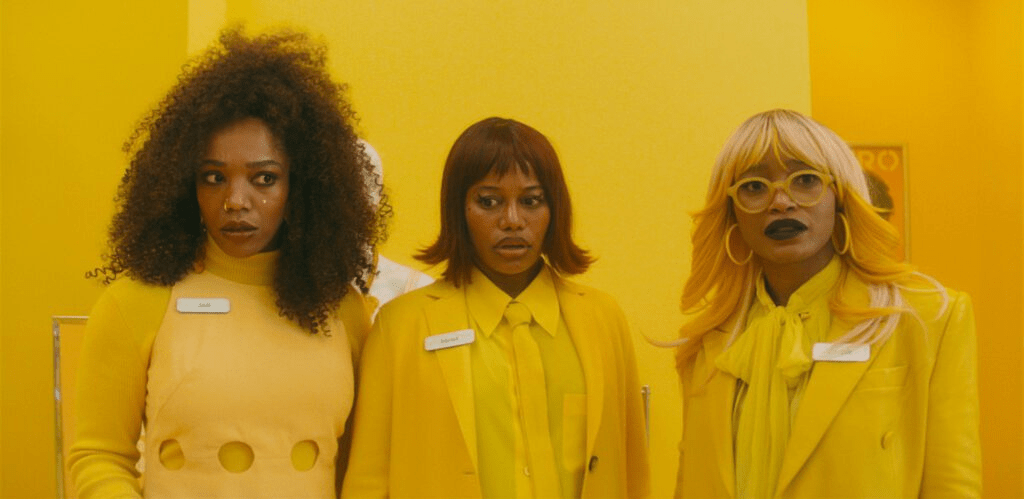
Keke Palmer, Naomi Ackie, and Taylour Paige star as boosters, or people who steal designer clothing to resell for a living. They have a special vendetta against street clothing designer, and culture appropriator, Christine Smith (played marvelously by Demi Moore) as they witness her stealing designs and exploiting her retail workers. The “Velvet Gang” meet up with an exploited worker from one of Christine’s Chinese sweatshops portrayed by Poppy Liu and along with a stolen piece of technology seek revenge on the acclaimed designer.

Riley once again creates an especially surreal world to tell his socialist allegory, and fills it with beautiful costumes, designed by Shirley Kurata, and stop motion imagery to help the communist theory palatable and even enjoyable to the average viewer including a supporting part from LaKeith Stanfield who is a perfect match for Rile even though the director continues to not allow him to exist as a normal human throughout both films.

If Sorry to Bother You was so far ahead of it’s time in 2018 that it still feels like the cutting edge of political satire today, I believe I Love Boosters will feel similar in 2034.