A2 – Spring Breakers – An Early Masterpiece

After the disappointment that was A Glimpse Inside the Mind of Charles Swan III, A24 released the new film by provocateur Harmony Korine in which he cast young women from Disney (or Disney adjacent) young adult TV shows and set them in a nudity filled spring break film that also somehow managed to be a Malickian style arthouse film, and it is a genuine masterpiece.
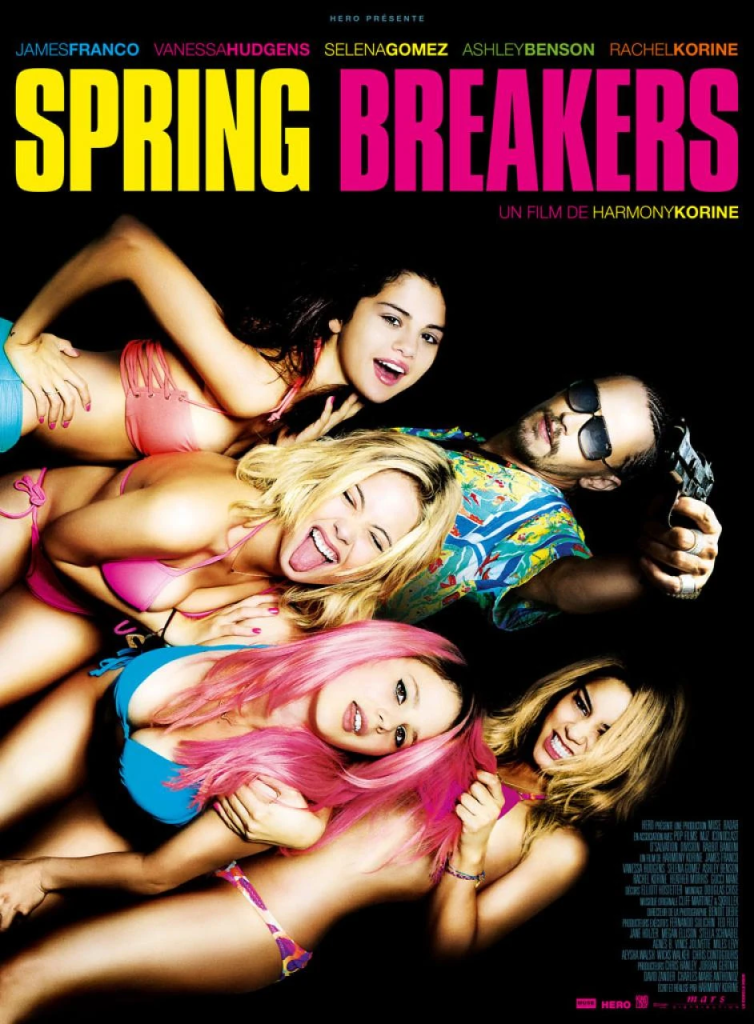
Spring Breakers stars teenage starlets, Selena Gomez, Ashley Benson, and Vanessa Hudgens as Faith, Brit, and Candy, three college women in desperate need of a break from the monotony of the world, and to experience something new. Along their friend Cotty (played by Rachel Korine, wife of directory Harmony) they rob a restaurant to fund their trip and take off to Florida to partake in the annual debauchery. When the cops crash a party with cocaine that they are at, they are arrested and without sufficient funding to pay the fine forced to spend a few days in jail. However, a local rapper and drug dealer named Alien (James Franco) takes pity on them and pays for their release and then becomes a mentor of sorts to the young women.

Much was made of the casting at the time, and it is impossible to view Spring Breakers without that as context. Teenage stars, especially young women, attempting to shed their child label and be seen as “adult” through partying and self-sexualization was by no means a new concept in 2013, though it was still used as an excuse to attack young women.

Spring Breakers on the surface appears to be another example of that phenomenon, with the assumption being that it would use the three former child stars’ want to be seen as grown and adult to create an exploitative film for the primary purpose of allowing people to leer at them in bikinis for 90 minutes. The opening seconds of the film which includes Girls Gone Wildesque footage scored by Skrillex’s “Scary Monsters and Nice Sprites” promises such exploitation, but soon the film gives away to ethereal repetition and dreamy, fluid photography which is more at home in an arthouse cinema than an adult theater.

This stylistic approach to filmmaking betrays a level of respect for the subject matter from director Harmony Korine who has made a career from filming communities that are oft derided. His films act almost as an anthropological study of the lives of his characters, and Spring Breakers fits this mold. The spring break spectacle might be a little inherently ridiculous, as is the ritualistic self-sexualization of teenage starlets, but Spring Breakers does not judge these women nor their characters for their actions. Rather it captures these events as a mode of understanding.

Brit (Benson) and Candy (Hutchens) with Alien (Franco)

Brit and Candy in particular are characterized as sex obsessed sharing handwritten notes of wanting penis while failing to pay attention in class. This is a foreshadowing for the most phallic scene of the movie in which the two hold guns near their pelvises and force Alien to filate them turning the power dynamic around. This is an example of Korine seeing the empowerment potential of this rite of passage.

While posters of newly legal child stars in dayglow bikinis brandishing assault rifles in hot pink ski masks may justifiably leave one to believe that A24 would move to zero for two when looking at their films through a feminist lens, Spring Breakers explores the initiation rite of its stars in a nonjudgemental manner. The opaque filmmaking implemented acts as a punishment for any disingenuous potential viewers looking only to ogle at the young women while still allowing the stars to explore their new maturity and autonomy outside of parental and family media conglomerate standards.

A1 – A Glimpse Inside the Mind of Charles Swan III – A Rough Start

I had never seen A24’s first release, and I knew it wasn’t the owner of the greatest of reviews, but I was not prepared for how rough a start the company got off to.

In the aftermath of his crash out in 2011 in which he lost his role in the extremely successful sitcom Two and a Half Men, Charlie Sheen became a public pariah and was the punchline of countless jokes. It was at this moment that Roman Coppola cast him in his new film A Glimpse Inside the Mind of Charles Swan III which would go on to be A24’s first release. The film played into the Sheen persona of the time in a way that with over a decade of hindsight feels like an edgelord attempting to be controversial but instead playing into tropes that were old even at the time.

Sheen plays the titular Swan, a self-described asshole whose brain is 80% consumed with thoughts of sex as he tries to deal with the reality of losing his girlfriend Ivana (Katheryn Winnick) when his womanizing ways are finally too much for her to put up with. The film plays out as a delusional ego trip by Charlie, as he and his best friend Kirby (Jason Schwartzman) blame women for all their troubles while objectifying them at the same time.

The average outfit for a woman in A24’s first feature

A Glimpse… falls into a common pitfall when viewing film through a critical lens including a feminist one, and that is that the text and subtext do not share a sentiment. While a depiction does not alone equate to condoning something, a film’s cinematic language can be used to determine its point of view. Charlie Swan might be seen as ridiculous and an asshole, but the film still relishes in its objectification and demonization of women. Apart from Patricia Arquette who plays Charlie’s sister, every other woman is shot through Charlie’s viewpoint of someone with exclusively sex on the mind. The film has no interest in exploring what a woman thinks, only what Charlie or Kirby thinks that they are thinking. Any attempts to claim the film thinks that the views of Charlie and Kirby are not what the filmmakers agree with is lost as the film relishes in the misogynistic musings of the two pigheaded men. The film even goes so far as to reward Charlie at the end of the film despite the character learning nothing and failing to grow throughout the length of the film.

Despite relying on a known entity in Roman Coppola and a reliable starting cast (Bill Murray also plays a supporting role), A Glimpse Inside the Mind of Charles Swan III was a rough place for A24 to begin its life in both quality and in its ability to be an improvement in how cinema sees women. Because of these flaws, it makes sense that their second release was the one that people associate with the beginning of the studio.

The Drama: Her Trauma, His Inconvenience

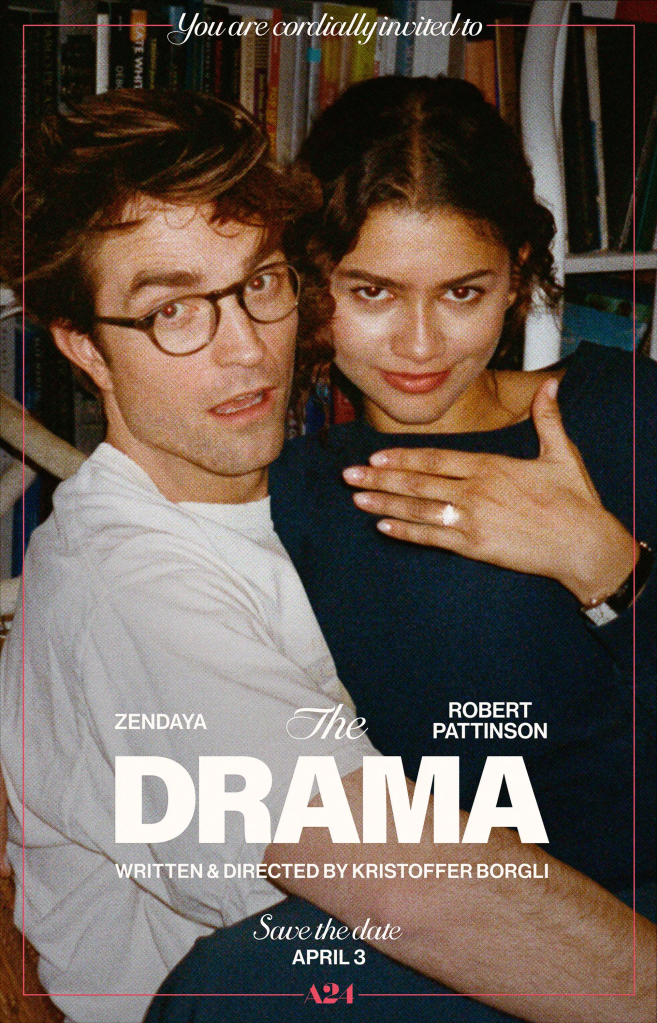
Working against the Hollywood norm of spoiling the entire film in the trailers, A24 very specifically kept the major reveal a secret throughout the advertising of Kristoffer Borgli’s The Drama. This review, however, will not be as respectful of that secrecy, so if you would like to still be surprised when watching the film, my short notes are that the film is well made with special accolades going to Borgli and Joshua Raymond Lee for their editing, but I have issues with the film’s viewpoint on Emma’s (Zendaya) “drama” and it’s focus primarily on how that affects Charlie (Robert Pattinson).


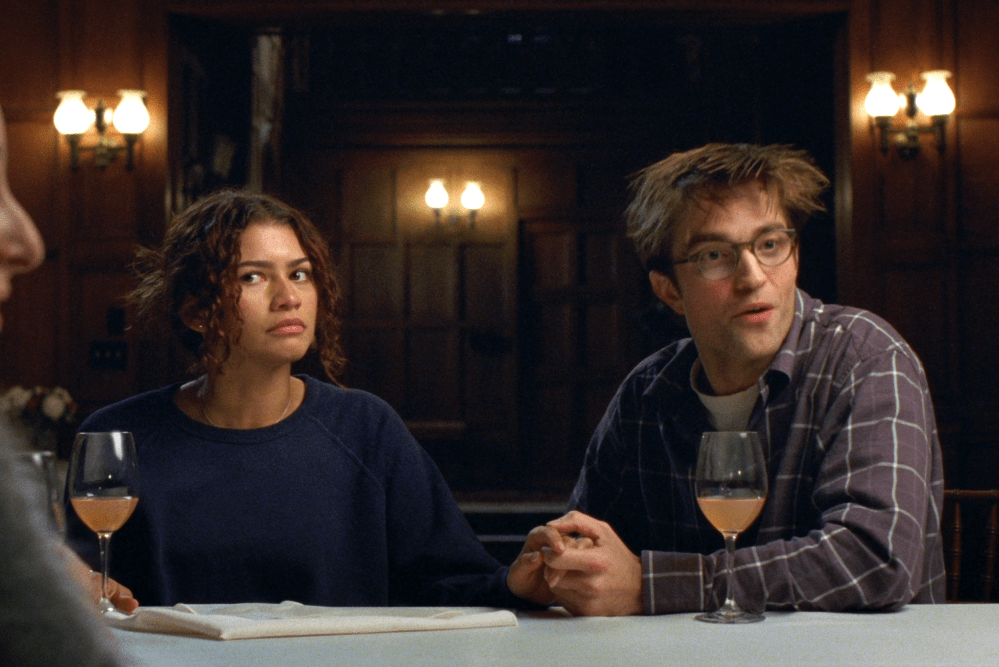
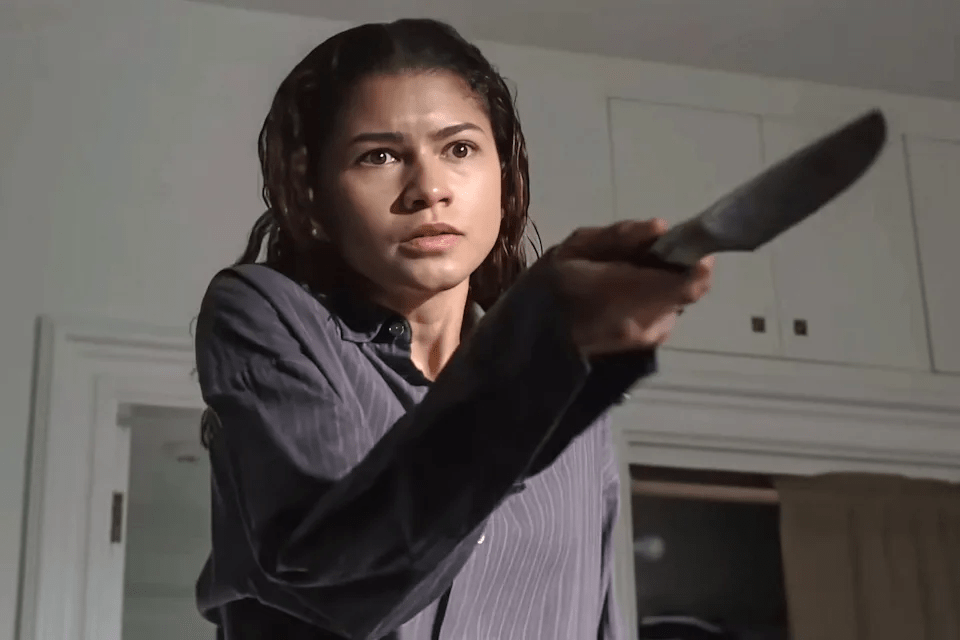
Emma and Charlie are an engaged couple a week from their wedding date. They are busy making the final decisions and preparing their speeches for the reception with the help of their best friends, fellow couple Rachel (Alana Haim) and Mike (Mamoudou Athie). One evening while giving the reception dinner one last taste test and inebriated on tasting wine, Mike and Rachel share that before their wedding, they told each other the worst thing that they ever did. The four go around the table sharing, but when Emma shares that she nearly committed a school shooting the mood sours and the night ends abruptly.

The rest of the film follows Emma and Charlie (mostly Charlie) as they must deal with the repercussions of this unearthed history. Charlie becomes largely frightened by Emma, now suddenly seeing her capacity for violence. Rachel shuts Emma out calling into question what will happen to their wedding party. At one point, Charlie irrationally scared and emotionally insecure begins talking to coworker Misha (Hailey Gates) about “the drama” and ends up crying before aggressively kissing her and initiating sex. All the tension builds to the climax at the wedding reception where Charlie cracks, unable to hold everything in.

Where The Drama works best is in its technical aspects especially the editing. The film shoots multiple ways different scenes could play out and inserts them all into the film as a way of showing the mindset of the characters. Emma and Charlie’s fears as to what the other is thinking become especially clear because of this technique. Beyond that editing trick, the entire film feels very polished and well put together, though leaves enough of an edge for it to feel real.

While the technical aspects of The Drama are largely unimpeachable, when it comes to Borgli’s writing and direction the issues arise. While the film is being sold as having co-leads between Zendaya and Pattinson, Pattinson is the film’s protagonist and most of the plot revolves around how “the drama” is affecting him. This centering of Charlie frames Emma’s past as a problem for him to deal with, largely removing her trauma from the equation.

When Rachel and Mike tell (not ask) Emma and Charlie that the four of them will share the worst thing that they ever did, Emma instantly looks uncomfortable by the prospect and never agrees to the promise. After Rachel and Mike share, and Charlie’s answer is ignored and told he isn’t participating anymore, Emma feels pressured into divulging her memory. Once she does, outside of a couple instances of nervous vomiting that night and again in the morning, the question of how being forced to relive her trauma affects her is never explored. The film seems to think that the only repercussions she receives come in the form of wedding drama. How reliving this trauma and losing her support system in the process affects her mental health is a question that Borgli has no interest in exploring.

Instead of expanding on the feelings of the woman who is reliving her trauma and seeing her future disappear because of it, the film largely obsesses over how difficult that is for the man about to marry her. Charlie shows no empathy to Emma (despite mentioning twice how important a quality that is to him). Instead, he is frightened of her (in a way that is played for laughs but comes across as heartless) despite her never showing him a violent side of her before. In addition to his fear, he spends much of his time focusing on maintaining his friendship with Rachel and Mike over prioritizing the needs of his fiancé. He is so emotionally affected by learning that about Emma’s past that he cheats on her in the midst of a crying fit. The entire experience of dealing with Emma’s past is centered on Charlie’s feelings, which I found to be rather insulting. The need to explore the impact that a complete emotional upheaval from a woman has on her male partner rather than spend time with her and her feelings is rather chauvinist.

Even when Charlie finally receives the consequences of his behaviors during the wedding reception, Borgli rewards him by having Emma coming back to him, no apologies necessary. I could see an argument that the final scene is another Charlie daydream taking place only in his head but given how much the rest of the film is on his side, it seems like the ending being literal is what Borgli intended.

Another concern that I have with the film is its seemingly villainization of mental health struggles. It never dawns on Charlie, Rachel, or Mike that Emma may have been hurting as a child. They all jump to assuming psychopathy. While bullying and depression are not an excuse for a mass shooting by any measure, the fact is that Emma didn’t go through with it despite coming close, and the reason she didn’t was because someone reached out. Charlie almost understands when at one point he comments on the number of school shootings in America and how many other people must have gotten close, but instead of exploring the mental health epidemic, he (playing a British man in the film) laughs it off as a cultural thing. That was the only time that Emma’s motivation as something other than psychopathy is considered by those three.

Men praising other men for ignoring or disrespecting the feelings of the women in their life and rewarding them for barely making it over the bar sitting on the floor is a long cinematic tradition, but that doesn’t mean it is not disappointing every time. The Drama had a lot of potential and could have been a fascinating character study had it chosen to follow Emma, the character that inciting incident happened to. I do think it could have flourished, though most likely had it been directed by a woman.