After the disappointment that was A Glimpse Inside the Mind of Charles Swan III, A24 released the new film by provocateur Harmony Korine in which he cast young women from Disney (or Disney adjacent) young adult TV shows and set them in a nudity filled spring break film that also somehow managed to be a Malickian style arthouse film, and it is a genuine masterpiece.
Spring Breakers stars teenage starlets, Selena Gomez, Ashley Benson, and Vanessa Hudgens as Faith, Brit, and Candy, three college women in desperate need of a break from the monotony of the world, and to experience something new. Along their friend Cotty (played by Rachel Korine, wife of directory Harmony) they rob a restaurant to fund their trip and take off to Florida to partake in the annual debauchery. When the cops crash a party with cocaine that they are at, they are arrested and without sufficient funding to pay the fine forced to spend a few days in jail. However, a local rapper and drug dealer named Alien (James Franco) takes pity on them and pays for their release and then becomes a mentor of sorts to the young women.
Much was made of the casting at the time, and it is impossible to view Spring Breakers without that as context. Teenage stars, especially young women, attempting to shed their child label and be seen as “adult” through partying and self-sexualization was by no means a new concept in 2013, though it was still used as an excuse to attack young women.

Spring Breakers on the surface appears to be another example of that phenomenon, with the assumption being that it would use the three former child stars’ want to be seen as grown and adult to create an exploitative film for the primary purpose of allowing people to leer at them in bikinis for 90 minutes. The opening seconds of the film which includes Girls Gone Wildesque footage scored by Skrillex’s “Scary Monsters and Nice Sprites” promises such exploitation, but soon the film gives away to ethereal repetition and dreamy, fluid photography which is more at home in an arthouse cinema than an adult theater.
This stylistic approach to filmmaking betrays a level of respect for the subject matter from director Harmony Korine who has made a career from filming communities that are oft derided. His films act almost as an anthropological study of the lives of his characters, and Spring Breakers fits this mold. The spring break spectacle might be a little inherently ridiculous, as is the ritualistic self-sexualization of teenage starlets, but Spring Breakers does not judge these women nor their characters for their actions. Rather it captures these events as a mode of understanding.

Brit and Candy in particular are characterized as sex obsessed sharing handwritten notes of wanting penis while failing to pay attention in class. This is a foreshadowing for the most phallic scene of the movie in which the two hold guns near their pelvises and force Alien to filate them turning the power dynamic around. This is an example of Korine seeing the empowerment potential of this rite of passage.
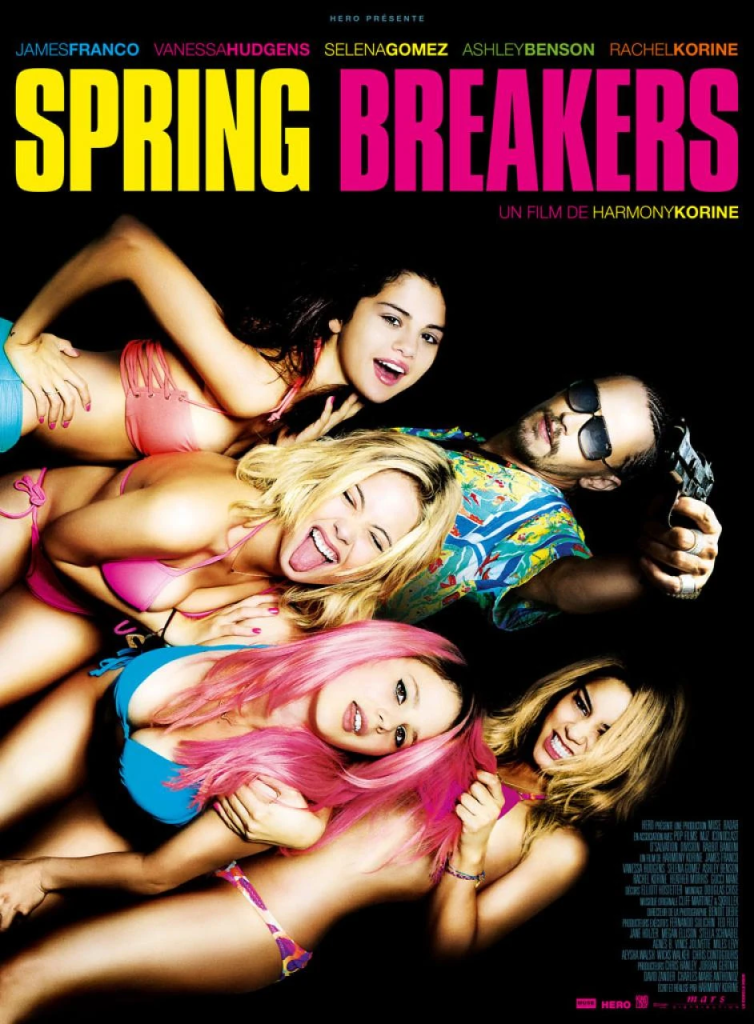
While posters of newly legal child stars in dayglow bikinis brandishing assault rifles in hot pink ski masks may justifiably leave one to believe that A24 would move to zero for two when looking at their films through a feminist lens, Spring Breakers explores the initiation rite of its stars in a nonjudgemental manner. The opaque filmmaking implemented acts as a punishment for any disingenuous potential viewers looking only to ogle at the young women while still allowing the stars to explore their new maturity and autonomy outside of parental and family media conglomerate standards.


