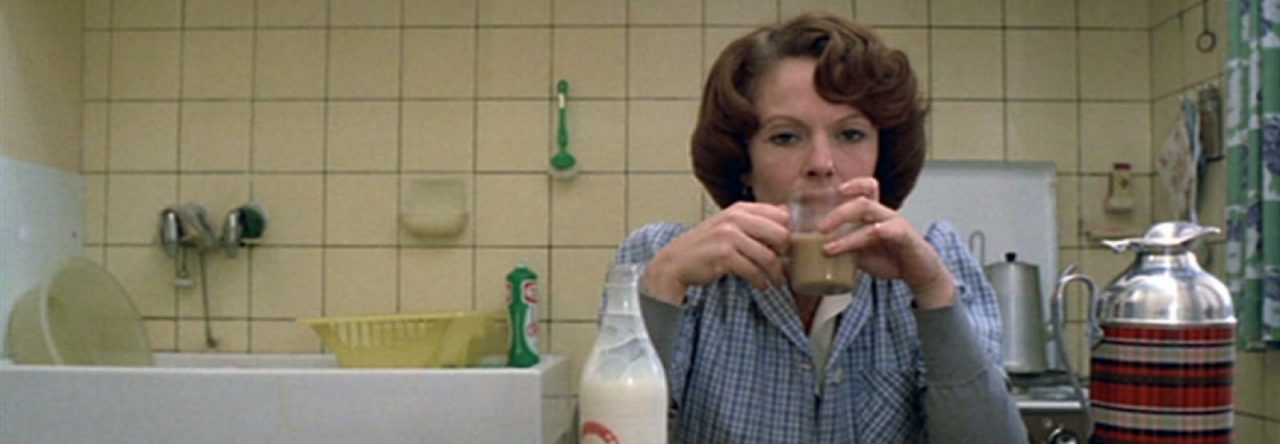

Much like yesterday, I’ve felt the need to explore the wonders of sapphic cinema, and while yesterday I visited the very beginning of lesbians on screen, today I am visiting potentially the most recent lesbian take on Nia DaCosta’s on the classic Henrik Ibsen play Hedda Gabler or in this iteration just Hedda. DaCosta chooses to gender swap Eilert Lövborg the titular character’s previous love interest with Eileen Lövborg giving the film a new sapphic twist.
Hedda Gabler/Tesman (Tessa Thompson) is a woman unenthused with her life despite her husband George (Tom Bateman) going far beyond his means to give her everything she could possibly want including a giant, opulent home he cannot afford. While she seems to be initially dreading the party she and her husband will be hosting, a call from an old acquaintance Eileen Lövborg (Nina Hoss) cause her outlook on the night to change instantly. With a new outlook on the evening, Hedda begins manipulating the actions and emotions of her guests to bring about her goals, and respark her past love for the fairer sex.

DaCosta is clearly familiar with the concept of the “disaster lesbian” as Hedda not only fits the archetype to the t but also possesses the uncanny ability to bring out the disaster in the other lesbians around her. Tessa Thompson brings Hedda to life with craftiness and plenty of alure that convincingly captivates the attention of every party guest. Nina Hoss despite being a supporting actress has the most interesting and challenging roll which she nails every part of. She goes from cold and in control, to a messy drunk, to a suicidal wreck over the course of the party, and every turn is delivered in a way such that she creates a complex character who holds multitudes.

While I appreciate the acting decisions by both actresses, they do not exactly mesh. I find it hard to believe that the confident Eileen who appears at Hedda’s party could be swayed into drinking (she is a recovered alcoholic) so easily, especially with her current creative and romantic partner Thea (Imogen Poots) urging her to stay strong and resist. Hedda does not come across as a mastermind who can expertly pull the strings to get her way, but as a hurt lovestruck puppy who is making decisions on vibes. While I appreciate both performances, they do not fit the screenplay that was handed to them.
The pieces of the film from behind the camera were also rather hit or miss. Hildur Guðnadóttir continues to be one of the best score composers working today as her score has significant propulsion yet and off kilter sparticness that matches with Thompson’s Hedda exactly. Other parts of the filmmaking process, however, feel rather like they come from a director with endless talent’s first film. They show an intuition for interesting effects yet an imperfect implementation. Specifically, the camera moves in unique ways and captures scenes through unique techniques and angles which initially create diversity and interest when viewing. However, after the first 20 minutes or so they prove to be more of a distraction than anything else.
While this review may have veered into the negative, I still believe that the film was good though not great. Fun performances, even if they do not relate perfectly, will always be an entertaining watch, and who doesn’t need more sapphic messiness in their life? Hopefully by watching films like Hedda we can avoid becoming the disaster lesbian in real life.

 Woman With A Movie Blog