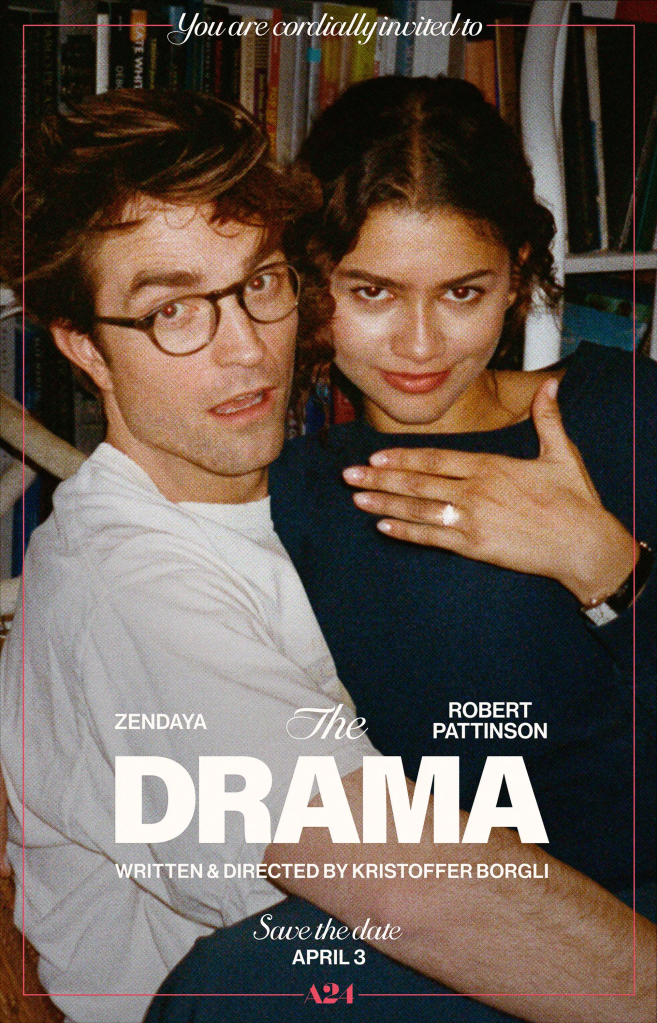
Working against the Hollywood norm of spoiling the entire film in the trailers, A24 very specifically kept the major reveal a secret throughout the advertising of Kristoffer Borgli’s The Drama. This review, however, will not be as respectful of that secrecy, so if you would like to still be surprised when watching the film, my short notes are that the film is well made with special accolades going to Borgli and Joshua Raymond Lee for their editing, but I have issues with the film’s viewpoint on Emma’s (Zendaya) “drama” and it’s focus primarily on how that affects Charlie (Robert Pattinson).
Emma and Charlie are an engaged couple a week from their wedding date. They are busy making the final decisions and preparing their speeches for the reception with the help of their best friends, fellow couple Rachel (Alana Haim) and Mike (Mamoudou Athie). One evening while giving the reception dinner one last taste test and inebriated on tasting wine, Mike and Rachel share that before their wedding, they told each other the worst thing that they ever did. The four go around the table sharing, but when Emma shares that she nearly committed a school shooting the mood sours and the night ends abruptly.
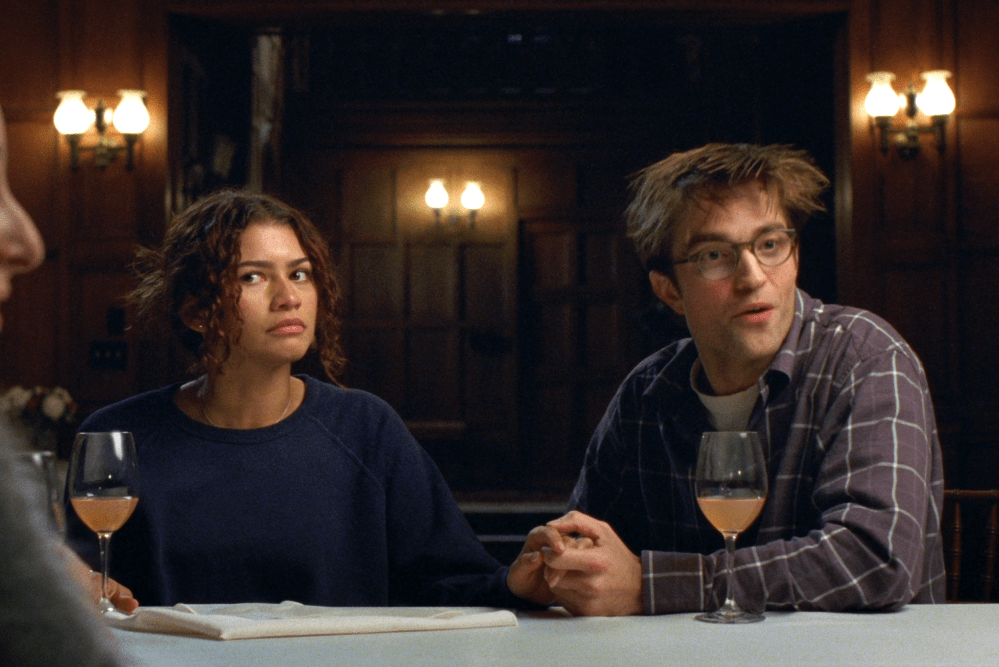
The rest of the film follows Emma and Charlie (mostly Charlie) as they must deal with the repercussions of this unearthed history. Charlie becomes largely frightened by Emma, now suddenly seeing her capacity for violence. Rachel shuts Emma out calling into question what will happen to their wedding party. At one point, Charlie irrationally scared and emotionally insecure begins talking to coworker Misha (Hailey Gates) about “the drama” and ends up crying before aggressively kissing her and initiating sex. All the tension builds to the climax at the wedding reception where Charlie cracks, unable to hold everything in.
Where The Drama works best is in its technical aspects especially the editing. The film shoots multiple ways different scenes could play out and inserts them all into the film as a way of showing the mindset of the characters. Emma and Charlie’s fears as to what the other is thinking become especially clear because of this technique. Beyond that editing trick, the entire film feels very polished and well put together, though leaves enough of an edge for it to feel real.
While the technical aspects of The Drama are largely unimpeachable, when it comes to Borgli’s writing and direction the issues arise. While the film is being sold as having co-leads between Zendaya and Pattinson, Pattinson is the film’s protagonist and most of the plot revolves around how “the drama” is affecting him. This centering of Charlie frames Emma’s past as a problem for him to deal with, largely removing her trauma from the equation.
When Rachel and Mike tell (not ask) Emma and Charlie that the four of them will share the worst thing that they ever did, Emma instantly looks uncomfortable by the prospect and never agrees to the promise. After Rachel and Mike share, and Charlie’s answer is ignored and told he isn’t participating anymore, Emma feels pressured into divulging her memory. Once she does, outside of a couple instances of nervous vomiting that night and again in the morning, the question of how being forced to relive her trauma affects her is never explored. The film seems to think that the only repercussions she receives come in the form of wedding drama. How reliving this trauma and losing her support system in the process affects her mental health is a question that Borgli has no interest in exploring.
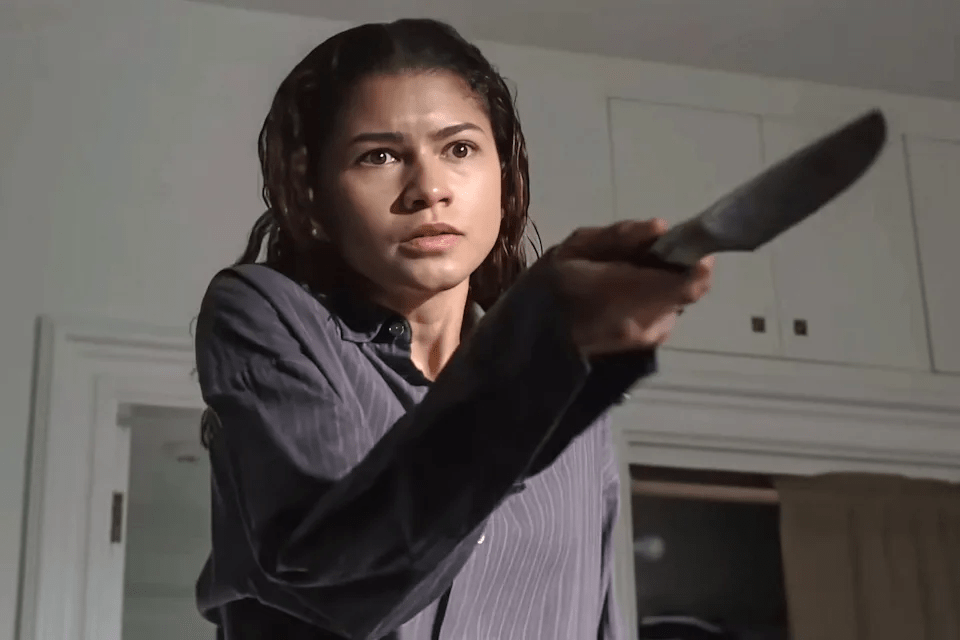
Instead of expanding on the feelings of the woman who is reliving her trauma and seeing her future disappear because of it, the film largely obsesses over how difficult that is for the man about to marry her. Charlie shows no empathy to Emma (despite mentioning twice how important a quality that is to him). Instead, he is frightened of her (in a way that is played for laughs but comes across as heartless) despite her never showing him a violent side of her before. In addition to his fear, he spends much of his time focusing on maintaining his friendship with Rachel and Mike over prioritizing the needs of his fiancé. He is so emotionally affected by learning that about Emma’s past that he cheats on her in the midst of a crying fit. The entire experience of dealing with Emma’s past is centered on Charlie’s feelings, which I found to be rather insulting. The need to explore the impact that a complete emotional upheaval from a woman has on her male partner rather than spend time with her and her feelings is rather chauvinist.
Even when Charlie finally receives the consequences of his behaviors during the wedding reception, Borgli rewards him by having Emma coming back to him, no apologies necessary. I could see an argument that the final scene is another Charlie daydream taking place only in his head but given how much the rest of the film is on his side, it seems like the ending being literal is what Borgli intended.

Another concern that I have with the film is its seemingly villainization of mental health struggles. It never dawns on Charlie, Rachel, or Mike that Emma may have been hurting as a child. They all jump to assuming psychopathy. While bullying and depression are not an excuse for a mass shooting by any measure, the fact is that Emma didn’t go through with it despite coming close, and the reason she didn’t was because someone reached out. Charlie almost understands when at one point he comments on the number of school shootings in America and how many other people must have gotten close, but instead of exploring the mental health epidemic, he (playing a British man in the film) laughs it off as a cultural thing. That was the only time that Emma’s motivation as something other than psychopathy is considered by those three.
Men praising other men for ignoring or disrespecting the feelings of the women in their life and rewarding them for barely making it over the bar sitting on the floor is a long cinematic tradition, but that doesn’t mean it is not disappointing every time. The Drama had a lot of potential and could have been a fascinating character study had it chosen to follow Emma, the character that inciting incident happened to. I do think it could have flourished, though most likely had it been directed by a woman.
 Woman With A Movie Blog