11/29/2025 – Hamnet

Holy Shit Jessie Buckley!

I honestly thought about making that my entire review for Chloé Zhao’s return from the Marvel verse with Hamnet; her performance was just that good. Stoping after that would both somehow undersell Buckley’s acting masterclass and be disrespectful to the rest of the cast and crew that makes Hamnet a uniquely special film so I shall continue.

Hamnet is a fictionalized telling of the love and grief of William Shakespeare (Paul Mescal) and his wife Agnes (Buckley) who is often known as Anne in history but in some records and this film as Agnes. Maggie O’Farrell adopted her novel of the same name with Zhao which tells the story of Agnes and William’s three children and creates a story for the circumstances that preceded the creation of Hamlet, filling in the gaps in history. While William is obviously the most famous character in the story, the film is primarily Agnes and her children’s story as long sections of the film take place while Shakespeare is in London leaving Agnes to take care of their first child Susanna (Bodhi Rae Breathnach) and later their twins Judith (Olivia Lynes) and Hamnet (Jacobi Jupe).

Zhao’s unique directorial vision is used to create a poetic feeling to the film. She makes liberal use of unannounced time jumps, both large ones between scenes and short ones contained within a scene. While these jumps can be slightly disorienting to begin with, they are employed to bring the most important moments and shots to the screen. It is not necessary to see William walk to Agnes and lie down with her, cutting directly from a conversation to them lying together results in amplifying the direct cause and effect. She also uses repetitious shots of nature which call back to the rumors of Agnes being born of a forest witch and create a mesmerizing pace that keeps the audience entranced.
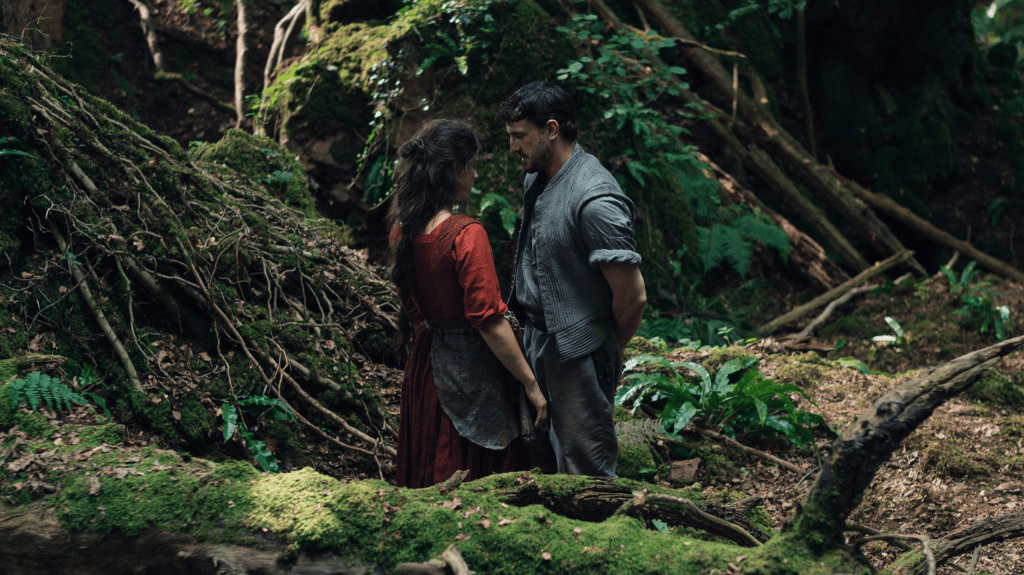
Jessie Buckley and Paul Mescal as Agnes and William

As not so subtly hinted at above, Jessie Buckley not only gives a career best performance, but the decade’s best performance as Agnes. She mixes bombastic yet true to life moments of pain and suffering, with subtle emotions captured in nothing more than a twitch from an otherwise still face in silence. Agnes is so much more than just the little known wife of the world’s greatest playwright. Under Zhao’s direction and Buckley’s embodying of the woman, William fades to the background (despite another excellent turnout from Mescal) and the story of this woman, her love, and her grief matter more in this moment than the dozens of eternal plays and sonnets.

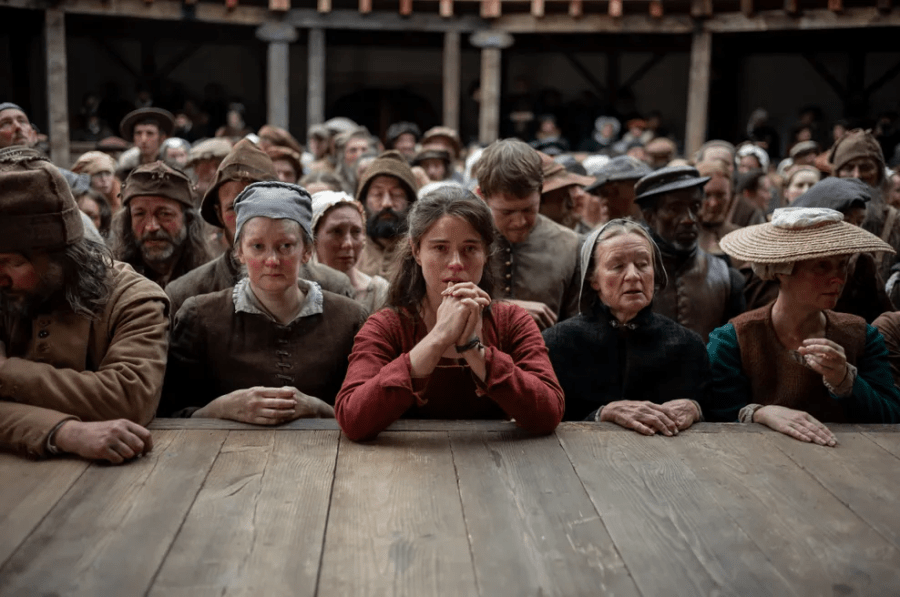
Agnes (Jessie Buckley) at the Globe Theater

Behind an unmatched acting feat by Jessie Buckley, an engrossing story and adaptation by Maggie O’Farrell, and the directorial elegance of Chloé Zhao, Hamnet is an example of the power that cinema can impart. Equal parts engrossing and devastating the film is an emotional experience to behold that will leave an audience changed. My only advice, outside seeing the film as soon as physically possible, is to double, no triple the amount of tissues you think you need to bring along.
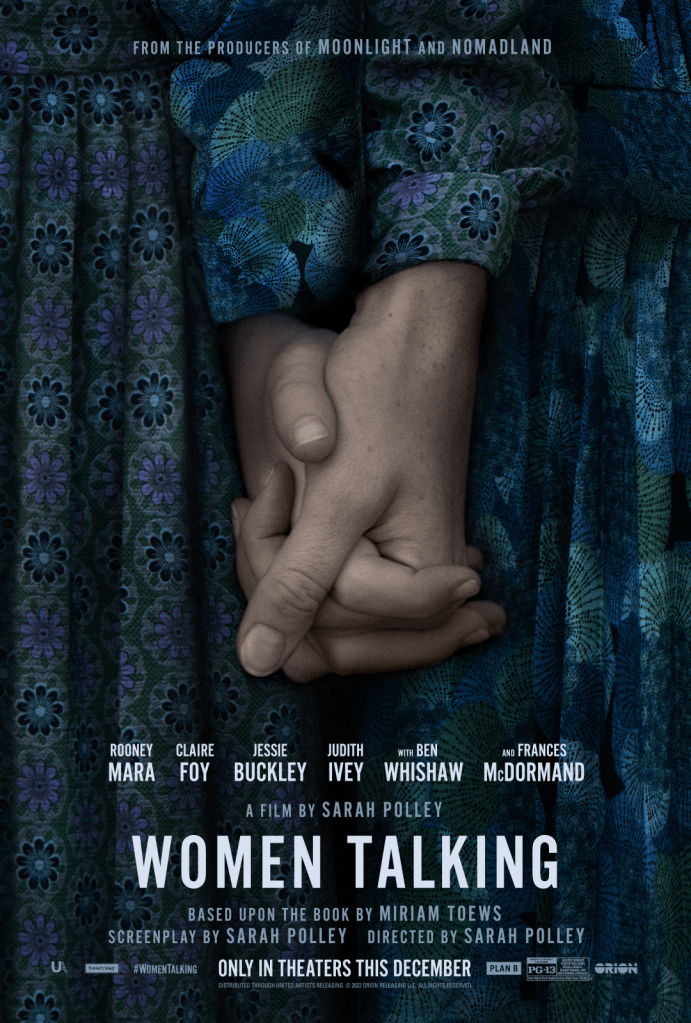
Women Talking: A Literal Masterpiece

Sarah Polley returns to the feature director’s chair for the first time in ten years, Stories We Tell, and her first narrative film since 2011’s Take This Waltz with the awards favorite Women Talking. Her new costume drama utilizes an all-star cast to create a captivating piece of cinema despite the film living up to its title and being almost exclusively women talking.

The film takes place in 2010 in a Mennonite village directly following an incident where the women of the community caught a man tranquilizing and sexually assaulting a woman. The man gives up a list of other men who are guilty of the same practice and is arrested by the local town. When all but one of the other men go to town to bail the guilty parties out, the women of the town gather to discuss their options going forward.

Forgiving the men, staying and fighting them, or leaving are the choices that the women consider, and despite being illiterate they organize a vote for all the women to decide their fate. When the vote returns, it results in a tie between fighting and leaving so three families convene to discuss their eventual decision.

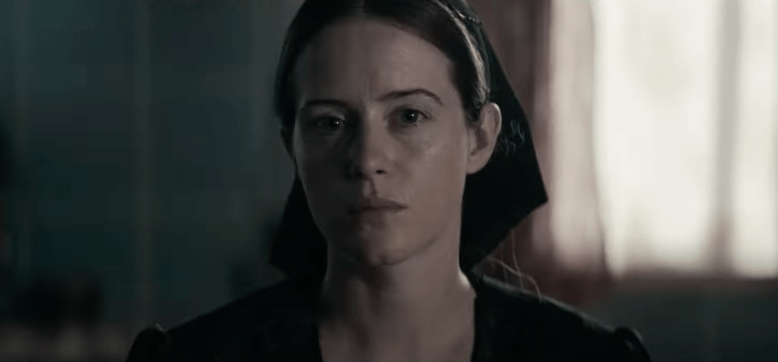
Ona (Rooney Mara), Salome (Claire Foy), Mariche (Jessie Buckley), and Janz (Frances McDormand) along with a handful of other older girls and women and the only man still in the village August (Ben Whishaw), whose only job is to take the minutes of the meeting, lock themselves in a barn to discuss their future.

Janz immediately gives an ultimatum that forgiving the men is the only option she will accept as it is the only way that they can still attain heaven according to their faith. When the rest of the women rebuke the idea, Janz storms off leaving the remaining women to deliberate between the other two options. The film proceeds from there with the women conversing with only one short break for them to perform their traditional duties.  

While the bulk of the film may seem actionless, the emotion displayed by each woman is entrancing as they grapple with an unknown future. Claire Foy declaring that if she should stay, she “will become a murderer” is devastating. Rooney Mara aptly captures the horror of her situation, an unmarried woman who has just realized that her pregnancy was due to the evils of men and not the supernatural. The terror that the women have endured becomes palpable because of the exquisite acting.

Much has been made about the color grading of Polley’s film, and while the decision is stark, it is both not without reason and not as distracting as out of context screen shots make it appear. The washed-out color leaves the film almost monochromatic echoing black and white filmmaking of the past. This homage to an older time reflects the out of time feeling that the Mennonite community exhibits, and especially the ancient mentality that would allow men to do this to women without consequence.

Highlighted by the unnerving acting trio of Mara, Foy, and Buckley Women Talking is a tour-de-force for a post #MeToo world.

★★★★½