A 2021 Film Journey: Day 40

I feel like a broken record, but I spent most of today nursing a fever, so forgive me if today’s post is on the short side. Illness aside, I got out of bed this evening long enough to watch a film and write this post. And like every other day this month, I made sure to watch a film by a Black director for Black History Month.

Clemency (2019, Dir. Chinonye Chukwu)

Image result for clemency

Well, that was bleak. Going into the viewing my only real knowledge of the film was that the film received some Indie Spirit nominations last year and what the word clemency means. While I was prepared for the film to be about death row, I wasn’t prepared for it to be that dark.

Director Chinonye Chukwu does something interesting with the subject in Clemency. When telling the story of a death row inmate hoping to be spared execution, the inmate would be the standard choice for a protagonist. This viewpoint decision forces the audience to grapple with sympathizing with a violent criminal inducing inner turmoil. Chukwu instead focuses on the warden, Bernadine (Alfre Woodard). While this should ostensibly be an easier character to support, it proves to be harder. By the time the film begins, Anthony (Aldis Hodge) has been in prison for 15 years. Whether he is guilty of murder or not is almost irrelevant from an audience point-of-view; what matters is that he is fighting to stay alive while Bernadine, our protagonist, is doing her job preparing to kill him. While she may be following the law and just doing her job, as the one doing the killing in the timeframe in which the film take place her internal struggles mimic our own upon viewing. An interesting take on the subject that I do not plan on visiting again. At least not for a long time.
A 2021 Film Journey: Day 39

Still not feeling particularly good today, so after a full day of work followed by a much-needed nap, there was only time for one quick movie and a short post. Today’s movie was a 2020 film that was on my shortlist to watch before putting together a year end list. While it unfortunately fell through the cracks then, it thankfully fit in perfectly this month for Black History Month.

Miss Juneteenth (2020, Dir. Channing Godfrey Peoples)

Image result for Miss Juneteenth

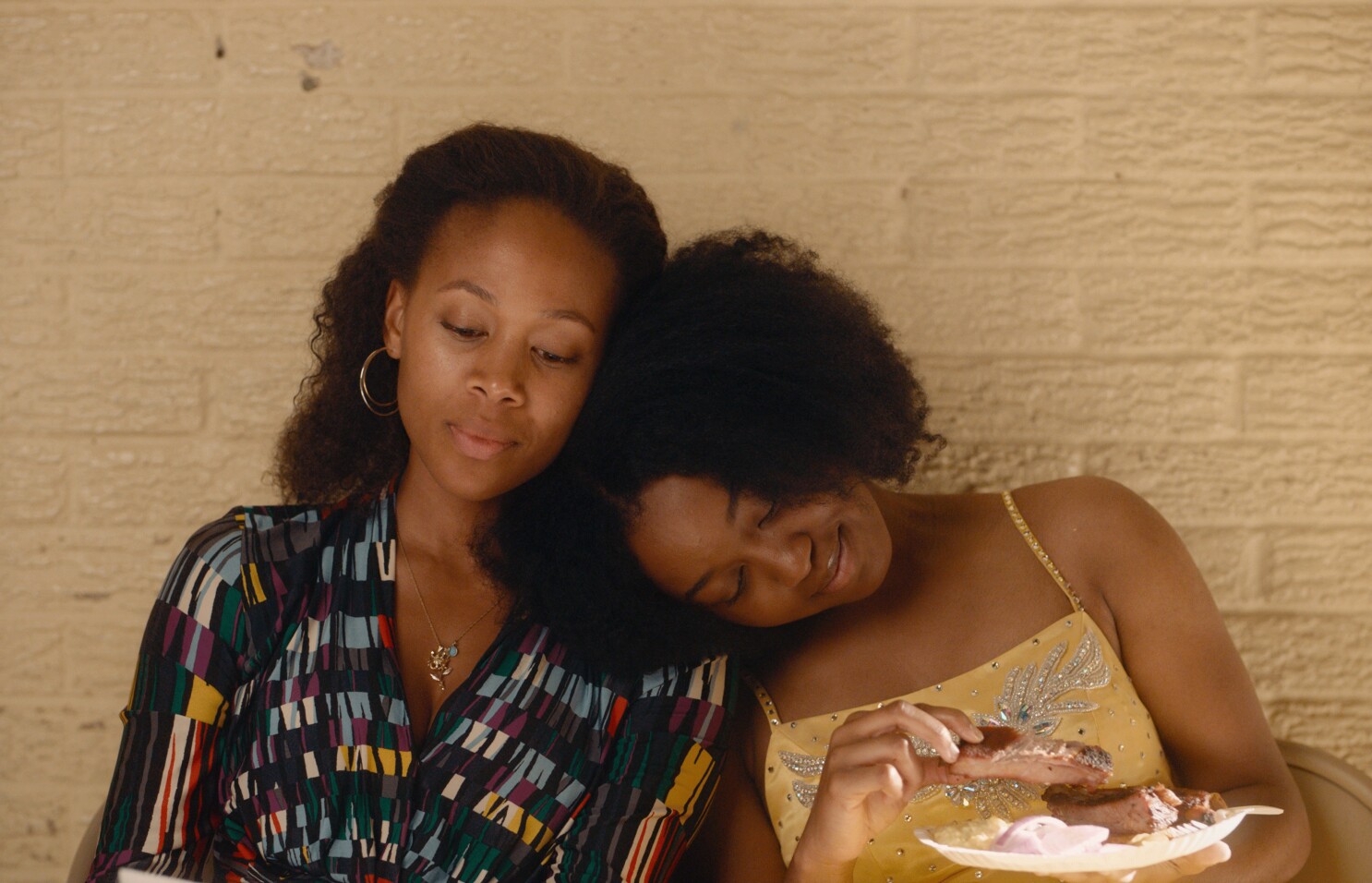
While Turquoise (Nicole Beharie) may be forcing her daughter Kai (Alexis Chikaeze) into the same beauty contest she won as a girl, Turquoise is not a traditional pageant mom. First time director Channing Godfrey Peoples uses the Miss Juneteenth pageant less as a symbol of glitz and glam, but instead as an escape route away from a life of poverty. Unfortunately, in the words of her boss, “ain’t no American Dream for Black folks.”

While invariably, some of the past Miss Juneteenth winners have gone on to great things, even a full ride scholarship to a historically Black college doesn’t guarantee a flawless future. Turquoise never even finished high school, so her scholarship went unused. And yet Kai is pushed into attempting to follow in her mother’s footprints in hopes of finding the mythical escape from a working-class life.

Miss Juneteenth is by and large a solid if not remarkable low budget indie flick. The kind of film that tends to get lost on a streaming service, but if you find it and put it on you end up very pleasantly surprised. The film had a budget of less than $1 million, so while I think it’s merely good not great, it shows a lot of skill from Peoples, and I hope studios will agree and give her a nice budget increase for her second feature.

A 2021 Film Journey: Day 38

Just another one movie weekend day. Like yesterday I slept in much later than I’m used to and today it all makes more sense: I’m getting sick. So even though it was the weekend, I spent most of the day in bed rather than watching a bunch of new movies. And while I did manage to watch one film, I’m still exhausted and am going to cut today’s entry short.

Boyz n the Hood (1991, Dir. John Singleton)

Image result for boyz n the hood

Coming-of-age films are a giant soft spot for me, but far too many of them focus on the coming-of-age of white boys. I’m always looking for a film to tell that type of story but for different people, be they young women, or in the case of Boyz n the Hood, young Black men. The late John Singleton’s first feature works as a brilliant entry into the coming-of-age canon.

The film is broken into two time periods, the first taking up the opening third of the film shows the main characters as young boys. After steeling ends one of the children in jail, the film takes a seven-to-eight-year time skip where the now young men are preparing for their post high school futures and learn what it means to be a Black man in the US. By splitting the film in two, Singleton is able to tell a more complete story about what it means to grow up Black. The country is telling Black people that they are criminals from such a young age that it’s no wonder that it becomes a self-fulfilling prophecy.

Laurence Fishburne plays Furious Styles, the father to Tre (Cuba Gooding Jr.) and father figure to Ricky (Morris Chestnut) Fishburne provides the standout performance for the film, and the monologue against the terrors of gentrification resonate just as strongly today as it must have in 1991. Ricky is shot dead, it’s Fishburne’s acting that sells the potential that Tre may calm down and not seek revenge. And when Tre sneaks out to join the now out of jail Doughboy (Ice Cube) to go out for vengeance, it’s the reminder of Furious’s impassioned plea that see’s Tre return home before it’s too late.

A 2021 Film Journey: Day 37

Happy weekend. I was much more tired than I thought after last week. I ended up sleeping in significantly later than I have in months. A combination of being busy at work and pandemic fatigue is getting to me. With my morning a complete wash, it cut into the time I had available for a movie today. That combined with the film I did watch’s length meant that even though it was a weekend, I only have on movie to talk about today.

Malcolm X (1992, Dir. Spike Lee)

Image result for malcolm x 1992

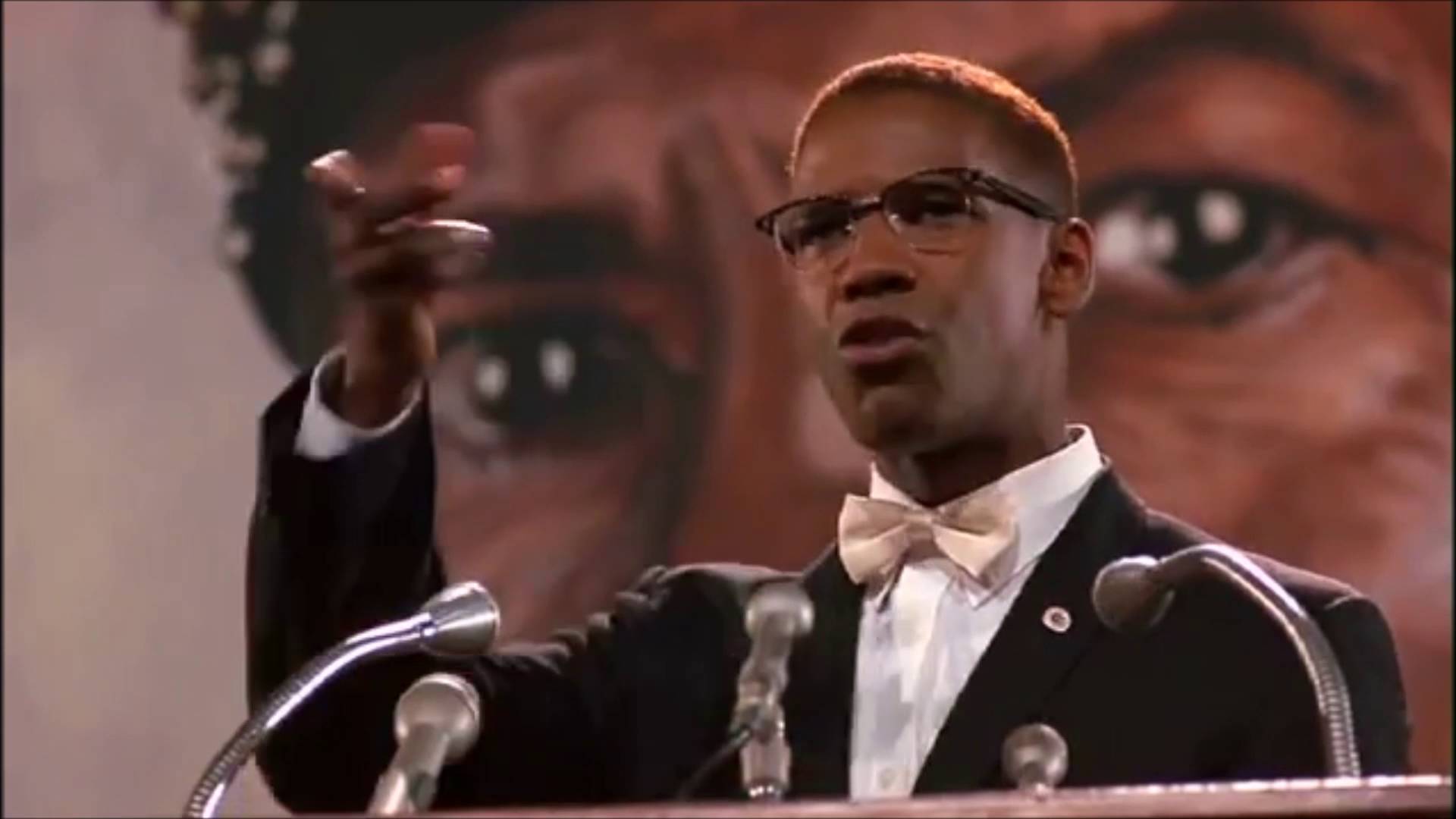
Biopics have an inherent flaw that needs to be addressed in their creation: the subjects of the film live long lives with countless important moments to explore. Even for subjects like Malcolm X who had their life tragically cut short, there’s no way to do them any service while compacting them into a 100-minute runtime. This leads many biopics to feel like a string of major events with little through line. The best biopics tend to work by embracing the limited time and telling a shorter story. Spike Lee decided to address the shortcoming in a different direction. Instead of telling a smaller, representative story, he took over 200 minutes to give X’s story the time it deserved.

In theory Malcolm X still succumbs to the issue with biopics. Even at the extended runtime, it’s still not possible to do the man’s entire life the justice it deserves, but the film’s length does give it more power than the alternative. The film feels like more than just a sequence of vignettes in the man’s life. While after watching it, I may only have a surface level of knowledge of where Malcolm the man comes from, I feel like the film succeeds in it’s telling of where Malcolm’s beliefs come from. For a man like he was, that’s the greatest thing Lee could have accomplished.

As important as Lee’s directorial voice was to the success of Malcolm X, the film could not work without a standout performance in the titular role. Thankfully a peak young Denzel Washington was available to play the civil rights icon. Washington was three years removed from his first Oscar win in Glory (1989, Dir. Edward Zwick), and I’m convince the proximity to it is the only reason that he didn’t win his second portraying X. Washington’s impressive range was a necessity to tell the full story of X’s life. He is equally believable as an 18-year-old coke dealer and 39- year-old Muslim minister. Lee as a director can tend to feel a little overstuffed, but Washington’s depiction of one of the greatest and most important men in history keeps even the three and a half hour epic feeling tight and important.

A 2021 Film Journey: Day 36

For all the fluster I’ve been making about finding Black helmed films on streaming services, I’ve had a handful that I’ve been keeping in my back pocket. Not enough to get me through the month unfortunately, but I find films elsewhere. And for tonight I have a film I’ve been looking forward to since it caused some controversy in its country of origin.

Rafiki (2018, Dir. Wanuri Kahiu)

Image result for rafiki 2018

Late last year when I watched Happiest Season (2020, Dir. Clea DuVall) I told myself that I was kind of done with scared to come out/ unsupportive parents plotline in queer cinema. Gay marriage has been legal in all 50 states for five years now; that story is well trodden and doesn’t need to be rehashed to into oblivion. I’m looking for something new in my queer cinema. That stance needs an important appendment: I’m looking for something new in my US queer cinema. Because in other parts of the world, like Kenya where gay sex can land you in prison for years, this is still the story they need to tell.

Rafiki at first seems to be the exact kind of paint by numbers romance that I’ve grown tired of. An initial conflict is hinted at for our two lovers when Kena’s (Samantha Mugatsia) friend makes homophobic comments against a known gay man. This combined that Kena and Ziki’s (Sheila Munyiva) fathers are political rivals sets up a completely predictable star-crossed lovers’ story.

It’s when the film’s climax hits that Rafiki develops in a way more locally specific. Director Wanuri Kahiu pulls no punches with her depiction of the oppressively anti-gay culture. When Kena and Ziki are caught kissing they attempt to run away in vain. When members of the community find them, it’s not to ridicule them, or to sensationalize their relationship for political gossip, but to attack the girls and leave them in a bloody mess on the ground. When the police arrive, it’s not to arrest their assailants, but to arrest the girls for being in a same-sex relationship. It’s in this moment that Kahiu asserts her purpose in making this film. She forces the audience member in a more accepting world to understand that the fight for equal rights is not over, and to help viewers in her home country to work on changing.

A 2021 Film Journey: Day 35

Another late night tonight as I couldn’t get my head into a movie until late. Tonight I further complicated things by picking a movie in excess of two hours, but it was at least on my list and I knew where it was so I didn’t have to repeat the last two night’s struggle of trying to find a Black helmed film.

The Forty-Year-Old Version (2020, Dir. Radha Blank)

Image result for the forty year old version

Watching The Forty-Year-Old Version, I kept thinking of Spike Lee’s first feature She’s Gotta Have It (1986), and low and behold writer, director, and star Radha Blank produced 2019 TV Series of the same name. Knowing that the influence is likely intentional, helps to clarify my thoughts on the film. Blank is a wonderfully talented creative, but at times the talent needs another voice to reign it in. At a hair over two hours, the film feels a bit overstuffed for the content (something that also frequently plagues Lee). Don’t get me wrong, I really enjoyed 90% of this film, that just makes the last 10% all the more tragic.

Blank is a brilliant creator, and her fingerprints are all over the film. Not only did she write, direct, and star in the film, but the film feels especially personal given that she shares a name with her character (for clarity I’ll be using Radha to talk about the character and Blank to talk about the person). Writing her character as a playwright allows Blank to take many artistic flourishes with the film. While the film is shot in black and white, it includes quick slideshow-esque cuts to explain Radha’s thoughts.

Another example of Blanks artistic flare is her depiction of the white characters involved in the making and watching of her play. They are portrayed as awful. This was distracting for most of the film, but eventually I think the purpose unlocked for me. Much like Radha’s initial rap, it’s not supposed to be a realistic depiction, but rather a comment on white people’s tendency to fetishize Black suffering. The decision is another example of Blank’s significant talent but also of the film’s need for a second set of eyes.

A 2021 Film Journey: Day 34

Today was the closest that I’ve come to not making my goal for the day as part of this project. I had to work a couple hours late tonight, and afterwards I was struggling to focus on anything at all. It wasn’t until 8pm until I forced myself to start looking for a movie to watch, and I was immediately reminded of how difficult it is to find a film by Black voices. I mentioned that briefly yesterday, but the fact that most films in streaming services’ Black History Month sections are directed by white people is appalling. I don’t want to use this as an excuse, and I will endeavor to watch as many Black helmed films as possible this month, but it was just an added frustration to a day that was already going rough. Regardless I found a film that met my criteria and then some and finally sat down to watch it.

Cane River (1982, Dir. Horace Jenkins)

Image result for cane river

While it took me a while to find a Black made film, the one I found was one of the most Black made films possible. Cane River was made not only by a Black director, Horace Jenkins, but by an all Black crew. The film itself has a very low budget, made-with-your-friends-in-the-backyard feel to it; that doesn’t make it a bad film in anyway, it just requires some recalibration in viewing. The less than stellar sound mixing is to be expected without a major studio to edit the excessive diegetic sound out but dismissing the film because of that is nothing but gatekeeping Black creators out. Instead of fixating on those deficiencies, I choose to evaluate the film on the aspects that were in its control.

What Cane River is, is a tightly crafted romance between two young people in a Romeo and Juliet influenced story. Peter (Richard Romain) comes from a wealth Black family that may or may not have been slave owners while Maria (Tommye Myrick) comes from a working-class family. Despite the different upbrings, the two quickly fall for each other. While love at first sight stories can frequently seem farfetched, Romain and Myrick have a natural chemistry of individuals who love each other but must be guarded in their feelings, a perfect match for the story.

A unique aspect to Cane River is that it has an almost musical quality to it. While the actors themselves never sing and the music is strictly non-diegetic, when a song comes on the plot is paused and the music is brought to the forefront. Each song is played nearly as a music video and less a continuation of the film, but in a movie so dedicated in portraying a Black story, highlighting Black New Orleans singer Phillip Manuel makes sense with the film’s exploration of Black culture.

A 2021 Film Journey: Day 33

After a somewhat lacking start to the month, I wanted to make sure tonight’s offering was a better film. Looking through films today for something to watch, I realized it is not going to be as trivial to find Black helmed films as I initially hoped. While many steaming services have a Black History Month section, their definition of what counts is rather generous. But I have a list to get through, so it shouldn’t be much of an issue. Tonight’s viewing was a 2020 film that didn’t come out until I wanted to have my list finalized so I put it off until today when it fits the theme perfectly.

One Night in Miami (2020, Dir. Regina King)

One Night in Miami Trailer: Regina King's Oscar Contender from Amazon |  IndieWire

It’s never a great surprise when a great actor moves behind the camera and ends up creating a great acting film. Oscar winner Regina King is another such actor turned director with her debut One Night in Miami. This substance over style approach betrays a slight insecurity over her own directorial skills, but more than makes up for that by extracting four solid to great performances from her lead actors.

A purely fictitious story of an imagined night between feal-life friends Malcolm X (Kingsley Ben-Adir), Mohammad Ali (Eli Goree), Sam Cooke (Leslie Odom Jr.), and Jim Brown (Aldis Hodge), One Night in Miami places it’s four larger than life icons in a single motel room for most of the runtime. In here they discuss and argue what each of their place in civil rights movement is and what it should be. Ben-Adir is the easy standout as the civil rights leader. This is partially because of the characterization of the four’s conversation requiring X to be the central figure but is due to Ben-Adir’s subdued depiction of the man. Goree and Odom Jr. as Ali and Cooke flank Ben-Adir’s X with more caricatured versions of their roles creating a welcome contrast, keeping the film moving at a brisk pace. Hodge may be the clear weak link of the four, but his performance has wonderful flashes, and he was given the least to do in the screen play. Together the four build off each other wonderfully under King’s actor first direction.

A 2021 Film Journey: Day 32

Time for month number two. The weekend disappeared far too quickly, and I never fully woke up today, but my work wouldn’t let me take the day off, so there’s no way I’d take today off from here. With the new month, comes Black History Month. For the month, I’m going to do my best to feature films by Black directors. I can’t promise that everything I watch will be by one, but I’m going to endeavor for at least the majority of them to be from Black voices.

See You Yesterday (2019, Dir. Stefon Bristol)

See You Yesterday” Filmmakers Use Sci-Fi to Discuss Police Brutality - YES!  Magazine

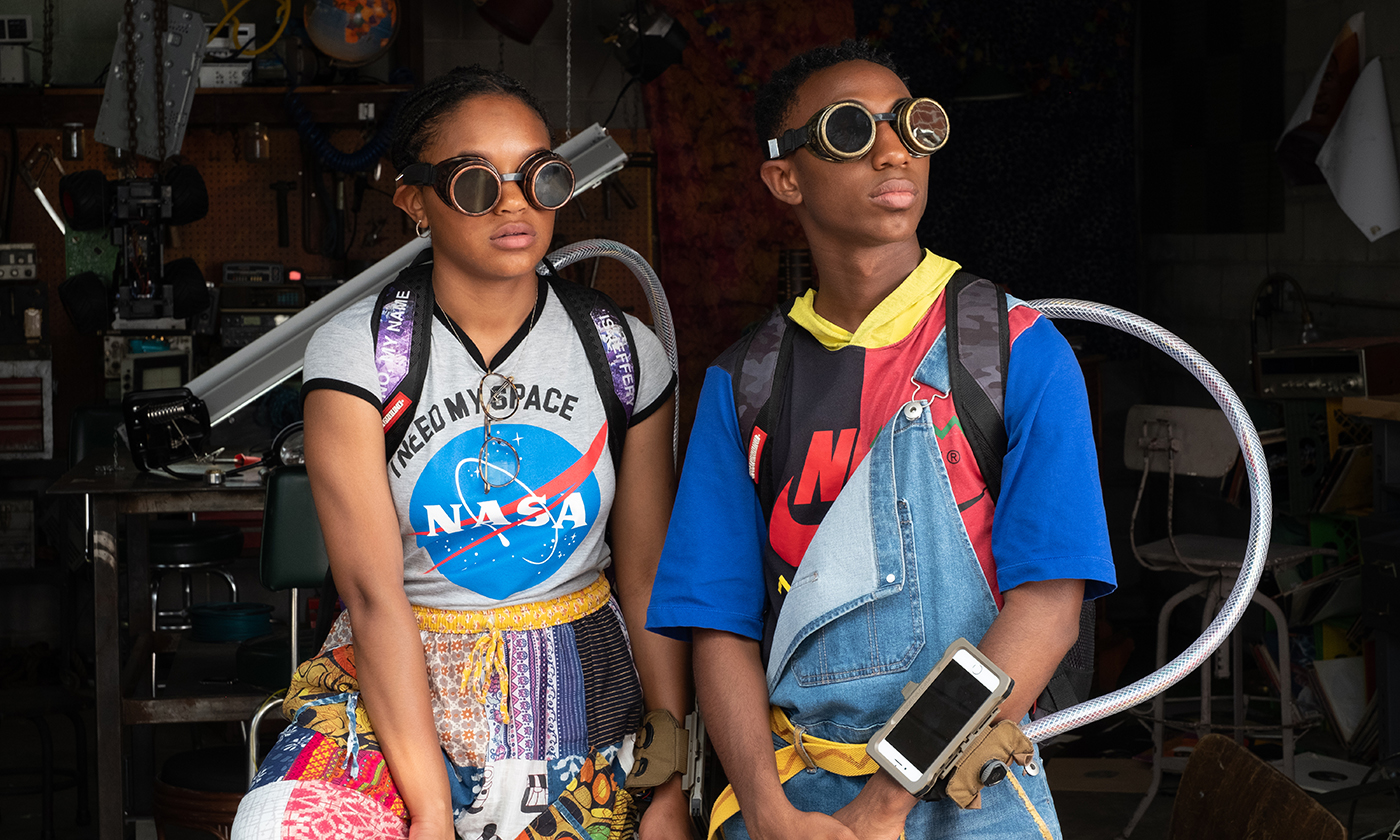
See You Yesterday is essentially Back to the Future (1985, Dir. Robert Zemeckis) meets The Hate U Give (2018, Dir. George Tillman Jr.). Together they combine into a high school time travel comedy (complete with Michael J. Fox cameo) that is too real to be fun and an issue piece that interjects too much comedy to make it’s point.

I really wanted to like this movie. I was fully engrossed for the first 20 minutes or so of it when it was just the happy-go-lucky buddy time travel movie. The depiction of brilliant people of color just existing in their working-class neighborhood was refreshing even if the plot lines were a little on the juvenile side. Everything gets messy when the film attempts to balance a critique on police brutality on top of that juvenile styled comedy. While Black people are still being killed by cops on what seems like a daily basis, I’d like the topic to be handled with more gravitas than See You Yesterday was able. A time travel approach to the topic is not inherently a flawed approach, but the tonal dissonance this film experienced prevented me from appreciating the film.

A 2021 Film Journey: Day 31

I broke with my stated goal for today. Today was supposed to be another full day of watching films leaving The Criterion Channel, but after the first film being from that selection, I made a pivot to watch my first 2021 film with hours remaining in the first month of the year.

Yentl (1983, Dir. Barbra Streisand)

Yentl | George Eastman Museum

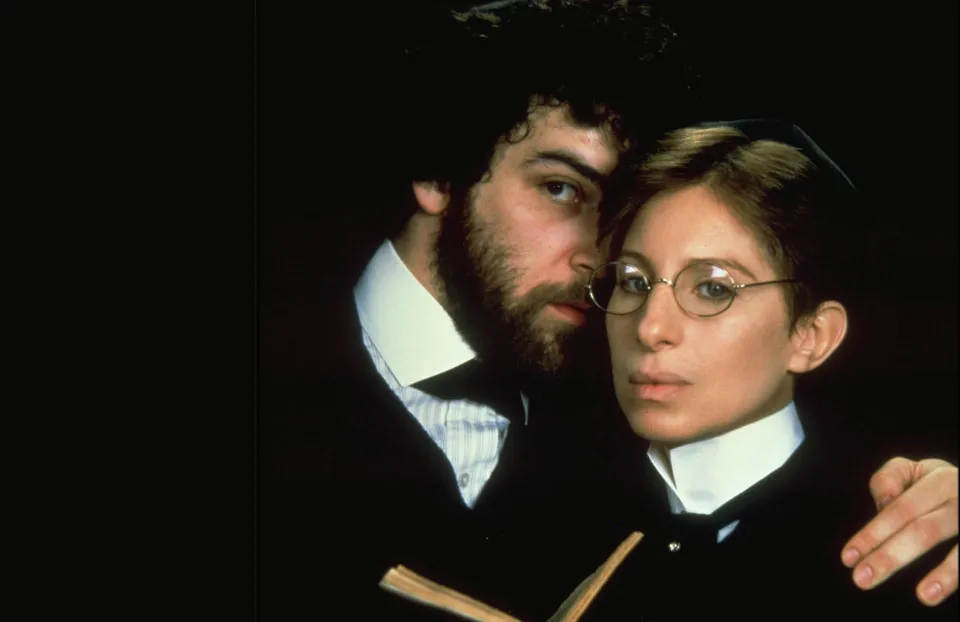
I feel like had Streisand wanted, she could have held most of the Disney renaissance in court over the films’ similarities to Yentl. A musical where a young person undertakes a hidden identity to seek out a more fulfilling life and, at some point, sings an “I want” song is essentially the one sentence plot of every film from The Little Mermaid (1989, Dir. Ron Clements and John Musker) to Mulan (1998, Dir Tony Bancroft and Barry Cook). The Mulan comparison is especially relevant as the hidden identity in Yentl also involves the titular character cross dressing to be taken for a man.

All the comparisons to Disney films aren’t necessarily a bad thing. Disney went to that well repeatedly because it’s a reliable bit of storytelling. A person longing for more than they are allowed feeds into an audience’s internalized insecurities, and Streisand sells it better than anyone. Her enigmatic persona and booming soprano create a welcoming picture, even if the subject matter, wanting to study Talmudic Law, is a little opaque.


After four feature films for The Criterion Channel in three days, I couldn’t let the new Carey Mulligan film go unwatched any longer.

The Dig (2021, Dir. Simon Stone)

STREAMING! — The Dig [2021] FULL MOVIE | The Dig — 2021 “B.B.C —  D.O.W.N.L.O.A.D”

January films aren’t supposed to be this good. Maybe that assumption will prove to be dated in a post-COVID world, but at least in the old world, January was a dumping ground for studios to drop films with little prospects. And while I don’t believe that The Dig will be making any big Oscar plays, it still greatly outperformed my expectations for a film from this release slot.

As ready to go to bat for the film as I am, it’s not unimpeachable. The love triangle between Lily James, Ben Chaplin, and Johnny Flynn is more distracting than of benefit to the film, but my misgivings are diminutive in respects to what does work with the film. What works in the film are the performances. Carey Mulligan and Ralph Fiennes both turn in fantastic performances, and while I may not be the biggest fan of their plot threads, Lily James and Johnny Flynn give wonderful supporting roles. Mulligan’s performance in particular is brimming with emotional depth. She perfectly balances her character’s poshness with her personal strife and an unending curiosity. A wonderful first film of the year.