11/25/2025 – Train Dreams

After missing the one-night engagement Train Dreams had in theaters in Seattle as part of the Seattle Film Critics Society PNW Awards, my hopes were that the film would be good but not so good that I would regret missing my chance to see it on the big screen. At least one of my wishes was granted.

Based on a Denis Johnson novella, writer/ director Clint Bentley along with co-writer Greg Kwedar adapt Johnson’s work of the same name in a way that is both visually arresting while still capturing the prose that is often relegated exclusively to the written word. Some of these prose-like feelings come from implementing Will Patton as a voiceover narrator. While I generally feel like voiceover is a cheap distraction from a movie used to cover up holes in the screenplay, it works well for Train Dreams which is approximating a visual poem more than a traditional movie.

The ethereal setting of Train Dreams

Robert Grainier (Joel Edgerton) is a quiet man working as a laborer in the Pacific Northwest in the early 1900s. He takes seasonal work building infrastructures and logging where he meets other men who have a profound impact on his beliefs and outlook on life, though he remains largely solitary. During an off season, his isolation is broken when he meets and falls instantly in love with Gladys (Felicity Jones). Together they build a home outside of town and upon having a child, Kate, live a life full of meaning and love together. However, with minimal paid opportunities in town, Robert does have to leave Gladys and Kate for long periods of time during logging season to provide for them until they can save enough money to build a small business of their own on their acre. After one of his long absences working, he arrives to find his home burned to the ground and his family missing. Reverting to his isolationist tendencies, Robert struggles to find his meaning in life once again.

Felicity Jones and Joel Edgerton as Gladys and Robert Grainier

While the cinematography, direction, score, and editing all play a significant part in creating the ethereal state that Train Dreams exists in, the performance by Edgerton is what creates such an emotional experience. Edgerton taps into the meekness of Robert in his acting. He feels no need to speak to fill the empty spaces but instead takes time to listen and process what he has heard. Wordless looks and subtle facial movements just barely noticeable through the scraggly facial hair expose the soul of the character, showing his gentleness and astuteness.

Edgerton’s career best performance is still further enhanced by Bentley’s handling of tone and pacing to create a film that feels at place in the beautiful Washington woods where it was shot. Train Dreams deserves to be appreciated as one appreciates the nature in which it is set. By immersing oneself into it and absorbing it with no outside distractions, just accepting the peace that it brings.

11/24/2025 – Nouvelle Vague

2025 has been the year for indie auteurs to be especially prolific. First Steven Soderbergh releases Presence and Black Bag in the first quarter of the year, and now Richard Linklater releases Nouvelle Vague less than a month after Blue Moon’s release. I was lucky enough to see Blue Moon in theaters a few weeks ago, and it is all but certain to make my best films of the year list come January, so I entered his second film of the year with high expectations.

Nouvelle Vague translates to New Wave which is an apt title for a film about the making of one of the defining French New Wave films: Jean-Luc Godard’s Breathless. Breathless came out in 1960, two years (or five if you count Agnès Varda’s La Pointe Courte) into the French New Wave movement. While Godard’s debut was not the beginning of the movement, it was a step to the more radical and revolutionary side of the movement, so it does make sense to signal the film out.

Guillaume Marbeck as Jean-Luc Godard

Unfortunately, while Breathless is a groundbreaking, convention shattering piece of cinema, Linklater did not have similarly lofty goals for his fictional behind-the-scenes telling of its creation. Linklater is a student of film and as such has a lot of reverence for the film, but other than paying his respects to the late Godard does not have much to say in Nouvelle Vague. He casts the Cahiers du Cinéma writers and future filmmakers as the cool outsiders who disrespect the current film industry because they know what art should be. History, and I, agree with that sentiment in hindsight, but it does not stop the characters of Godard (Guillaume Marbeck), Truffaut (Adrien Rouyard), Chabrol (Antoine Besson), and Schiffman (Jodie Ruth-Forest) from coming across as unbearably pompous.

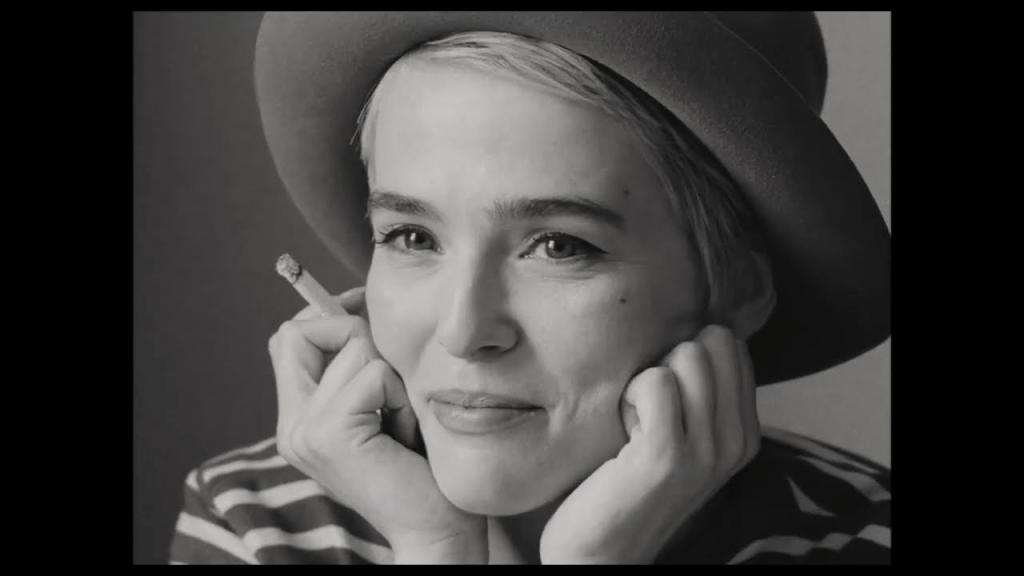
Zoey Deutch as Jean Seberg

Marbeck’s depicts Godard as such an unlikable cad which does match my understanding of the director himself, but it also becomes grating as the film continues with him in every scene constantly talking. The only truly likable character in the film is Jean Seberg (Zoey Deutch), and while Deutch is excellent Linklater portrays her as naïve and unable to understand the genius that is Godard. Linklater wants the viewer to know that Godard was a genius who changed cinema for the better, and he is not wrong that Godard’s creations are that impressive and important. I am just done with aggrandizing arrogant men who think themselves a god. Instead, I choose to celebrate the work while acknowledging that creators can be flawed.

11/23/2025 – Hedda

Much like yesterday, I’ve felt the need to explore the wonders of sapphic cinema, and while yesterday I visited the very beginning of lesbians on screen, today I am visiting potentially the most recent lesbian take on Nia DaCosta’s on the classic Henrik Ibsen play Hedda Gabler or in this iteration just Hedda. DaCosta chooses to gender swap Eilert Lövborg the titular character’s previous love interest with Eileen Lövborg giving the film a new sapphic twist.

Hedda Gabler/Tesman (Tessa Thompson) is a woman unenthused with her life despite her husband George (Tom Bateman) going far beyond his means to give her everything she could possibly want including a giant, opulent home he cannot afford. While she seems to be initially dreading the party she and her husband will be hosting, a call from an old acquaintance Eileen Lövborg (Nina Hoss) cause her outlook on the night to change instantly. With a new outlook on the evening, Hedda begins manipulating the actions and emotions of her guests to bring about her goals, and respark her past love for the fairer sex.

Tessa Thompson as the titular Hedda Gabler/Tesman

DaCosta is clearly familiar with the concept of the “disaster lesbian” as Hedda not only fits the archetype to the t but also possesses the uncanny ability to bring out the disaster in the other lesbians around her. Tessa Thompson brings Hedda to life with craftiness and plenty of alure that convincingly captivates the attention of every party guest. Nina Hoss despite being a supporting actress has the most interesting and challenging roll which she nails every part of. She goes from cold and in control, to a messy drunk, to a suicidal wreck over the course of the party, and every turn is delivered in a way such that she creates a complex character who holds multitudes.

Nina Hoss as Eileen Lövborg

While I appreciate the acting decisions by both actresses, they do not exactly mesh. I find it hard to believe that the confident Eileen who appears at Hedda’s party could be swayed into drinking (she is a recovered alcoholic) so easily, especially with her current creative and romantic partner Thea (Imogen Poots) urging her to stay strong and resist. Hedda does not come across as a mastermind who can expertly pull the strings to get her way, but as a hurt lovestruck puppy who is making decisions on vibes. While I appreciate both performances, they do not fit the screenplay that was handed to them.

The pieces of the film from behind the camera were also rather hit or miss. Hildur Guðnadóttir continues to be one of the best score composers working today as her score has significant propulsion yet and off kilter sparticness that matches with Thompson’s Hedda exactly. Other parts of the filmmaking process, however, feel rather like they come from a director with endless talent’s first film. They show an intuition for interesting effects yet an imperfect implementation. Specifically, the camera moves in unique ways and captures scenes through unique techniques and angles which initially create diversity and interest when viewing. However, after the first 20 minutes or so they prove to be more of a distraction than anything else.

While this review may have veered into the negative, I still believe that the film was good though not great. Fun performances, even if they do not relate perfectly, will always be an entertaining watch, and who doesn’t need more sapphic messiness in their life? Hopefully by watching films like Hedda we can avoid becoming the disaster lesbian in real life.

11/22/2025 – Mädchen in Uniform

Lately I have been feeling a romantic yearning re-enter my life, and with it has come the need to expand my sapphic cinema knowledge. While I have seen quite a few in the genre, there are quite a few from cinema’s history that I have missed out on, and if I am going to fill some holes, I might as well start at the beginning.

Mädchen in Uniform directed by Leontine Sagan and Carl Froelich is a German film from 1931 that is largely considered to be the first explicitly lesbian feature length film. Created in a Germany that soon would fall to Hitler and the Nazi party and their violent hatred of anything queer, Mädchen in Uniform feels like something far ahead of not only it’s time, but more transgressive than films would be for the following 40 years with the advent of Hays Code in Hollywood four years later.

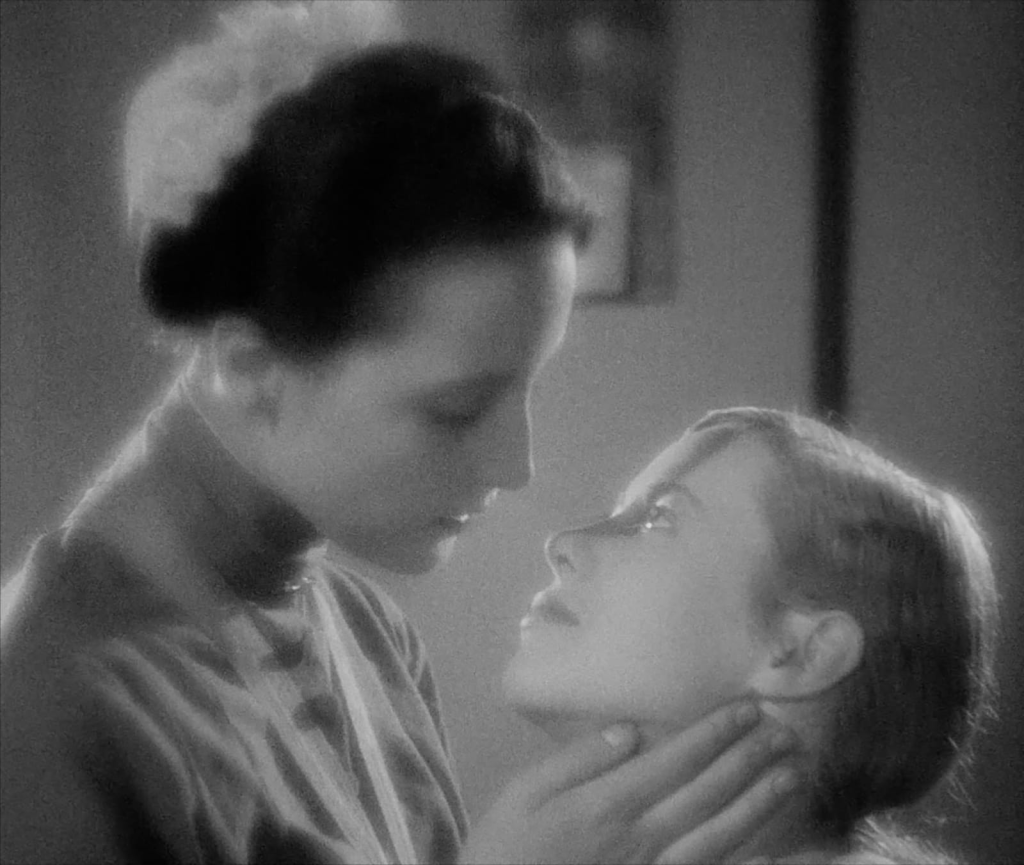
Set in a boarding school that is light on funds and strict on discipline, Mädchen in Uniform follows Manuela (Hertha Thiele) as she is enrolled in an all-girls boarding school. Despite initially appearing meek in front of teachers she quickly fits in with the other girls, including sharing many of their crushes on one of the teachers, Fräulein von Bernburg (Dorothea Wieck), which quickly turns into complete infatuation when Bernburg gives her special attention.

Dorothy Wick and Hertha Thiel sharing an intimate moment as teacher and student, Fräulein von Bernburg and Manuela

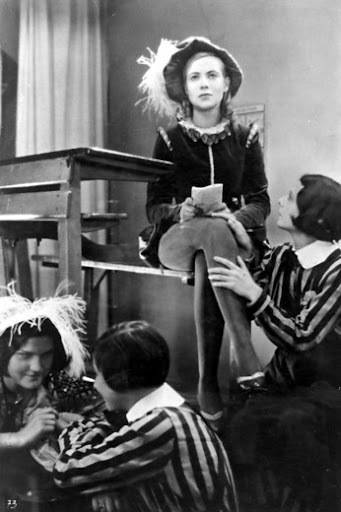
After portraying a man in a school play, where ironically she was allowed to show her legs more than the allowed girls uniforms, and getting significant attention that could be construed as sexual for a young girl going through puberty, she gets drunk on the punch that the cooks spiked for the girls. While intoxicated, Manuela loudly exclaims her feelings for and reading of the private moments she has experienced with Bernburg, but when the headmistress overhears immediate consequences for both student and teacher follow.

Manuela in her costume before staring in the play.

Having a woman as the primary director (Froelich is listed as a supervisor) keeps the film in the spirit of a childhood crush rather than a leud, titillating affair. Having a crush on an older woman who shows compassion and cares for us in a way that no one has before is a rite of passage for any girl with sapphic tendencies. Sagan captures the lovesickness of youth in a beautiful and surprisingly candid way for the time.

While the film clearly lacked the more technical cinematic language we have today with odd edits between over the shoulder shots and tight closeups, the film is well paced and builds to perfectly written and shot climax. When considering the place and time that this film was released, one line from Fräulein von Bernburg  stands out as not only progressive for the time, but would still be seen as radical from some groups today: “The spirit of love, it takes on a thousand forms.”