Even two years ago I would never have missed a big theatrical A24 release, but as Neon continues to rise, A24’s luster has started to dim. They have released more than their fair share of busts this year and as such when the new Dwayne Johnson headed Oscar hopeful biopic was released to a less than stellar reception, it dropped down my priority list, but with Benny Safdie at the helm I was going to make my way around to it eventually.
The Smashing Machine is a narrative remake of a 2002 documentary of the same name. Johnson takes over the role of Mark Kerr, an M.M.A. fighter from the earliest days of the UFC. Supported by his partner Dawn (Emily Blunt) and friend/ trainer Mark Coleman (Ryan Bader) Kerr fights not only the competition but also his demons as he strains to remain in control.
Johnson’s performance is the standout component of the film. He was looking for a way to prove that he was an actor and not just a movie star, and while the film’s poor performance will likely deny him the Oscar nomination that he was gunning for, he has provided a strong proof of concept that he is an actor worth respecting. From intense focus to exasperated boyfriend to giddy friend he hits unique notes throughout the film while still making Mark feel like a complete character.
Dwayne Johnson as Mark Kerr
While many biopics fall for the trap of trying to fit too much into a single film, The Smashing Machine marks the rare occasion in which a little more scope would have been appreciated. The film focuses on such a short time period, a single Japanese tournament, that it is difficult to grasp the level of fame Kerr possessed at the time. This may have been less on an issue in the documentary as the audience would likely be self-selected to be fans of the sport, but for a wide release awards hopeful more context on the state of the sport and Mark’s place in it would have gone a long way. Similarly, it was very hard to get a grasp on the relationship between Kerr and Dawn. They both came across as manipulative and toxic in the small amount of time they interacted on screen, yet the epilogue exclaimed that they were married and together for years, which implies they might have been right for each other.
Emily Blunt as Dawn with Dwayne Johnson
The Smashing machine is a frustrating film. Dwayne Johnson excels in his most serious role to date, yet the film does not feel like it is solid enough to support the performance. The film feels like the 4th episode of a six episode docuseries, and while I still land on the side of recommending it, it is hard not to be disappointed that the film did not meet Johnson’s performance.
After missing the one-night engagement Train Dreams had in theaters in Seattle as part of the Seattle Film Critics Society PNW Awards, my hopes were that the film would be good but not so good that I would regret missing my chance to see it on the big screen. At least one of my wishes was granted.
Based on a Denis Johnson novella, writer/ director Clint Bentley along with co-writer Greg Kwedar adapt Johnson’s work of the same name in a way that is both visually arresting while still capturing the prose that is often relegated exclusively to the written word. Some of these prose-like feelings come from implementing Will Patton as a voiceover narrator. While I generally feel like voiceover is a cheap distraction from a movie used to cover up holes in the screenplay, it works well for Train Dreams which is approximating a visual poem more than a traditional movie.
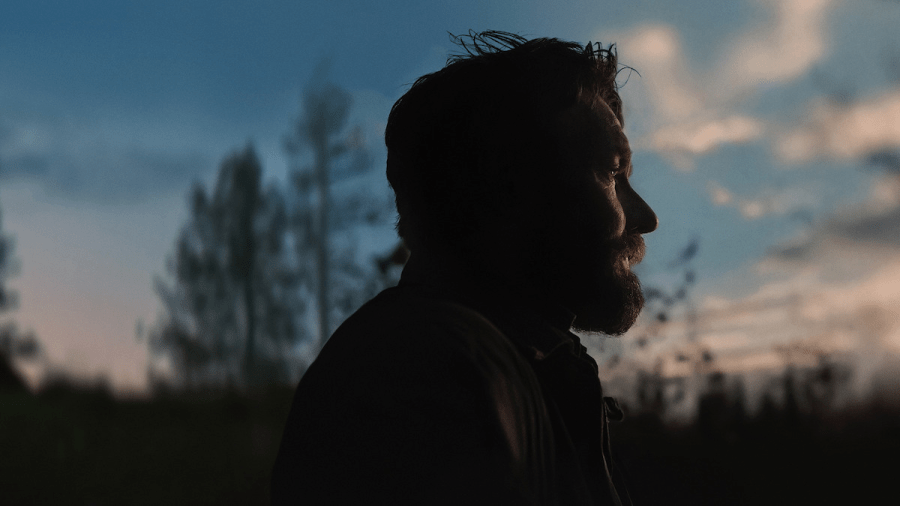
The ethereal setting of Train Dreams
Robert Grainier (Joel Edgerton) is a quiet man working as a laborer in the Pacific Northwest in the early 1900s. He takes seasonal work building infrastructures and logging where he meets other men who have a profound impact on his beliefs and outlook on life, though he remains largely solitary. During an off season, his isolation is broken when he meets and falls instantly in love with Gladys (Felicity Jones). Together they build a home outside of town and upon having a child, Kate, live a life full of meaning and love together. However, with minimal paid opportunities in town, Robert does have to leave Gladys and Kate for long periods of time during logging season to provide for them until they can save enough money to build a small business of their own on their acre. After one of his long absences working, he arrives to find his home burned to the ground and his family missing. Reverting to his isolationist tendencies, Robert struggles to find his meaning in life once again.
Felicity Jones and Joel Edgerton as Gladys and Robert Grainier
While the cinematography, direction, score, and editing all play a significant part in creating the ethereal state that Train Dreams exists in, the performance by Edgerton is what creates such an emotional experience. Edgerton taps into the meekness of Robert in his acting. He feels no need to speak to fill the empty spaces but instead takes time to listen and process what he has heard. Wordless looks and subtle facial movements just barely noticeable through the scraggly facial hair expose the soul of the character, showing his gentleness and astuteness.
Edgerton’s career best performance is still further enhanced by Bentley’s handling of tone and pacing to create a film that feels at place in the beautiful Washington woods where it was shot. Train Dreams deserves to be appreciated as one appreciates the nature in which it is set. By immersing oneself into it and absorbing it with no outside distractions, just accepting the peace that it brings.
2025 has been the year for indie auteurs to be especially prolific. First Steven Soderbergh releases Presence and Black Bag in the first quarter of the year, and now Richard Linklater releases Nouvelle Vague less than a month after Blue Moon’s release. I was lucky enough to see Blue Moon in theaters a few weeks ago, and it is all but certain to make my best films of the year list come January, so I entered his second film of the year with high expectations.
Nouvelle Vague translates to New Wave which is an apt title for a film about the making of one of the defining French New Wave films: Jean-Luc Godard’s Breathless. Breathless came out in 1960, two years (or five if you count Agnès Varda’s La Pointe Courte) into the French New Wave movement. While Godard’s debut was not the beginning of the movement, it was a step to the more radical and revolutionary side of the movement, so it does make sense to signal the film out.
Guillaume Marbeck as Jean-Luc Godard
Unfortunately, while Breathless is a groundbreaking, convention shattering piece of cinema, Linklater did not have similarly lofty goals for his fictional behind-the-scenes telling of its creation. Linklater is a student of film and as such has a lot of reverence for the film, but other than paying his respects to the late Godard does not have much to say in Nouvelle Vague. He casts the Cahiers du Cinéma writers and future filmmakers as the cool outsiders who disrespect the current film industry because they know what art should be. History, and I, agree with that sentiment in hindsight, but it does not stop the characters of Godard (Guillaume Marbeck), Truffaut (Adrien Rouyard), Chabrol (Antoine Besson), and Schiffman (Jodie Ruth-Forest) from coming across as unbearably pompous.
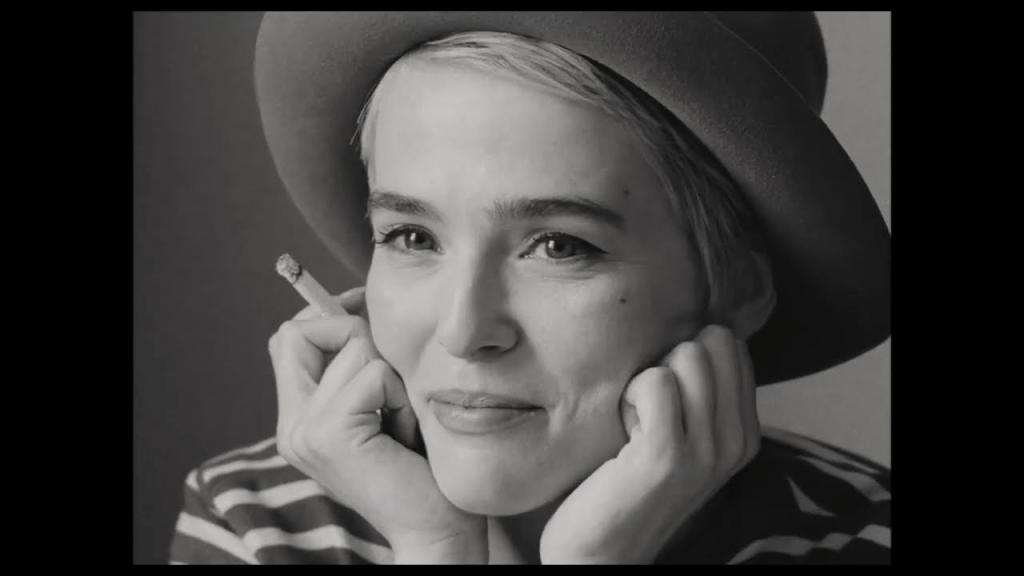
Zoey Deutch as Jean Seberg
Marbeck’s depicts Godard as such an unlikable cad which does match my understanding of the director himself, but it also becomes grating as the film continues with him in every scene constantly talking. The only truly likable character in the film is Jean Seberg (Zoey Deutch), and while Deutch is excellent Linklater portrays her as naïve and unable to understand the genius that is Godard. Linklater wants the viewer to know that Godard was a genius who changed cinema for the better, and he is not wrong that Godard’s creations are that impressive and important. I am just done with aggrandizing arrogant men who think themselves a god. Instead, I choose to celebrate the work while acknowledging that creators can be flawed.
Much like yesterday, I’ve felt the need to explore the wonders of sapphic cinema, and while yesterday I visited the very beginning of lesbians on screen, today I am visiting potentially the most recent lesbian take on Nia DaCosta’s on the classic Henrik Ibsen play Hedda Gabler or in this iteration just Hedda. DaCosta chooses to gender swap Eilert Lövborg the titular character’s previous love interest with Eileen Lövborg giving the film a new sapphic twist.
Hedda Gabler/Tesman (Tessa Thompson) is a woman unenthused with her life despite her husband George (Tom Bateman) going far beyond his means to give her everything she could possibly want including a giant, opulent home he cannot afford. While she seems to be initially dreading the party she and her husband will be hosting, a call from an old acquaintance Eileen Lövborg (Nina Hoss) cause her outlook on the night to change instantly. With a new outlook on the evening, Hedda begins manipulating the actions and emotions of her guests to bring about her goals, and respark her past love for the fairer sex.
Tessa Thompson as the titular Hedda Gabler/Tesman
DaCosta is clearly familiar with the concept of the “disaster lesbian” as Hedda not only fits the archetype to the t but also possesses the uncanny ability to bring out the disaster in the other lesbians around her. Tessa Thompson brings Hedda to life with craftiness and plenty of alure that convincingly captivates the attention of every party guest. Nina Hoss despite being a supporting actress has the most interesting and challenging roll which she nails every part of. She goes from cold and in control, to a messy drunk, to a suicidal wreck over the course of the party, and every turn is delivered in a way such that she creates a complex character who holds multitudes.
Nina Hoss as Eileen Lövborg
While I appreciate the acting decisions by both actresses, they do not exactly mesh. I find it hard to believe that the confident Eileen who appears at Hedda’s party could be swayed into drinking (she is a recovered alcoholic) so easily, especially with her current creative and romantic partner Thea (Imogen Poots) urging her to stay strong and resist. Hedda does not come across as a mastermind who can expertly pull the strings to get her way, but as a hurt lovestruck puppy who is making decisions on vibes. While I appreciate both performances, they do not fit the screenplay that was handed to them.
The pieces of the film from behind the camera were also rather hit or miss. Hildur Guðnadóttir continues to be one of the best score composers working today as her score has significant propulsion yet and off kilter sparticness that matches with Thompson’s Hedda exactly. Other parts of the filmmaking process, however, feel rather like they come from a director with endless talent’s first film. They show an intuition for interesting effects yet an imperfect implementation. Specifically, the camera moves in unique ways and captures scenes through unique techniques and angles which initially create diversity and interest when viewing. However, after the first 20 minutes or so they prove to be more of a distraction than anything else.
While this review may have veered into the negative, I still believe that the film was good though not great. Fun performances, even if they do not relate perfectly, will always be an entertaining watch, and who doesn’t need more sapphic messiness in their life? Hopefully by watching films like Hedda we can avoid becoming the disaster lesbian in real life.
Grand Prix winner (second prize) at Cannes this year was the Indian film All We Imagine as Light, and it was easily the best of the big three award winners (Emilia Pérez was the Jury Prize winner and Anora won the Palme). While being produced in India, don’t expect any fantastical action or musical numbers as is common with Bollywood fare. Payal Kapadia’s film instead has more in common with a US independent film than the studio system in her country.
The film centers on roommates and nurses at the same hospital in Mumbai, Prabha (Kani Kusruti) and Anu (Divya Prabha) and their relationships. Prabha as the senior of the two women, has been married for years, but her husband has been working and living in Germany for quite a while and his calls have become less and less frequent. At the beginning of the film, it has been over a year since they’ve talked, but out of the blue he sends her a high-end rice cooker in the mail without so much as a letter. This brings her relationship or lack thereof to the forefront of Prabha’s mind.
Anu’s love life differs greatly from that of Prabha’s, but is no less complicated. She is in a relationship with a Muslim man Shiaz (Hridhu Haroon). The cultural difference between the two means they must keep their relationship a secret, though their success at that is questionable as their relationship is the subject of gossip between the nurses at the hospital. Compounding on this is that her parents are constantly sending her pictures of Hindi men that they are trying to marry her off to.
The final plot line in the film follows Parvaty (Chhaya Kadam) a cook working at the same hospital as Prabha and Anu. She is being evicted from her home of 22 years by a predatory building company since she has no papers after the loss of her husband. Eventually she succumbs to the pressure from the builders and returns to her small village far from Mumbai with the help from Prabha and Anu where the second half of the film takes place.
The beauty of the film is in the intimacy of both the relationships and the camera work. Cinematographer Ranabir Das holds tight on faces and hands to tell the story of how each character feels about the other. These close ups rely heavily on the actors to have perfect control over their facial expressions, and they live up to the expectations.
This intimacy is also expressed in the screenplay. Written by the director, Kapadia touches on both the day-to-day livings of her female protagonists as well as the major, or major to the characters, relationships with men. This blending of events makes the characters feel real and their experiences true to life. The lives of the characters feel lived in and personal, inducing empathy from the audience.
Intimate stories of women’s lives often get the short shrift in the film industry, especially in areas of the world where women have fewer rights, but Kapadia works against the system to create something special. Cannes missed out on having unprecedented back-to-back female filmmakers win the Palme as All We Imagine as Light is a perfect film.
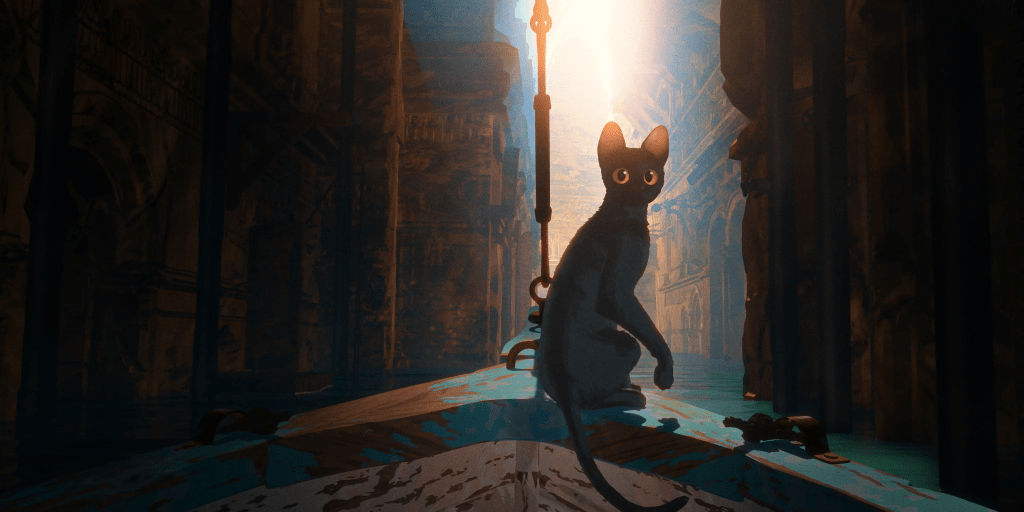
Set in a post-apocalyptic world where humanity is gone, but their past is still present, Flow utilizes this setting to create a beautiful world for its protagonist, a gorgeous black cat, to explore. The Latvian film directed by Gints Zilbalodis subjects the wonderfully rendered cat to a flood of biblical proportions forcing it to explore the world and cooperate with other animals against its natural instincts.
Cat traverses the flooded landscape on a boat it happens upon populated by a capybara which it is understandably tentative of. The makeshift crew of the boat expands to include a ring-tailed lemur, a labrador whom Cat had encountered before the flood, and a secretarybird. While in nature the animals would be at the best ambivalent to each other if not outright hostile, the boat brings with it an unspoken truce between the animals as they look to exist in the strange new world.
Zilbalodis shows real restraint in his characterization of the animals that inhabit the film. While most films would lean on humanizing the wild animals, each one feels genuine to its species when interacting in the world. This is captured both in small moments inserted into the film to remind the viewers they are watching animals (a moment of Cat chasing a sun sport as reflected in Lemur’s mirror stands out) as well as behaviors exhibited throughout. For example, Cat frequently retreats to the top of the mast for a solitary moment amongst the chaos of the animals. Likewise, Capybara is aloof and flops down on the deck of the boat to rest at random times. Most importantly, the animals never speak a language outside of their own noises, yet the feelings and motivations of each animal can clearly always be ascertained.
By keeping the animals so honest to their animalistic selves, the peril they experience as well as the joy hit the viewer more emotionally than a personified version would. Cat’s meows hit a nerve that any owner of felines understands intimately and caused this black cat owner to long to be reunited with her furball.
The only real exception to this naturalist portrayal of the animals is that they all seem to inherently know how to use the rutter to steer the boat, a job which Secretarybird takes point on once it joins the boat, but which each animal takes its turn at. This singular task is required for the animals to be able to successfully explore the newly aquatic world, but quickly falls into the realm of suspended disbelief as the rest of the animals’ behaviors feel so genuine to their species.
Another undeniable strength of the film is its visuals. The art is stylized in a way the eschews photorealism for a look that allows the animals to be more expressive, with giant eyes which speak wonders. Everything in the film is brilliantly colored in a fantastical way which while unrealistic compliments the magical essence of the situation. The remains of human civilization that the animals navigate feel both futuristic and ancient, which adds to the mystery of the world in which the animals live.
Flow is a perfect antidote to the American animation scene where even the best of films are filed with one liners and a constant state of irony left over from the 90s. The genuineness of the Latvian feature allows the viewer to connect more closely with the characters even though they don’t speak a word. Beautiful both in image and plot, Flow is the peak of what the animated medium can accomplish when allowing the creators to think outside of the snarky box in which most US animated studios reside.
Pixar returns to the sequel machine for its 2024 endeavor, but this time instead of making a sequel of a less critically received film (ala cars), they turn the machine to one of the most beloved films in their catalogue, Inside Out. Does the beloved 2015 film survive the sequlization? Well yes and no. Inside Out 2 is definitely the lesser of the two films, but it does stand on its own at least decently well.
In the first Inside Out, a young girl, Riley is transplanted from her home in Minnesota to San Fransico, a change that she was not ready for and did not acclimate well to. During the film, the personified emotions that run her evolved from distinct feelings (i.e. Riley either felt nothing but Joy, or Sadness etc…) un-mixing in their control, to something more complex. The concept of bittersweet (a combination of Joy and Sadness) was especially prominent in the film as Joy, the head emotion, was forced to accept that she would have to share her responsibilities with the other emotions, especially Sadness.
In the sequel, Riley is on the precipice of high school and finally content in her new life in California, The emotions in her head have running her down to a well oiled machine, that is until the night before she starts hockey camp when a puberty alarm starts to go off, and suddenly Joy and the gang are confronted with a group of new emotions headed by Anxiety. From there the original bunch are removed from the brain so that anxiety can take over and run Riley from this point on.
In theory setting a second Inside Out around puberty makes sense. It feels like it could be a story people actually wanted to tell and not just some sinical cash grab, and I believe it does cross that hump. The introduction of anxiety who “protects her [Riley] from the things she can’t see” as opposed to fear who “protects her [Riley] from the things she can see” is a great piece of character development and sets the film out well. Anxiety’s control of Riley leads her to take more nuanced decisions in life rather than just following the easy path to immediate joy. Anxiety is more worried about future joy for the young girl. But when Anxiety works too hard without the other emotions, it leads to tossing and turning in the night, and worst of all a really affecting portrayal of a panic attack.
Unfortunately, the film has the same resolution as the first film, that all the emotions need to work together and that one alone cannot run Riley’s life. The shared resolution is a common theme that plagues sequels, and while I would have hoped that with a novel enough setup Inside Out 2 could have beat this pattern, it succumbed like many others.
Technically the film looks extremely polished, as all Pixar films are, though I am tired of the Disney and Pixar look that encompasses much of animation landscape. Voice actors were well chosen with Amy Poehler reprising her role as Joy and bringing as much excitement to it as ever. Maya Hawke gave the deepest performance capturing her love for Riley as she was actively making her life worse.
Another sequel for Pixar, another film that fails to live up to the magic of the original, and while certainly not a bad film, I doubt it will make my rotation of Pixar films I go back to of which the original is solidly in. Something is just missing in the Pixar formula when revisiting a space. Maybe it’s the magic of seeing something new and unique for the first time?
9 years after his award-winning return to the world of Mad Max with Mad Max: Fury Road auteur George Miller once again tackles the Australian wasteland, but this time with a heroine Furiosa as the title character. Charlize Theron passes the baton to Anya Taylor-Joy and the young Alyla Browne to play Furiosa in this prequel.
Furiosa: A Mad Max Saga is a pretty straight forward revenge film, but being straight forward is not a deterrence, contrary, the simplicity of the story allows for Miller’s signature style to build upon that basic skeleton into something fantastical. Furiosa is kidnapped as a child and forced to watch her mother perish at the hands of her captor Dr. Dementus (Chris Hemsworth). After Furiosa escapes Dementus’s hands – into the equally bad control of Immortan Joe (Lachy Hulme) – she begins planning her escape and eventual revenge.
While the film is advertised as a showdown between Anya Taylor-Joy and Chris Hemsworth, Alyla Browne deserves much more credit than she is getting. She performs as the titular Furiosa for at least half if not more of the film, and her physicality in acting at such a young age is commendable. When it is time for Anya Taylor-Joy to take over she steals the show as she does in everything she touches. Unfortunately, the acting of Chris Hemsworth is spotty at times as he struggles to capture the appropriate tone of campy but not buffoonish.
In the slog of action flicks, most of them superhero movies, that have plagued the box office for the past 15 years, it’s a marvel to see what miller can do with a similar budget. While most of the superhero films feel very sanitized and all run into one another they are so similar, Furiosa has action that one can feel, and that looks unique. He even found a way to add to the action repertoire of the last film by adding airborne militia. While long action scenes tend to leave this reviewer with her eyes glazing over, there was enough life in this film that it kept me engrossed throughout.
The main question on many people’s minds is bound to be, how does Furiosa compare to Fury Road? The major difference between the two is the pacing. Fury Road was almost a single action scene stretched out for over two hours, while Furiosa takes place over time with a heavier emphasis on story. This change of focus naturally leads to the action being a bigger part of Fury Road, and while the action in Furiosa is not any worse than that of Fury Roads, Fury Road’s ability to extend that action for 2 straight hours without being bogged down is such an impressive feat that it is a hard film to live up to.
While Fury Road will likely stand up to the years better than Furiosa, that says everything about the exquisiteness of the former rather than any downfall of the latter. Furiosa is still an invigorating watch, and if you are a fan of Chris Hemsworth’s schtick, you’ll be even higher on the film than I am.
A forward: I understand that this film won’t be for everyone, some people will not be receptive to the trip that this film takes its viewers on, and I’m sure this will have its fair share of 1-star reviews. What I am telling you though is that if this film does resonate with you, you cannot afford to miss it because it could very easily become a self-identifying piece of media. I’m going to gush about this film for the next 1000 words or so and I understand that some people may resent me if I make them see it, but I am under the film’s spell, so this aggressively positive review is all I am capable of. Also be warned this will go into spoilers as I feel I need to to flush out the themes. Please go see this film and then come back after.
Three years after making the cult classic We’re All Going to the World’s Fair (a film this reviewer will be catching up with in the upcoming week,) Jane Schoenbrun returns to the big screen with what is destined to go down as on of the quintessential Millennial pieces of filmmaking, I Saw the TV Glow.
Taking place in the mid-90s, the film is about two teenagers, two years apart, who form a bond over a young adult teen show The Pink Opaque. Owen, Ian Foreman and Justice Smith as young and old Owen respectively, is the younger of the two, and is unable to watch the show when it airs because of his mother’s strict bedtime requirements for him. Alone and desperate for someone to share her interest with, Maddy, Brigette Lundy-Paine, invites Owen over one night to watch if with her, and then supplies him with taped copies of episodes to watch when he is able.
One week when Owen spends the night at Maddy’s and she convinces him to run away with her next weekend. Owen, scared to leave the comfort of the life he knows doesn’t, show up and Maddy is left to run away on her own. The film then jumps 8 years to when she returns and tries to explain herself to Owen in the coolest looking and sounding queer bar caught on screen.
The live music in the bar is the peak of one of many highlights from the film, the music both score and soundtrack. Schoenbrun had unprecedented control over the music in her film having budget from A24 to create 12 to 15 original pieces of music. With this much control over the soundtrack, Schoenbrun and musician Alex G were able to sculpt the exact soundscape that one would expect the physical manifestation of a memory of a dream. It uses current artists and techniques but It is such an ethereal sound that it makes sense to score the 90s because that’s what a memory sounds like.
Stylistically I Saw the TV Glow relies on nostalgia. The Pink Opaque is clearly a play on Buffy the Vampire Slayer or other such TV shows that would be passed around on VHS. And while the picture quality is crisp, the whole movie has a feel of being taped onto VHS. The soundtrack relies on a lot of distorted synths, and footage of the show in particular are rather distorted. Everything just feels like it lives in the late 90s, like the film itself was a relic of the time only with deeper meaning being interjected from the present.
Much of the deeper meaning that I Saw the TV Glow contains comes from its surface level and more allegorical queerness. After the first time skip, Owen approaches Maddy about watching The Pink Opaque together again, and Maddy announces “You know I like girls right?” clearly announcing herself as belonging to the LGBTQIA+ spectrum. In this way, she represents the confident queer person who while they existed in the 90s were rather countercultural.
Owen on the other hand represents the repressed queer identity so uncomfortable with the concept that he was scared to admit it to himself. When explain that he believes that he is ace, he describes it as thus: “I can take a shovel and dig that part of me out and I know there’s nothing in there, but I’m terrified to open it and look.”
Both of these ways of “dealing” with one’s queerness in the 90s capture one inevitability from that era, isolation and loneliness. Either you live open and people reject you or you hide yourself and are too miserable to have a thriving social life and the loneliness comes for you anyway.
The trans allegory is not a subtle one, Owen wears a dress in a dreamlike state multiple times, and his father, randomly played by Fred Durst, dismisses The Pink Opaque as a show for girls. The television show itself and Owen’s relationship to it take supernatural form, and this connection represents Owen’s transness. As a child watching the show is something he keeps from his family, and it can be assumed that Maddy is the only person he is open about it with. Many kids from that era (myself included) would have that one friend to which they felt comfortable being open.
After Maddy disappears Owen keeps the show, his transness, to himself. He becomes obsessed with the show as if the show has power over him. When Maddy finally does reappear she exposes to him that The Pink Opaque was more than a show, and that he is not who he thinks he is. She leads him to a place where he can be reborn as his true self.
Confronted with the truth of who he is, he runs scared to take the jump. This moment takes place in 2006, and it makes complete sense that Owen would be scared to make the jump. It was an unknown at the time, and risking the life he had, even if it has this loud ghost haunting him is at least familiar. The problem with this decision is that The Pink Opaque never leaves, in fact it grows like a tumor.
As a trans person myself, I instantly felt like this film is an inextricable part of me. The pink TV static runs through my body, and brings comfort to my isolated, closeted childhood self. Jane Schoenbrun created a film that speaks directly to her, and like years of therapy has offered her a place to call home. I Saw the TV Glow just resonates with whatever part makes one feel isolated from the rest of the world. It is more than just a perfect film It lives on with the viewer who is willing to accept it and becomes a part of them.
After a breakout 2021 that saw a double feature’s worth of brilliant Japanese, arthouse cinema (Drive My Car and Wheel of Fortune and Fantasy) Ryûsuke Hamaguchi was effectively crowned the international arthouse director to aspire to, and with his newest offering, Evil Does Not Exist, he reasserts that he deserves the title. His newest film follows in Hamaguchi’s motifs common throughout his past work with long conversations being common, and possessing a level of complexity that extends beyond the text. Evil Does Not Exist may also have his most textually complex ending to date.
The main premise of the film comes from a situation that Hamaguchi was experiencing first hand while deciding on his next film, and it involves a company buying land amongst a village, Mizubiki, where the residents live a ecofriendly lifestyle where they all rely on the natural spring water to survive and thrive. When the real estate company presents the citizens with their proposal to add a glamping facility to their village, dozens of concerns are aroused most of which revolve around the cleanliness of the spring water.
After meeting with the village, presenters Takahashi (Ryuji Kosaka) and Mayuzumi (Ayaka Shibutani) realize that they have empathy with the villagers and their demands, a fact which doesn’t sit well with their manager or consultant. However, instead of creating an adversarial relationship there, the two set off on a task given their boss’s advice and then he and the supervisor are never heard from again. The film instead focuses on how these two acclimate to their temporary residency.
The closest thing the film has to a protagonist is Hitoshi Omika as Takumi, a single father to the 8-year-old Hana (Ryo Nishikawa) and self proclaim odd-jobs man. Through him the audience is introduced to the village and the way of life it entails. He is also the lens through which Takahashi and Mayuzumi open up to the holistic way of living that is common in Mizubiki.
Omika was a tremendous actor considering this was his first time ever in front of a camera. His passive enjoyment of ever day life in the woods, chopping wood, filling up containers of spring water shows a lot of restraint that it takes some actors years to learn. He comes at most things with a laissez-faire attitude that builds an aura of mystery around him and his performance. It is possible that no professional actor could have play this role as it give so little that everything has to be inferred.
Without getting into spoilers, the ending must be remarked upon because it designates a change in Hamaguchi’s direction. While Hamaguchi has previously always worked in the immediate for his film making, the ending on Evil Does Not Exist sees him playing with time and reality in a way that leaves the viewer begging for a second watch in order to fully comprehend what happened.
Hamaguchi once again delivers a masterful film which’s subtext will keep the viewer busy for days processing everything the director wanted to say. Phenomenal acting. a score it is almost criminal I did not dive into detail about, and tight, measured direction leads to one of the best films in the first half of the year.









 Woman With A Movie Blog