New Release Monday – Challengers

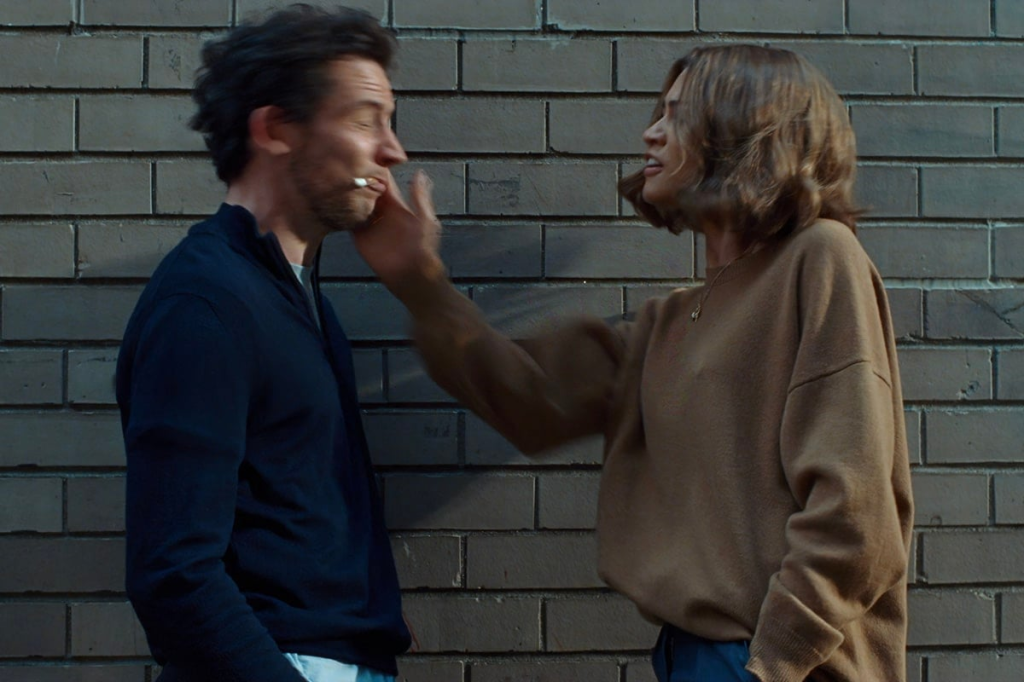
Director Luca Guadagnino has done his share of passionate love stories in the past, so the complex love triangle of 2024’s Challengers made perfect sense for his next film. The film staring Zendaya, Mike Faist, and Josh O’Connor as each side of the triangle uses the world of professional tennis as its backdrop, and while the tennis cinematography is exceptional, it is the off the court drama that sells the film.

The film primarily takes place during a challenger event where Art (Faist) and his now wife/coach Tashi (Zendaya) are participating as a warmup for the upcoming Open, while the shunned Patrick (O’Connor) is playing for his chance at a spot in the qualifier tournament for the same Open. The story of the three is then told in flash backs with each arch of the relationship between the three provides more salacious drama than the last.

The jumping through time aspect of the film works well because rather than go for a story arch, the film goes for an intrigue arch. While the flashbacks are primarily in chronological order, when the film deviates from this strict order, it is to hold back emotional punches for when they would be better appreciated. Guadagnino layers the film such that the intensity is always increasing with affairs and backstabbing filling up the latter half of the film.

While not the purpose of the film per se, the tennis playing needs to be commented on, and specifically the cinematography of the tennis. The playing is shot head on like most tennis in movies, this allows for the actors to be facing the camera while also removing the need for the actors to actually carry out a volley, but something small that director of photography Sayombhu Mukdeeprom chose to do that was unique was shoot the balls flying into the camera like it was a 3D movie. This little change ups the excitement of the tennis scenes tenfold.

Much of the film marketing attempted to sell Challengers on the sexiness of the three young, attractive actors and the risqué script. Unfortunately, that is the one aspect of the film that really falls short. Early in the film, there is a threesome sequence that while cut short hints at the heat the rest of the film promises, and yet, after that scene nothing is shown. Sex is implied to have occurred between various pairs of actors, but nothing is caught on camera. Not implying that the film needed to be X rated, but when the sex appeal is marketed upon so heavily one cannot help but expect a little more steam.

Misgivings about the sexiness of the film aside, Guadagnino delivers again. Challengers is an excellently paced invigorating watch. The cinematic landscape is significantly more chaste than it was in say the 90s, so any push in a more salacious direction is welcome. And more pictures by Guadagnino are welcome as well. He has a distinct voice, and his films always bring quality, and Challengers is no exception.

New Release Monday – Civil War

Known for making some of the best science fiction films of the past decade (Ex Machina (2015) and Annihilation (2018)), Alex Garland set his sights to an alternate present rather than future with his newest film Civil War. Setting a film called Civil War in the US during the current political unrest is a dangerous endevor in which to partake, but by eliminating specific politics (so much so that California and Texas share a side), Garland gets his message across with out alienating, or worse enraging, half the nation.

Kirsten Dunst plays Lee a famous war photographer, who along with her coworker Joel (Wagner Moura) has her sight on the biggest photograph of her career, an exclusive photo of the president before the Western Forces (Texas and California) can breach Washington DC and execute him. They are joined by longtime friend and fellow press member Sammy (Stephen McKinley Henderson) and Jessie (Cailee Spaeny) a young aspiring war photographer who looks up to Lee. Once they depart, the film structure becomes that of many vignettes as their van stops or is stopped for various reasons.

The vignette style is used to provide the viewer with snapshots of what the US would look like with the country torn apart. It focuses on the dehumanization that Americans would suddenly see for their brethren as soon as the government labels a subset of them enemies. From gleeful lynchings to depraved mass graves, without the connection of country, Garland shows how Americans would resort to their basest of instincts and inflict violence on the people they no longer consider one of their own.

Assigning multiple characters as photographers, one would hope that Civil War would have some beautiful cinematography, and director of photography Rob Hardy delivers with some stunning camera work. The video is accompanied by still photos representing what Lee or Jessie shoot, and especially the black and white photos by Jessie are stunning.

Civil War is definitely a political film, but the politics are not what one would expect given the premise. There is no right and left, conservative and progressive, only people A and people B. By refusing to take a stance on the hot button issues of today, Garland instead peaks deeper at the soul of an American, and at the price of war.

Garland displays a rather bleak view of Americans. He portrays a country that is so caught up in loyalty, that even if the cause of the split is unspoken, the people will immediately align with their “side” and otherize/ dehumanize the other people. Civil War has an extremely misanthropic view of Americans, and given the partisanship expressed in reality, it is not hard to see why.

The other hidden politics of Civil War is to help Americans to see the terror of war. America is constantly fighting or funding wars, and the images on TVs do little to express how ugly wars are to the places where they take place. By setting the bloodshed in American streets it helps to awaken the viewer to the atrocities that are committed in the name of war, and how awful it must be to experience it.

A strong, complex message combined stunning photography and brilliant acting (Kiki delivers another perfect performance) make Civil War one of the best films in this still young year.

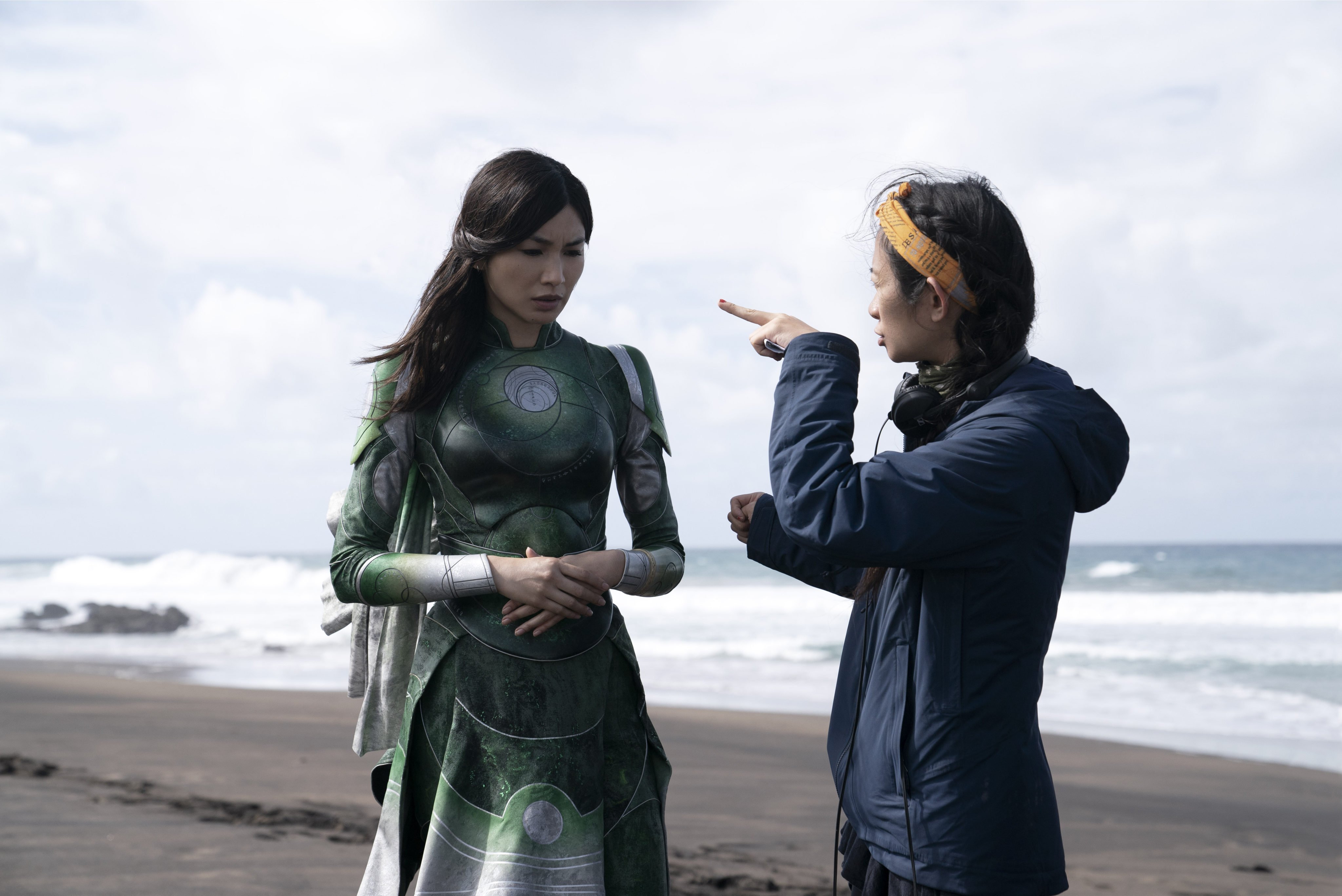
Eternals: Quiet in a Loud Genre

Where Chloé Zhao filmed Marvel's Eternals: the locations that stood in for  the Amazon rainforest, Alaska and ancient Babylon | South China Morning Post

Eternals, the most recent film in the Marvel Cinematic Universe, is proving to be one of the most divisive in the series. Much of the divide amongst both critics and audience alike can be attributable to Academy Award Winning director Chloé Zhao’s quieter sensibilities. Her penchant for tone poems may have made her a peculiar choice for the action heavy genre, but her more subdued style is a welcome breath of air for a genre that can be frantic at times.

While the film is inherently plot driven, with countless action scenes as Marvel requires in all their films, Chloé Zhao keeps an emotional arch at the center of her film.  By the start of the movie, Sersi (Gemma Chan), Ikaris (Richard Madden) and the rest of the Eternals have lived for millennia. In that time, they have experienced countless lifetimes of emotion; they’ve experienced both endless joy and heartbreak. Sersi and Ikaris have spent eons in a loving relationship, and just as much time hurtfully apart. This baggage weighs heavily on Sersi as she begins a new emotional journey with a mortal, Dane (Kit Harington). When the deviants, the creatures the Eternals were sent on Earth to destroy, return, Ikaris and Sersi are thrust back together forcing Sersi to process her emotional baggage so she can fully commit to a relationship with Dane. This is the emotional core that Zhao relies upon to bring something personal and relatable to the loud franchise.

The strongest parts of the film for building these characters are the extensive flashbacks. In these, each of the Eternals in turn experiences a defining moment of their long lives. These often don’t come in battle, but in helping the humans progress and live fuller lives. For example, sitting down with a mortal cooking a simple dinner imbues Sirsi with empathy that guides her life for the centuries to come. These moments are where Zhao’s voice comes through the loudest. She enables her characters to evolve on their own without plot dictating what they should become. While it is still much more restrained version of Zhao’s other work, her auteurial signature pushes through, nonetheless.

Where Zhao’s influence is felt the least is unfortunately in the entire third act during which all character nuance is disregarded so that an overblown fight can take place. This fight sequence could fit in just fine with any other film in the Marvel library, but Zhao was building to something more. Her film deserved a more emotionally driven climax as part of the action. Instead, the film falls prey to the same soulless fight sequences that fans of Marvel fans have seen dozens of times before.

Eternals more than any other Marvel film allowed the distinct voice of its director to shine through the standard formula. Her use of flashbacks allowed her the slower pacing she uses so well to ensure that her characters develop organically. However, a completely disconnected third act leaves the film feeling like two separate entities. Zhao’s influence comes back for the film’s resolution and is strong enough throughout to warrant a recommendation. It would just be nice to see Marvel trust their directors with complete control of a film rather than micromanage all the action sequences.

Bergman Island

Bergman Island' Movie Streaming Review: Stream It or Skip It?

Perennial festival darling Mia Hansen-Løve returns for another film that is destined to receive plenty of critical acclaim if not much commercia success. Bergman Island like all Hansen-Løve films focuses on mastering the intimate to tell a story that is both incredibly specific and eminently relatable at the same time.

Bergman Island tells the story of Chris (Vicky Krieps) who follows her husband Tony (Tim Roth) to the titular Bergman Island to work on her next film while her husband teaches a series of masterclasses. After a prolonged bout with writer’s block, she takes inspiration from her surroundings and writes most of her next project. The second half of the movie cuts between the movie’s reality and the Chris’s eventual film within the film starring Mia Wasikowska as Amy and Anders Danielsen Lie as Joseph.

Set on the isle of Fårö, Bergman Island leans heavily on the rich cinematic history of its setting. Hansen-Løve fills her camera with iconic imagery whenever possible but does not let the film turn into a simple travel brochure. Everything is in subservience of her characters. Chris, Tony, and Amy are all filmmakers, so their connection to the island and its famous locations provides a reason for the shots of Bergman’s legacy. The balance of utilizing her setting and but not letting the setting use her is a real strength Hansen-Løve shows throughout the film.

The film’s genius shines through the most in the second half when telling of Chris’s in progress movie leads to a blend of reality. Amy and Joseph while creations of Chris’s work also serve as proxies for the married couple. Hansen-Løve is a master of character work, and these doppelgangers allow her to flex those muscles. Chris and Tony’s relationship and life circumstances are dissimilar from that of Amy and Joseph and yet Hansen-Løve finds the through lines and creates a rich tapestry of human emotions and relations for the viewer to sample.

In her latest outing, director Mia Hansen-Løve delivers another superb picture featuring her strength of capturing interpersonal relationships. Her lead characters that the complexities of their emotions are front and center to the story. The stunt location decision feeds into her story seamlessly without becoming a distraction, and the decision to utilize a film within a film builds wonderful character depth. Bergman Island is a wonderful specimen of quiet yet deeply personal storytelling.