A 2021 Film Journey: Day 142 and 143

Before I dive into today’s entries, I want to mention a change I am going to be implementing going forward. My past few posts have been coming increasingly late, and I think that is exposing a flaw this project has had upon conception. Moving forward, rather than attempt to write up a post after watching my movie, often late into the night/ early morning, I will be writing my posts the following morning. As for today’s posts, while I do not intend on combining days on a regular basis, it just made sense with these films.


Before this weekend, I had only seen one Jacques Rivette film, his 13-hour epic Out 1 (1971). While that was arguably a foolishly ambitious place to begin, I had the chance to see it in theaters a few years ago and was not going to turn that down. And while at the time I would have been well served watching one of his shorter (shorter being a relative term) films before jumping in the deep end, that experience offered an excellent baseline for this weekend’s viewings.

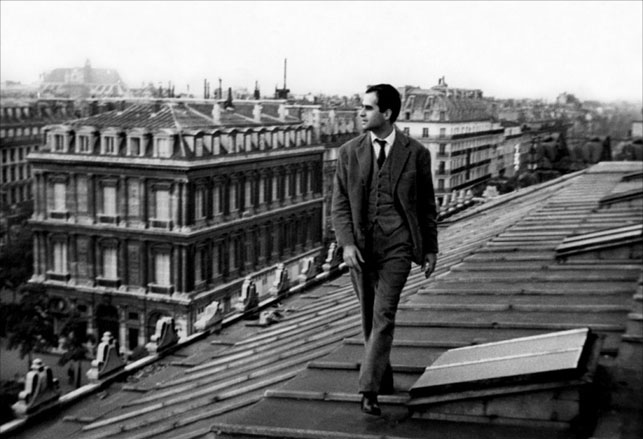
Paris Belongs to Us (1961, Dir. Jacques Rivette)

MoMA | Jacques Rivette's Paris Belongs to Us

10 years before releasing his magnum opus, Rivette’s debut feature debuted during the relative infancy for the French New Wave movement. Had Paris Belongs to Us not struggled to find distribution for years, the film could potentially have had a much more influential role on the movement, but the multiple year delay led to François Truffaut’s The 400 Blows (1959)and Jean-Luc Godard’s Breathless (1960) having a much more sizable impact on the movement. This suspended release means that while Paris Belongs to Us implements many trademark elements of the movement, it also feels unique in that landscape.

Paris Belongs to Us leans heavily into the socio-economic themes that are plentiful in the French New Wave. The title itself is ironic as all the characters in the film are non-native Parisians. Each is escaping a place that would not have them in the wake of the second world war, but they find refuge in each other in Paris. What Rivette brings to the movement is a bit more control over the cinematic language of the film with which he creates a mysterious aura to envelope his story. The protagonist Anne (Betty Schneider) is lured into believing a mysterious conspiracy. While she spends the runtime of the film slowly trying to find the truth behind a man-she-never-met’s apparent suicide, the audience in turn is tasked with deciding if the mystery is real or imagined.

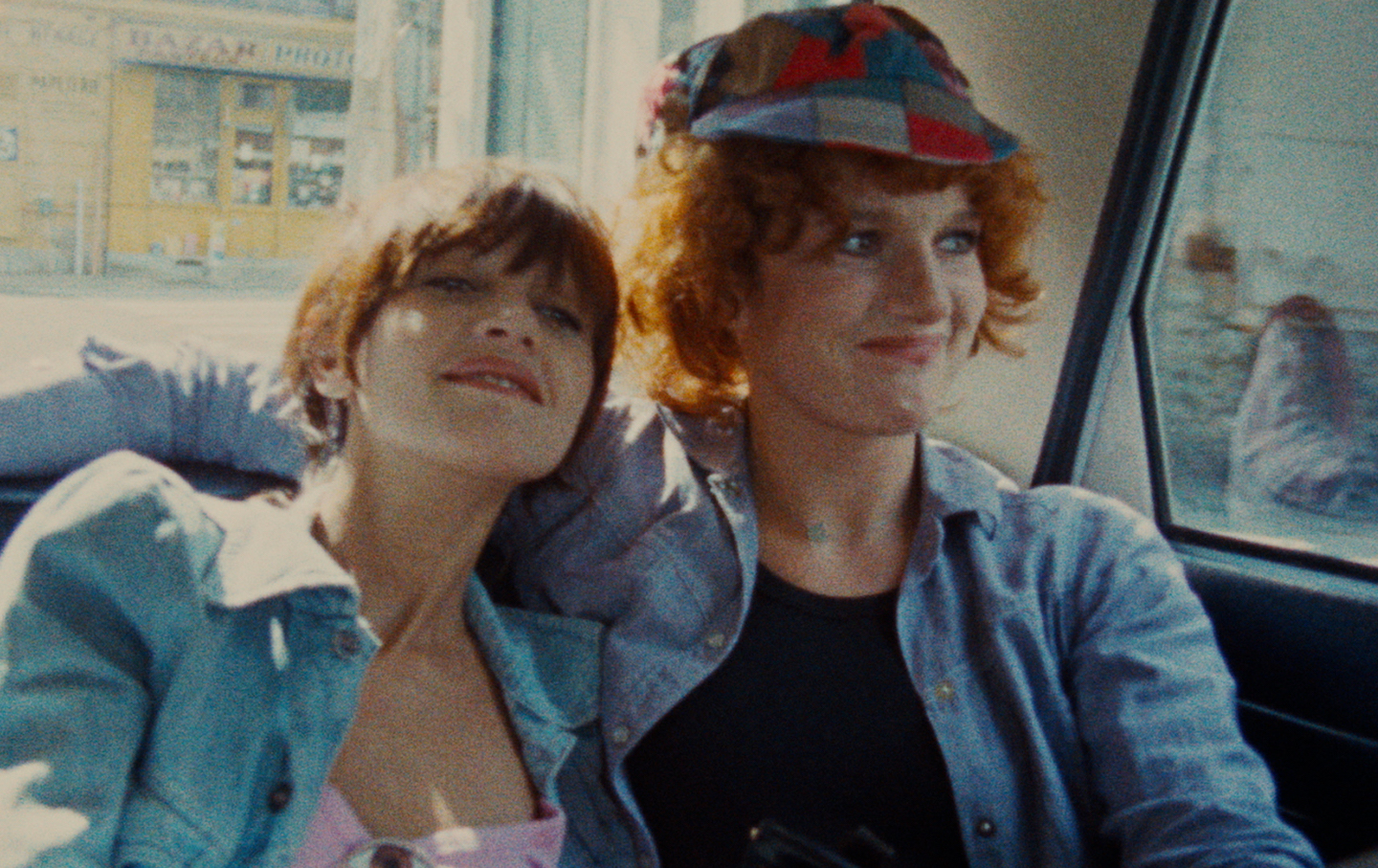
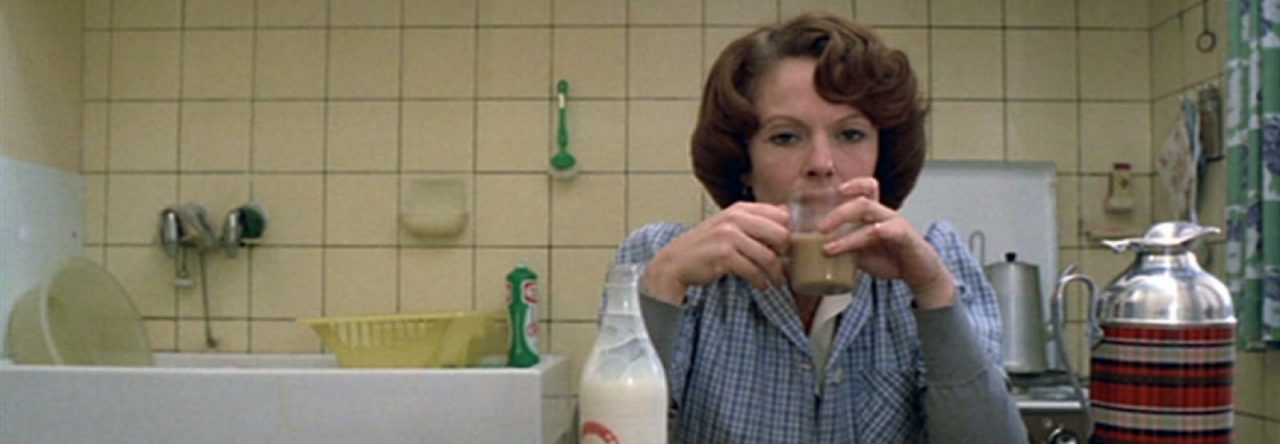
Céline and Julie Go Boating (1974, Dir. Jacques Rivette)

The Triumph of 'Céline and Julie Go Boating' | The Nation

The second Rivette offering of the weekend was his first feature after Out 1, Céline and Julie Go Boating. While obviously much shorter than the 13-hour film that preceded it, clocking in at nearly 200 minutes, Céline and Julie Go Boating continued Rivette’s trend of using an extended runtime to create a necessary mood for his features. The film uses its lethargic pace to build the surrealist mood necessary for the film’s principal premise. The initial meeting between Céline (Juliet Berto) and Julie (Dominique Labourier) on film initially appears to be a random encounter between strangers, but it quickly melds into a more playful, familiar interaction. This undefined moment to start the film reflects the tone of the film to follow.

Near the halfway point of the film, the relationship between Céline and Julie is well defined – Céline has moved in with Julie – and Rivette’s trademark mystery begins to take center stage. Both women become enamored with a mysterious house that with the help of psychotropic candy takes them to a melodramatic world where they play a hypnotic role. They become increasingly enamored with this parallel reality until it occupies the entirety of both women’s lives.


Both films are ones that I would struggle with recommending. Their extremely deliberate pacing would be a turnoff to many, but to those willing to put up with gratuitous downtime, both films are works of beauty. Rivette displays exceptional skill at mood creation and intrigue building. The extended runtime in his films allow him to implement elongated crescendos such that one finds oneself on edge without being aware of the subtle build. When neither film supplies a narratively fulfilling ending, it is the meticulously crafted mood that lingers from both films. While they are certainly not for everyone, Rivette is a master auteur for those willing to embrace his hallmark style.
A 2021 Film Journey: Day 140

I clearly do not learn. A day after lamenting that I chose such a complex film to start so late, and after commenting on how Zama exposed my personal film criticism deficiencies, I for some reason chose today to re-engage with the works of Guy Maddin. Like yesterday, time got away once more, and this post is being delayed again.

Careful (1992, Dir. Guy Maddin)

Careful (1992)

Before this film, my experiences with Guy Maddin had been exclusively his later work. I had seen nothing before My Winnipeg (2007). The context of his latter work, The Forbidden Room (2015) in particular, ended up being extremely beneficial for putting both in auteurial context with each other. While The Forbidden Room was more experimental in form and visuals, at its heart, the film was a love letter to the earliest years of cinema. While that film played with the concept of lost films by intertwining many faux recreations, Careful was an early example of Maddin creating his own version of pre-Hollywood cinema.

While Careful may have spoken dialogue, Maddin implements numerous other techniques in service of replicating they style. The plot of the film feels pulled straight from the bygone era. It is filled with extreme melodramas that ring hollow in current cinema but were common for the era. The filmmaking itself also resurrects specific techniques from the birth of cinema. Most obvious is Maddin’s use of tinted celluloid. Much of the film uses this tinting as the only color – as would be the case in the 1890s through 1920s – but even when Maddin implements color film, each scene is still tinted to replicate the look. Another technique used by Maddin to replicate this era is to shoot while seldom moving the camera. Each of these decisions combine to create an anachronistic viewing that is more enjoyable as a cinematic experiment than as a narrative. It is an extremely interesting watch as long as one goes into it with that in mind.

A 2021 Film Journey: Day 139

Fell asleep last night while writing this one. It is probably for the best though; I needed some time to process this film. I really either need to start watching my films earlier, or not pick such heavy material to watch at 10pm.

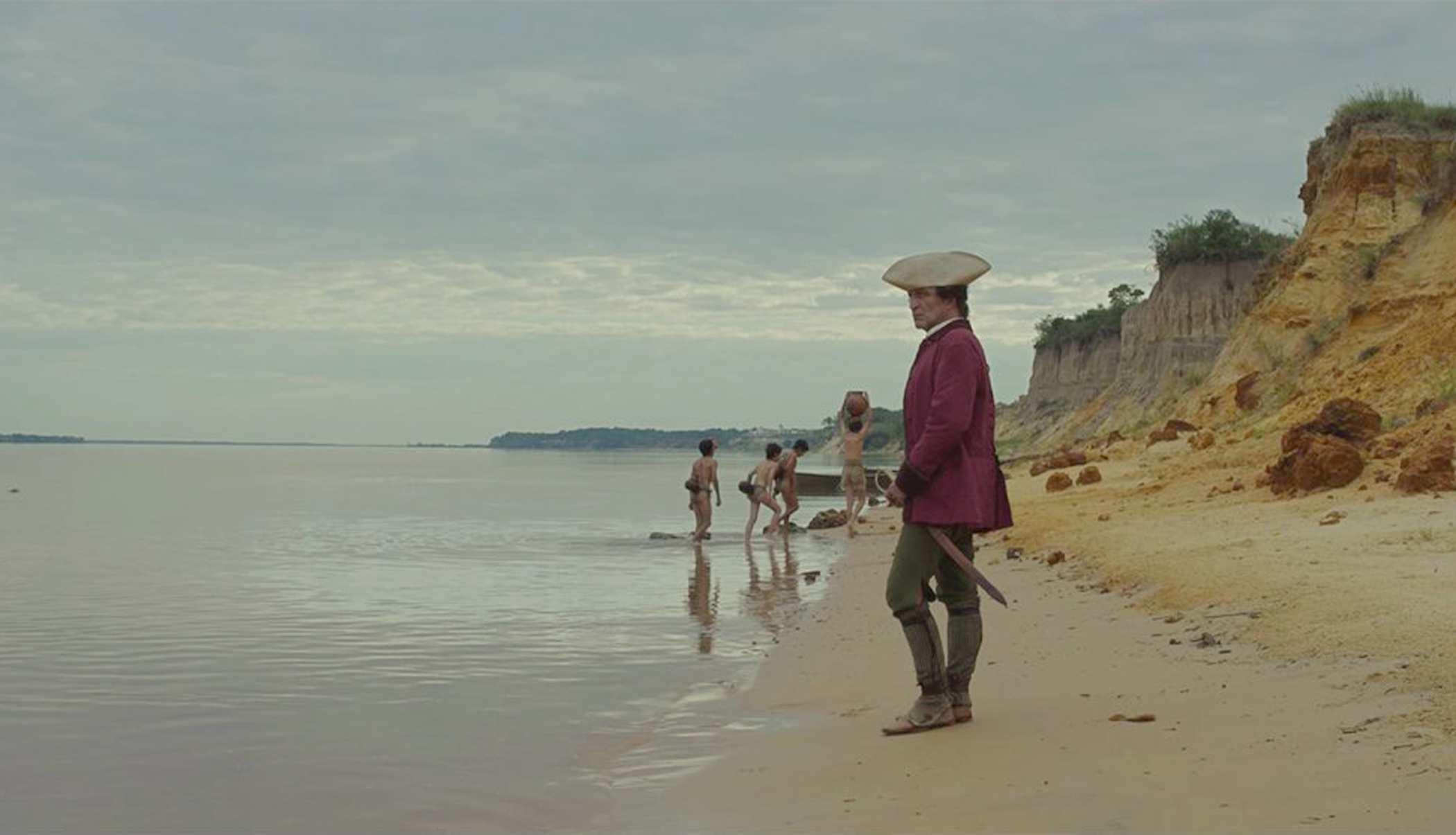
Zama (2017, Dir. Lucrecia Martel)

zama | vertoning | KASKcinema

Zama is the type of film that really causes me to regret my lack of any formal film criticism training. I can tell you that Zama is beyond brilliant, and that I was in constant awe watching it, but I am not sure what specifically about it activated those feelings in me. The film is a period piece taking place in 18th century Argentina, but the setting has an air of surrealism that creates a constant unease. Spanish elegance is made a mockery of while set upon mud floors and occupied with donkeys in a way that creates a unique world for Martel’s film.

While the setting in Zama may exists in an intermediate space between reality and full-blown surrealism, the film’s narrative symbolism is anything but vague.  At its core, Zama is an extremely critical satire of colonialism. Don Diego de Zama (Daniel Giménez Cacho) and the rest of the Spanish occupiers are portrayed as excessively foppish. The film is constantly juxtaposing the white men who look a fool in their garish costumes with the indigenous people mostly naked, but able to survive in the tropic environment. While the power dynamics are as grim as they were in reality, Martel’s innovative look at the time provides a welcome reframing of that history.

A 2021 Film Journey: Day 138

I swear, some days it feels like it goes straight from 6pm to 10pm with nothing in between. All that is to say, I am not really sure where the day disappeared to, so today’s movie once again was started late. Still after this spotty month of viewing, if I watch and write about something I am considering it a success.

Wadjda (2013, Dir. Haifaa Al-Mansour)

Wadjda,' by Haifaa al-Mansour, Made in Saudi Arabia - The New York Times

While this film was on my radar for quite some time now, it was seeing Haifaa Al-Mansour most recent film, The Perfect Candidate, as part of the Seattle International Film Festival that inspired me to move it up my list. Like her later film Wadjda tells the story of a Saudi woman attempting to navigate a country that is only beginning to expand its understanding of women’s rights. While The Perfect Candidate focused on a young professional woman, Wadjda instead follows a young girl’s need to rebel against her restrictive surroundings.

Eight years later, Wadjda is more remarkable for what it meant than what it is. The film is good to great on an artistic level. It has some slight pacing issues but there is little to complain about and a lot to enjoy. What stands out more than any of the films text is its place in the culture. When it came out Wadjda marked the first time a woman made a feature film in Saudi Arabia, and it is clear that Haifaa Al-Mansour took the honor with the respect it deserved and created a film addressing the same injustices that kept her from the big screen before this film.

A 2021 Film Journey: Day 137

I am really struggling with keeping on top of writing this month. Yesterday was the first warm day of the year, and while I would like to say I missed my post because I was making the best of the weather outside, instead my body just shutdown unable to take the sudden temperature increase. So yesterday consisted mostly of naps and cold water. Regardless it is cooler today and I have a movie to write about, so here we go.

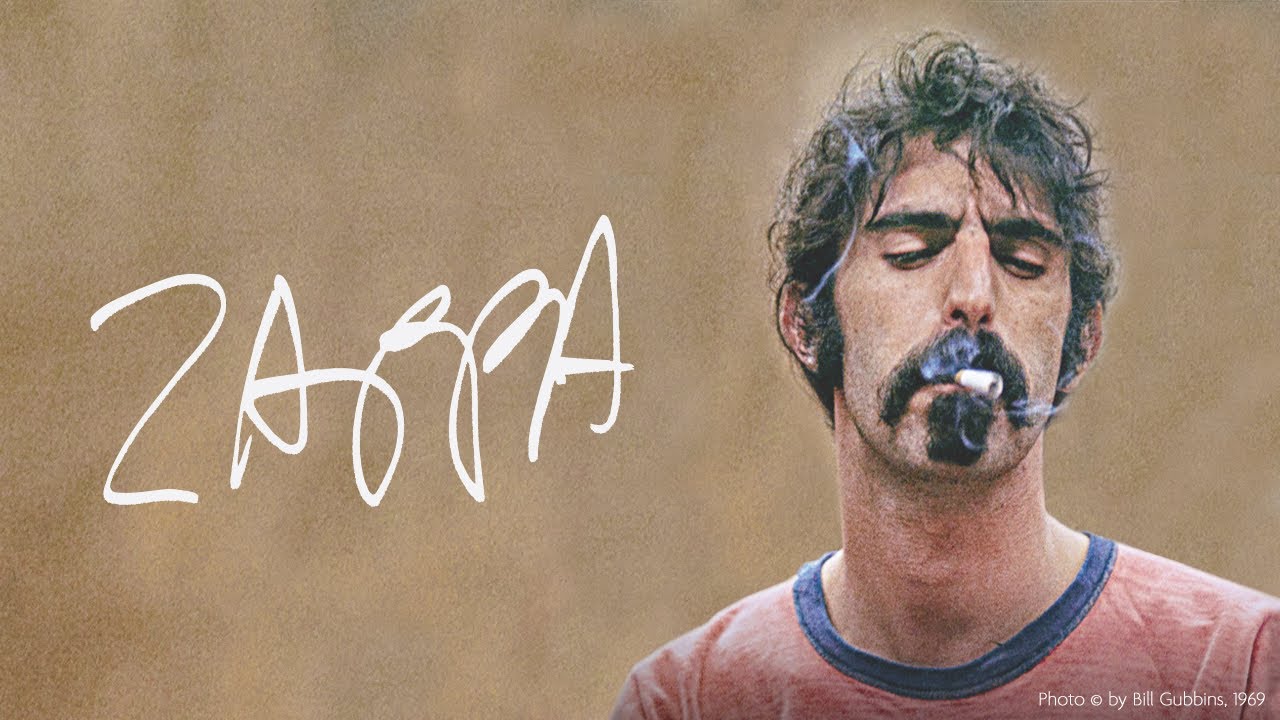
Zappa (2020, Dir. Alex Winter)

Zappa - Official Trailer - YouTube

This documentary had been on my list last year, but I missed its release in the mess that was 2020. Finding it on Hulu, I knew that it needed to be tonight’s viewing. I got really into Frank Zappa’s music and when I was in college – I saw Zappa plays Zappa twice during that time – and have always been enamored with the man behind the music. Alex Winter’s Zappa delivers specifically on the interest in the man behind the music. While it includes a near constant string of musical clips and tidbits, Frank Zappa the man and the artist take center stage.

As a fan, the film more than held my attention. Winter captured the complexities of Zappa’s career and keeps the movie evolving despite its rather long run time. Zappa’s evolution from musical theater innovator to experimental composer and eventually political voice highlights his genius and influence he had on the world of music. While I was completely enamored with the content of the documentary, I once again recognize that Winter does little artistically with his film. Zappa the man engrossing enough that the film succeeds; still, one has to imagine that Zappa himself would have wanted a more daring and experimental film honoring his legacy.

A 2021 Film Journey: Day 135

I am still trying to get back into the swing of things since falling off at the beginning of the month. In service of that, I am doing my doing my best to pace myself as I return to writing. While I likely would have fallen off when I did regardless, I do think my breakneck watching and writing pace from SIFF was responsible for a bit of burnout. With that in mind, even though it is the weekend, today was just a one film day while I ease myself back into this habit.

Cold Water (1994, Dir. Olivier Assayas)

Cold Water (1994) directed by Olivier Assayas • Reviews, film + cast •  Letterboxd

Before today, my experience with Olivier Assayas consisted entirely of the films he has done with Kristen Stewart – which I adore. For the next film in his ouvre that I chose to watch, I jumped 20 years back from Clouds of Sils Maria to Assayas’s tale of rebellious youth, complete with classic rock soundtrack, Cold Water. Staring Virginie Ledoyen and Cyprien Fouquet as the troublesome couple Christine and Gilles, Cold Water hits on all the staple elements for a teenage rebellion film, but never feels derivative.

While Assayas’s recent work is highlighted by quiet, ponderous moments, Cold Water shows that he has success in more kinetic moments as well. The highlight of the film comes late in the third act after Christine has escaped from the hospital in which she had been committed, and Gilles had run from home. They both coincidentally head to the same party to reunite under the backdrop of youth debauchery. Credence Clearwater Revival blares while glass and furniture are broken and burned in an energizing moment that keeps the ponderous qualities of Assayas’s later work. While the tropes may verge on the cliché, Assayas’s unique touch is ever present elevating the material.

A 2021 Film Journey: Day 134

I know I missed my post again yesterday; this has been a difficult week for me. I ended up messaging a friend in near tears last night asking for permission to not make a post. With another night of rest under my belt, and a weekend upcoming, I am feeling much better today than I have in a couple of weeks. So today I was once again able to watch a new to me movie and give it a quick post.

Desert Hearts (1985, Dir. Donna Deitch)

Picture of Desert Hearts

This film was so wonderfully gay, it made this lesbian’s heart sing. The young, out lesbian Cay (Patricia Charbonneau) fits a common trope as the persuasive lesbian on the prowl, but her younger age provides significant character depth beyond initial glance. When she falls for Vivian (Helen Shaver), Cay being 10 years younger than the professor runs counterintuitive to the tropes that would become standard in later years. Instead of an older lesbian seducing an unexpecting women through her experience, in Desert Hearts it is the younger woman who does the seducing. This builds upon Vivian’s character arc; the years she wasted in a marriage that she is in the process of terminating become more pronounced when realizing that they kept her from experiencing the kind of love that Cay provides.

The other unique aspect that Desert Hearts provides to the lesbian romance is a unique take on the love triangle through Frances (Audra Lindley). While Frances has no romantic attraction for either woman (in fact she finds Cay’s lifestyle unsavory), she shares a different, strong relationship with each. While not legally her daughter, Frances views Cay as such, and even when Cay frustrates Frances, her love is mostly unconditional. With Vivian on the other hand, Frances had just met her but is quickly considering her a good friend – a form of platonic love. The way that Vivian and Cay’s romance plays with this unconventional love triangle lends the already enjoyable Desert Hearts a welcome narrative depth to go with the classic lesbian tale.

A 2021 Film Journey: Day 132

I am cheating on my rules today. I wanted this project to be exclusively about films that are new to me (or that I at least have not seen in my post college life), but with the amount that I have been struggling just watching and posting anything lately, I chose to give myself a pass today. While the movie I chose to watch may seem odd given my current mental state, just trust me when I say it makes sense to me.

Melancholia (2011, Dir. Lars von Trier)

Lars von Trier's “Melancholia”: A Discussion | Film Quarterly

I adore this film in ways that it is going to be difficult for me to fully explain today. Rather than fail to talk about everything the film does to make it the masterpiece it is, I want to touch on an extremely personal aspect of it that resonates with me. Lars von Trier’s previous film Antichrist (2009) was created in a self-admitted state of deep depression. While a great film itself, that film felt the weight of the director’s depression in an unrelenting way.

Two years later, and von Trier was in a less depressed place and was able to look back on that extreme depression from a happier place on the other side. This hindsight keeps the mood similarly heavy, but it allows for less absolutes in intensity. This allows for a more honest portrayal of mental illness. Like her director, Kirsten Dunst came at the material from the prospective of someone who had openly dealt with depression previously. She uses this experience to deliver a perfect performance that depicts serious depression outside of normal fictional portrayals and instead creates something much more brutally honest. It is in this honesty stemming from the director and actress’s experience that results in Melancholia being one of the films that most perfectly crafted depictions of mental illness set to film.

A 2021 Film Journey: Day 131

I am sorry I went AWOL for the last week plus. On Sunday the second, I got my first COVID shot and proceeded to get almost immediately extremely sick. My need to do nothing but sleep led me to missing a few posts and from there the anxiety and depression really took hold. Each day missed begat the next day missed until more than a week went by without a single post from me. I have felt awful about myself because of the misses, but as I felt worse it became harder to motivate myself to watch anything and thus it became a spiral down. Thankfully, tonight I managed to take a seat on my couch, let a cat jump on my lap, and watch a movie. Thank you for putting up with a longer blog section and a shorter movie review as I get back in the swing of things.

Wildlife (2018, Dir. Paul Dano)

Wildlife movie review & film summary (2018) | Roger Ebert

To this day the only film directed by Paul Dano is a complicated depiction of a volatile family set in 1960. Jerry (Jake Gyllenhaal) has been uplifting his family in search of an easy answer, and after he refuses to take his job back following a wrongful termination, he instead leaves the family to fight wildfires until the first snow. This abandonment is one too many transgressions for his wife Jeanette (Carey Mulligan) to take. The bulk of the film follows Joe (Ed Oxenbould) as he watches his mother attempt to process her remaining feelings for her husband and the selfish actions that he takes.

For being a freshman director, Paul Dano displays a precise handling of tone in his period drama. Shot primarily from Joe’s point of view, Dano taps into the emotions of an overwhelmed 14-year-old watching both parents individually tear apart their marriage. While some of the personal complexities may be over Joe’s head, Dano captures these intricacies without betraying Joe’s point of view. As a whole the film is superb, but if there is any flaw, it would be that Gyllenhaal is not especially convincing at playing someone from 1960. This deficiency is further exacerbated by casting him aside Mulligan who was born to play roles from the mid-20th century. It is not enough to ruin the film by any extent, but it did stand out.

A 2021 Film Journey: Day 121

A 2021 Film Journey: Day 121

As with last night, I once again looked to my criterion shelf for tonight’s viewing. More than picking a film at random tonight, I wanted to acknowledge the importance of the holiday with my choice. My initial inclination was to allow myself a re-watch and revisit Jacques Demy’s workers strike musical Une Chambre en Ville (1982). That film is a personal pick of a hidden gem and I was close to putting it on when an obvious alternative caught my eye.

Che: Part One and Che: Part Two (2008, Dir. Steven Soderbergh)

Che: Part One (2008) directed by Steven Soderbergh • Reviews, film + cast •  Letterboxd

Both IMDB and Letterboxd consider each half of the four-and-a-half-hour biopic about the Marxist revolutionary to be separate films, and while I am going to be combining them for the sake of discussion, I do find the separation to be useful. Each part tells a somewhat self-contained story of a South American revolution under the guidance of the Argentinian Ernesto “Che” Guevara (Benicio Del Toro). Che: Part One focuses on his work liberating Cuba and helping to install Fidel Castro (Demián Bichir) in the 1950s while Che: Part Two looked at his attempt at another revolution in Bolivia which led to his capture and execution.

The interplay between the two films is intriguing. The film was originally in development by Terrence Malick who wanted to create a film exclusively focusing on Guevara’s attempted revolution in Bolivia. After financing fell through Malick left the project and Soderbergh took over. One of Soderbergh’s first decisions was that Guevara’s time in Bolivia would be better served with background and thus the first part was created to support the now second part. Considering that part one was created as a supplemental piece, it is interesting that part one is significantly more entertaining and a more artistic use of filmmaking.

While both films chronicle a revolution that marked a period of Guevara’s life, they do so in unique ways. Che: Part Two is somewhat indistinguishable from any war film. Politics and economics may take a more front seat approach than in more American focused wars, but the cinematic language is the same. It tells a conventional chronologic narrative. Conversely, Che: Part One jumps years between Guevara’s time in the revolution before Castro rose to power and his time as an ambassador for Cuba. These are as easily distinguishable with the revolution shot in color and time as an ambassador in black and white. By piecing together the first film non linearly, Soderbergh develops more nuanced themes and results in a more entertaining watch.