A 2021 Film Journey: Day 33

After a somewhat lacking start to the month, I wanted to make sure tonight’s offering was a better film. Looking through films today for something to watch, I realized it is not going to be as trivial to find Black helmed films as I initially hoped. While many steaming services have a Black History Month section, their definition of what counts is rather generous. But I have a list to get through, so it shouldn’t be much of an issue. Tonight’s viewing was a 2020 film that didn’t come out until I wanted to have my list finalized so I put it off until today when it fits the theme perfectly.

One Night in Miami (2020, Dir. Regina King)

One Night in Miami Trailer: Regina King's Oscar Contender from Amazon |  IndieWire

It’s never a great surprise when a great actor moves behind the camera and ends up creating a great acting film. Oscar winner Regina King is another such actor turned director with her debut One Night in Miami. This substance over style approach betrays a slight insecurity over her own directorial skills, but more than makes up for that by extracting four solid to great performances from her lead actors.

A purely fictitious story of an imagined night between feal-life friends Malcolm X (Kingsley Ben-Adir), Mohammad Ali (Eli Goree), Sam Cooke (Leslie Odom Jr.), and Jim Brown (Aldis Hodge), One Night in Miami places it’s four larger than life icons in a single motel room for most of the runtime. In here they discuss and argue what each of their place in civil rights movement is and what it should be. Ben-Adir is the easy standout as the civil rights leader. This is partially because of the characterization of the four’s conversation requiring X to be the central figure but is due to Ben-Adir’s subdued depiction of the man. Goree and Odom Jr. as Ali and Cooke flank Ben-Adir’s X with more caricatured versions of their roles creating a welcome contrast, keeping the film moving at a brisk pace. Hodge may be the clear weak link of the four, but his performance has wonderful flashes, and he was given the least to do in the screen play. Together the four build off each other wonderfully under King’s actor first direction.

A 2021 Film Journey: Day 32

Time for month number two. The weekend disappeared far too quickly, and I never fully woke up today, but my work wouldn’t let me take the day off, so there’s no way I’d take today off from here. With the new month, comes Black History Month. For the month, I’m going to do my best to feature films by Black directors. I can’t promise that everything I watch will be by one, but I’m going to endeavor for at least the majority of them to be from Black voices.

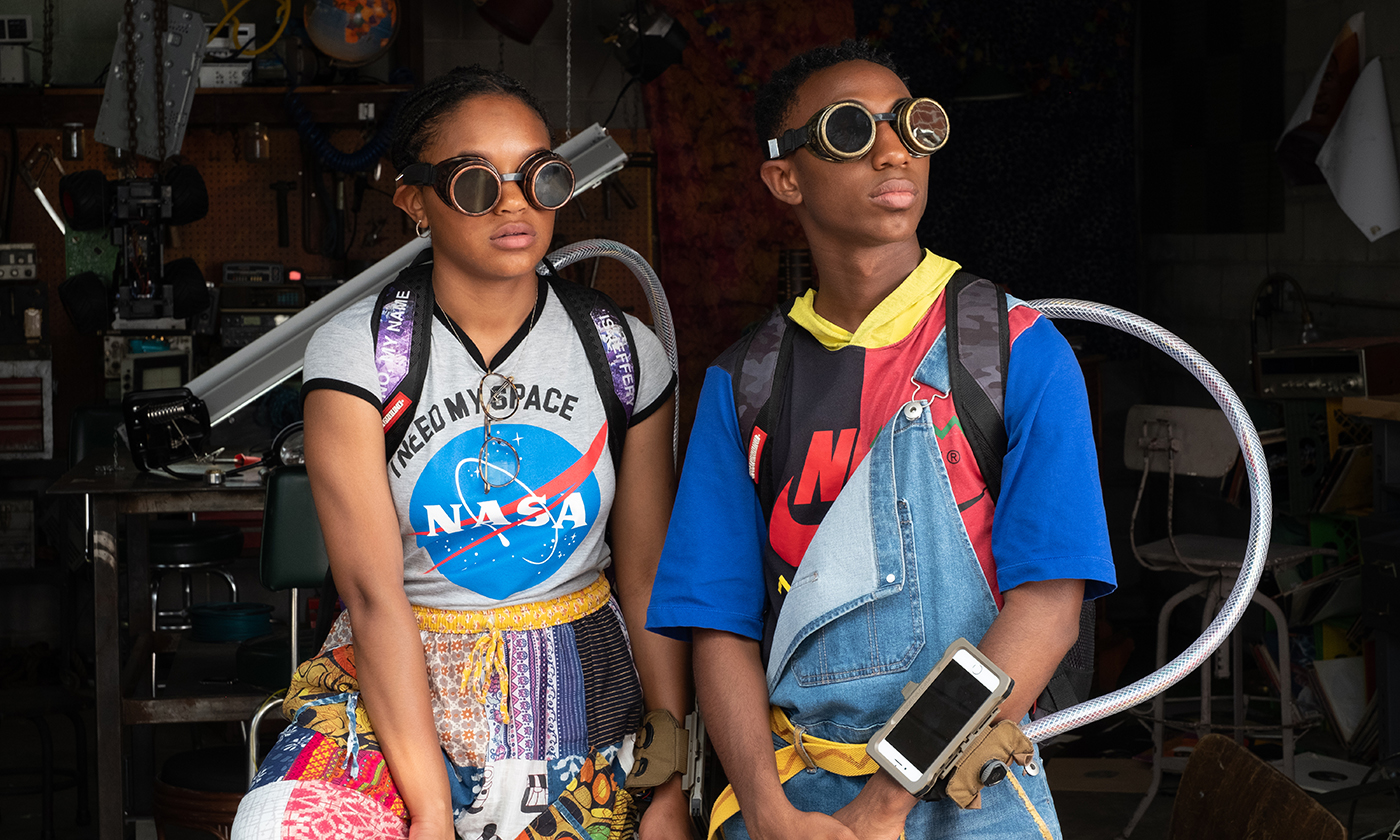
See You Yesterday (2019, Dir. Stefon Bristol)

See You Yesterday” Filmmakers Use Sci-Fi to Discuss Police Brutality - YES!  Magazine

See You Yesterday is essentially Back to the Future (1985, Dir. Robert Zemeckis) meets The Hate U Give (2018, Dir. George Tillman Jr.). Together they combine into a high school time travel comedy (complete with Michael J. Fox cameo) that is too real to be fun and an issue piece that interjects too much comedy to make it’s point.

I really wanted to like this movie. I was fully engrossed for the first 20 minutes or so of it when it was just the happy-go-lucky buddy time travel movie. The depiction of brilliant people of color just existing in their working-class neighborhood was refreshing even if the plot lines were a little on the juvenile side. Everything gets messy when the film attempts to balance a critique on police brutality on top of that juvenile styled comedy. While Black people are still being killed by cops on what seems like a daily basis, I’d like the topic to be handled with more gravitas than See You Yesterday was able. A time travel approach to the topic is not inherently a flawed approach, but the tonal dissonance this film experienced prevented me from appreciating the film.

A 2021 Film Journey: Day 31

I broke with my stated goal for today. Today was supposed to be another full day of watching films leaving The Criterion Channel, but after the first film being from that selection, I made a pivot to watch my first 2021 film with hours remaining in the first month of the year.

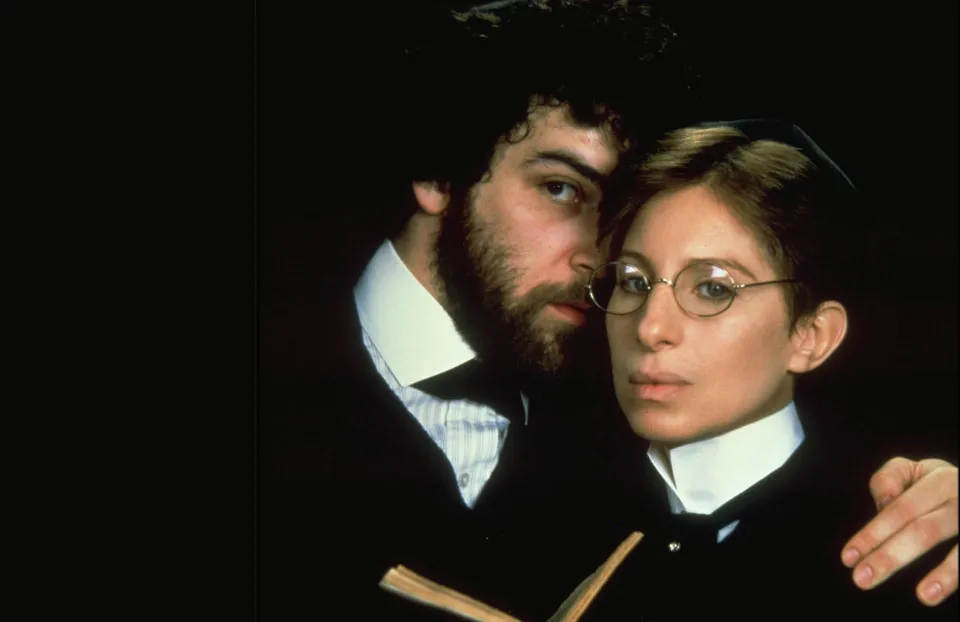
Yentl (1983, Dir. Barbra Streisand)

Yentl | George Eastman Museum

I feel like had Streisand wanted, she could have held most of the Disney renaissance in court over the films’ similarities to Yentl. A musical where a young person undertakes a hidden identity to seek out a more fulfilling life and, at some point, sings an “I want” song is essentially the one sentence plot of every film from The Little Mermaid (1989, Dir. Ron Clements and John Musker) to Mulan (1998, Dir Tony Bancroft and Barry Cook). The Mulan comparison is especially relevant as the hidden identity in Yentl also involves the titular character cross dressing to be taken for a man.

All the comparisons to Disney films aren’t necessarily a bad thing. Disney went to that well repeatedly because it’s a reliable bit of storytelling. A person longing for more than they are allowed feeds into an audience’s internalized insecurities, and Streisand sells it better than anyone. Her enigmatic persona and booming soprano create a welcoming picture, even if the subject matter, wanting to study Talmudic Law, is a little opaque.


After four feature films for The Criterion Channel in three days, I couldn’t let the new Carey Mulligan film go unwatched any longer.

The Dig (2021, Dir. Simon Stone)

STREAMING! — The Dig [2021] FULL MOVIE | The Dig — 2021 “B.B.C —  D.O.W.N.L.O.A.D”

January films aren’t supposed to be this good. Maybe that assumption will prove to be dated in a post-COVID world, but at least in the old world, January was a dumping ground for studios to drop films with little prospects. And while I don’t believe that The Dig will be making any big Oscar plays, it still greatly outperformed my expectations for a film from this release slot.

As ready to go to bat for the film as I am, it’s not unimpeachable. The love triangle between Lily James, Ben Chaplin, and Johnny Flynn is more distracting than of benefit to the film, but my misgivings are diminutive in respects to what does work with the film. What works in the film are the performances. Carey Mulligan and Ralph Fiennes both turn in fantastic performances, and while I may not be the biggest fan of their plot threads, Lily James and Johnny Flynn give wonderful supporting roles. Mulligan’s performance in particular is brimming with emotional depth. She perfectly balances her character’s poshness with her personal strife and an unending curiosity. A wonderful first film of the year.

A 2021 Film Journey: Day 30

As I mentioned yesterday, today’s films all came from the leaving The Criterion Channel selection. While yesterday’s viewing was an embarrassing blind spot from the accepted cannon of film, today’s films were early outings from favorite directors of mine (along with some bonuses at the end).

Father of My Children (2009, Dir. Mia Hansen-Løve)

FATHER OF MY CHILDREN - Official HD Trailer - YouTube

In general, I like to go into movies as blind as possible. For films like Father of My Children, all I need to know is that it’s directed by someone I respect, in this case Mia Hansen-Løve, and I’ll put it on with no other context. Normally this isn’t an issue, but every once in a while, the content of a film I watch blind backfires on me. Father of My Children unfortunately crossed that line for me by prominently featuring a suicide of a main character. While there’s nothing inherently wrong with that, it’s the kind of thing I prefer to have a warning about so I can make sure I’m in the right place emotionally for it. I had to take a pause and collect myself today after that scene, but I was able to rally my way through it today.

Triggering scene aside, I really enjoyed Father of My Children. It is the earliest Hansen-Løve film I’ve seen as of current, but it doesn’t show any imperfections from lack of experience. The film may not have an actor with the gravitas of an Isabelle Huppert like Things to Come (2016) did, but from a direction standpoint, the film wants for nothing. In all her films, Hansen-Løve captures the complex emotions her characters experience while undergoing a period of change and strife; Chiara Caselli and Alice de Lencquesaing as Sylvia and Clémence the wife and eldest daughter of the deceased Grégoire (Louis-Do de Lencquesaing) are wonderful examples of this trend. A must see for any fan of the director’s style.

Unrelated (2007, Dir. Joanna Hogg)

Boldly Going Nowhere | Unrelated (2007) | Bright Wall/Dark Room

The second film for the day was the debut film of Joanna Hogg, a director who’s film The Souvenir was my favorite film of 2019, but who I only vaguely knew outside of that. I had watched her 2010 film Archipelago, but I only appreciated it in theory, not as much in practice. Still, that was plenty enough for me to put her debut film Unrelated near the top of my to-watch list of this group of films. For good reason too, this film was great. Where this film worked for me and her follow-up Archipelago didn’t quite as well was in its focus on a singular character. Anna (Kathryn Worth) is in a relationship crisis and instead of confronting the issues runs. This impulse to flee rings familiar and creates a strong backbone of the film. She attempts to regain her youth by attaching herself to her friend’s child Oakley (Tom Hiddleston in his first film role), but like any midlife crisis it’s for naught. Blending the extremely personal with the universal, Unrelated was a wonderful first outing from Hogg.

After two excellent features, I finished the evening by watching two Oscar-nominated animated shorts also leaving The Criterion Channel at the end of the month.

Your Face (1987, Dir. Bill Plympton)

Call for Entries: 'Your Face' Global Jam Welcomes Animators Worldwide for Bill  Plympton Tribute | Animation World Network

and

Guard Dog (2004, Dir. Bill Plympton)

Guard Dog by Bill Plympton | Short of the Week

So, these were things. They were not necessarily bad, but there was very little there there. Both shorts were filled with bizarre and somewhat grotesque imagery, and while I don’t think I’d personally consider either of them especially Oscar worthy, the first one, Your Face, was my preferred one with its imaginative transformation of the face in question.

A 2021 Film Journey: Day 29

Today and this weekend’s film selections are all going to have something important in common. They are all going to be leaving The Criterion Channel at the end of the end of the month. Tonight’s film also had the benefit of being a giant blind spot to close at the same time.

It Happened One Night (1934, Dir. Frank Capra)

100 Essential Films: 5. It Happened One Night —

Somehow, before tonight, I’d only ever seen two Capra films, and It’s a Wonderful Life (1946) is the only one that I’ve seen in over a decade. Watching It Happened One Night, I can’t deny that it’s a great film, but I also can understand why Capra is not a personal go to.

Just to be crystal clear, It Happened One Night is a near perfect film. Claudette Colbert is an absolute goddess on film, and Clark Gable plays the boozer who falls for the perfect woman more than aptly. The screenplay is perfectly paced; each set piece builds upon the ones before it, raising the stakes and intensifying the situation for the leads. The misunderstanding at the heart of the climax is one of the most believable of its kind. Every piece works well together in as a tightly crafted whole.

While I can’t deny the execution and polish of the film, I have to acknowledge to myself that perfectly told stories are not why I personally watch movies. I smiled the entire time that I watched It Happened One Night, but I doubt it will still be at the front of my mind tomorrow. I want to be respectful of the film because it’s wrong to judge a film for something that it didn’t try to be. I’m saying this not to slander the film, but to acknowledge where a film can be great without scratching my own personal itch. There was everything to appreciate about It Happened One Night but very little to wrestle with, and more and more when I watch movies I’m looking to wrestle.

A 2021 Film Journey: Day 28

One of the interesting parts of this project thus far, has been the process I go through to pick the film that I’m going to watch on any given day. There are dozens of movies that I own but haven’t seen and literal thousands of movies on aggregated lists that I have in my to-watch queue. It can honestly be paralyzing when attempting to choose a film to watch, so when inspiration to watch something specific hits, I don’t question how weird of a trek my brain had to go through to decide upon it. I put the film on.

Today’s mental gymnastics involved me listening to Radiohead while I worked. Thom Yorke’s signing made me remember the amazing score and song he created for the remake of Suspiria (2018, Dir. Luc Guadagnino). From there I remembered that Suspiria (1977) was the only Dario Argento film I had ever seen, so today I rectified that.

Deep Red (1975, Dir. Dario Argento)

Halloween Horror: Deep Red (1975) — 3 Brothers Film

And while I’m at it.

Inferno (1980, Dir. Dario Argento)

Inferno (1980) - International Trailer [HD] - YouTube

I grouped the two films together because I found much of what I had to say was shared between the two. While still a neophyte to Italian giallo films, I at least was no longer under the common misconception that the term was synonymous for horror. This understanding helped temper my expectations, especially with Deep Red which was much more clearly rooted in murder mystery than horror. Genre specifics aside, both films were filled to the brim with Argento’s trademark vibrant red blood.

Another reason I’m choosing to combine my thoughts for these two movies is because of the acting. Not only do they share quite a few actors including Daria Nicolodi, Argento’s wife at the time, but they share a distinctive style. That style, though, makes me unsure of what to say about the acting. Every line being ADRed is distracting for me, but it feels wrong to admonish the film for it give that it was the style. The ADR wasn’t an on-the-fly decision to cover for issues in the film, just how Italian films were made at the time. Because I’ve seen so few of these films, I don’t know feel in a position to judge the relative quality.

The last thing I want to mention about both of these films is the score. It’s actually rather ironic that it was Thome York who put me in the mood to watch these films, because while like the Suspiria remake, the score for Deep Red (and for the original Suspiria) are likewise notable, they are nothing like the eerie atmospheric York outing. Instead, progressive rock band Goblin create something loud and obtrusive in the absolute best way. Goblin’s scores all slap.

A 2021 Film Journey: Day 27

Today was quite emotionally taxing on me again, yet despite the emotional drain I felt, I managed to watch 3 films. Two of them were feel good re-watches, Hayao Miyazaki’s Porco Rosso (1992) and The Wind Rises (2013), so I won’t be delving into them other than to reassert that The Wind Rises is my favorite Miyazaki. Thankfully, I had in a bit of clairvoyance managed to sneak the viewing of a documentary in earlier in the day for today’s entry.

What She Said: The Art of Pauline Kael (2019, Dir. Rob Garver)

EIFF Exclusive Review: What She Said - The Art of Pauline Kael | Filmotomy

A day that I’m emotionally drained and mostly trying to survive another day while keeping my streak intact is a daunting day to choose a film about one of if not the most prolific film writers of all time, but here I am. Kael almost intimidates me if I’m being honest. Her tendency to be the dissenting opinion on so many films considered part of the canon is a trait of someone so assure of her convictions that no outside pressure could dissuade her. It’s a level of self-awareness that everyone should strive for.

Thankfully, I don’t have to put my writing up against the master’s. The only ask on me is of my own giving and it’s just to write about the film I watched today. Evaluating documentary films has a level of trickiness to it. I’ve definitely fallen down the trap of calling a documentary a good film when what I really meant was that I was interested in the subject matter. A personally interesting subject can make a mediocre documentary seem great in the moment, but a great documentary can make dull subject captivating. Unfortunately, What She Said: The Art of Pauline Kael is a mediocre documentary about a fascinating subject. The clips of great films, and the near constant inclusion of Kael’s prose provide a lot of spark to the film, but devoid of it’s subject, what remains is nothing but a by the numbers talking head film.

A 2021 Film Journey: Day 26

Today was the hardest day I’ve had keeping up with this process. Work was long and constant today. Bouncing from one meeting to the next, I had little chance to ground and find any reprieve through the day. This combined with the depression that’s been having an increasingly large say on my mood made it so that I only wanted to turn on junk TV and idle my way to the end of the night. As much as that was my intuition, I knew that putting on a real movie would make me feel better in the long run; this project has been good for me in that way. To be especially gentle with myself I chose a film from a favorite genre of mine: low concept science fiction.

Aniara (2019, Dir. Pella Kagerman and Hugo Lilja)

Swedish 'Aniara' an angst-ridden journey through space

A quick definition in case anyone is not completely familiar with the distinction between low concept and high concept fiction. High concept is very plot/ story driven. The Star Wars films are perfect examples of this. In those films, everything is driven by a strict adherence to the plot. Low concept fiction instead deals with a premise rather than a plot and tends to be much more character driven. Aniara falls into the later camp.

The premise for Aniara involves an incident less than 30 minutes into the beginning of the film. 1 hour into a 3-week trip from Earth to Mars the space the space cruise ship Aniara is knocked irrevocably off course. With that relatively simple set up, Swedish filmmakers Pella Kagerman and Hugo Lilja explore a myriad of human behaviors all in respect to the premise.

Emelie Garbers plays the lead known as The Mimarobe and serves as the ever-decreasing hope for humanity upon the doomed ship. Through her eyes, the film explores the differing imparts the scenario has on everyone. In the first year, most people seem content to give into their vices. Every night is a party for those who want to drink and screw, and the Mimarobe controls a machine that creates an escapism world for those who can’t cope otherwise. As the ship approaches year 3, humanity reverts to its more violent nature. Suicides become rampant, and the men in power use any means necessary to cling to the remaining bit of artificial control that they have. By the end of the film, nothing resembling humanity remains.

Aniara was a perfect piece of low concept science fiction that I’m glad I forced myself out of my funk to watch.

A 2021 Film Journey: Day 25

Back to a work week, which means back to only one movie a day unless I can maneuver things in a way to sneak in a second. Today, unfortunately, was not such a day. It’s probably for the best. I’m beyond exhausted, ready to fall asleep at 7pm, and just starting to write this post. Exhaustion aside, I was looking forward to watching this film, and I’m also excited to talk about it.

I’m Your Woman (2020, Dir. Julia Hart)

Film Review: I'm Your Woman – SLUG Magazine

Director Julia Hart has had a fascinating career thus far. I’ve mentioned before that I was at the world premier for her first film Miss Stevens (2016) at the South by Southwest Film Festival. With that film, she displayed great skill and appeared destined to create indie dramadies that may never have crossed over but were highly acclaimed by those who found them. Then in 2018 she released her moody take on the anti-superhero film with Fast Color. 2020 saw her releasing two new films the adorably twee Disney fare in Stargirl and today’s viewing the crime drama I’m Your Woman.

It turns out that I have a love for films where women must pick up the pieces of their lives after their crime boss husbands are no more. To be fair the only other film that I can think of that fits that description is Widows (2018. Dir. Steve McQueen), but well-defined genre or no, the screenplay resonated with me, and I was ready for more. The transition from ignorant bliss, to frantically figuring out how to function on her own created a dramatic resonance that drove the story. Unlike a traditional crime/ gangster film the characters emotional strife was the driving force of the film rather than the crimes being committed.

Rachel Brosnahan delivers a wonderful performance as Jean, the mob widow forced on the run. Her character’s uncomfortably with just living without her husband and his money comes across in every decision she makes. Even the way she holds her adopted baby Harry betrays the character as one without a motherly instinct. Co-stars Marsha Stephanie Blake and Arinzé Kene play the married couple Teri and Cal who offer their support to Jean. The three mesh well in the performance; each of them understand the requirements of their character and deliver a unified picture.

A 2021 Film Journey: Day 24

I woke up this morning to see Twitter ablaze with thoughts on the new Godzilla vs. Kong (2021, Dir. Adam Wingard). While I personally thought the trailer looked kind of awful, but it still seemed like a good enough excuse to break out my Showa-Era Godzilla box set.

King Kong vs. Godzilla (1963, Dir. Ishirô Honda and Tom Montgomery)

King Kong vs. Godzilla (1963) - Rotten Tomatoes

The Showa-Era Godzilla films after the first are not something that I would go to if were in the market for some high art. Heck, they wouldn’t be the first things that I would look towards if I wanted to watch a good movie, but nonetheless they have their place. I put these movies on when I’m looking to have some fun. The rubber suits have aged poorly, and the effects look dated, but the films contain the perfect amount of cheese to create a light viewing experience. The stilted dialogue and head scratching decisions from the actors almost enhance the experience. Humanity seems so incompetent that a fight between monsters greatly superior to man makes even more sense.


After a week away from 2020 films, I found myself pulled back, at least for a bit. As I mentioned before, the past few years I’ve made a point of watching every film that’s nominated for an Oscar. The nominations are still a bit away, but we do know what many countries are submitting for contention. My local independent theater (SIFF) is doing virtual screening of a few such films, so after watching some 60s Kaiju schlock, I followed it up with an international film contender while supporting my local cinema at the same time.

My Little Sister (2020, Dir. Stéphanie Chuat and Véronique Reymond)

My Little Sister Reviews - Metacritic

With all due respect to filmmakers Stéphanie Chuat and Véronique Reymond, My Little Sister is the exact kind of good but not great film that can easily be forgotten. Thankfully lead actress Nina Hoss, best known for her devastating performance in Phoenix (2015, Dir Christian Petzold), turns in another heart wrenching performance as Lisa, a famous play write whose twin brother Sven (Lars Eidinger) is undergoing cancer treatment. The film plays out as one would expect; Nina sees her emotions pushed trying to balance her relationship with her husband and kids with that of her sick brother. Her husband Martin (Jens Albinus) is inconsiderate given the circumstance and exacerbates Nina’s strife. It’s largely by the numbers in its execution, but a wonderful lead performance brings it to a solid watch.