12/03/2025 – Irma Vep (1996)

I am still an Assayas neophyte having seen his two Kristen Stewart pictures and nothing else, but during last month’s Criterion Collection sale, I blind purchased Irma Vep on his name alone. This film deals with a lot of French cinematic history that despite my love for their films, I am still not the best suited to do, but I will give it my best chance.

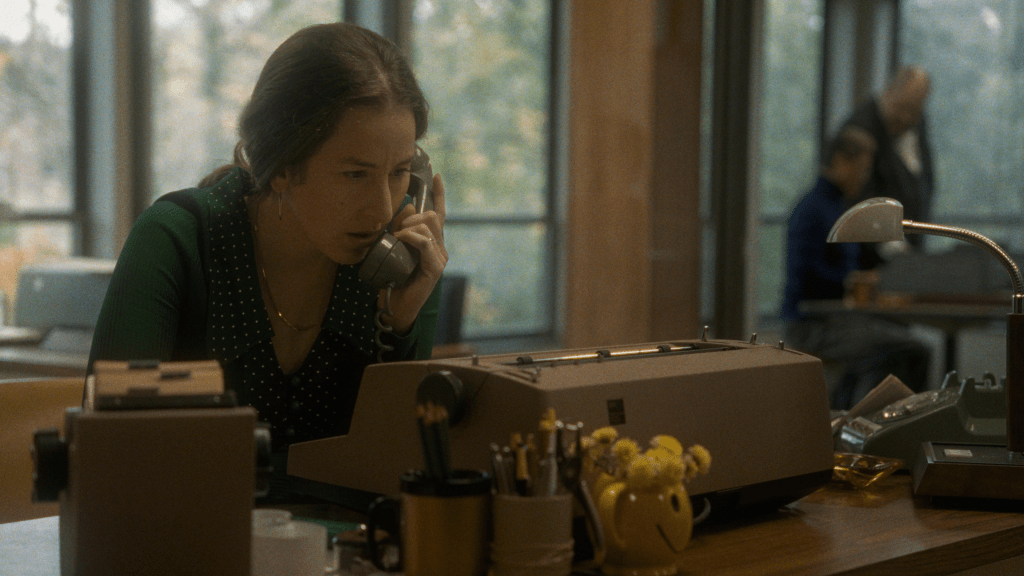
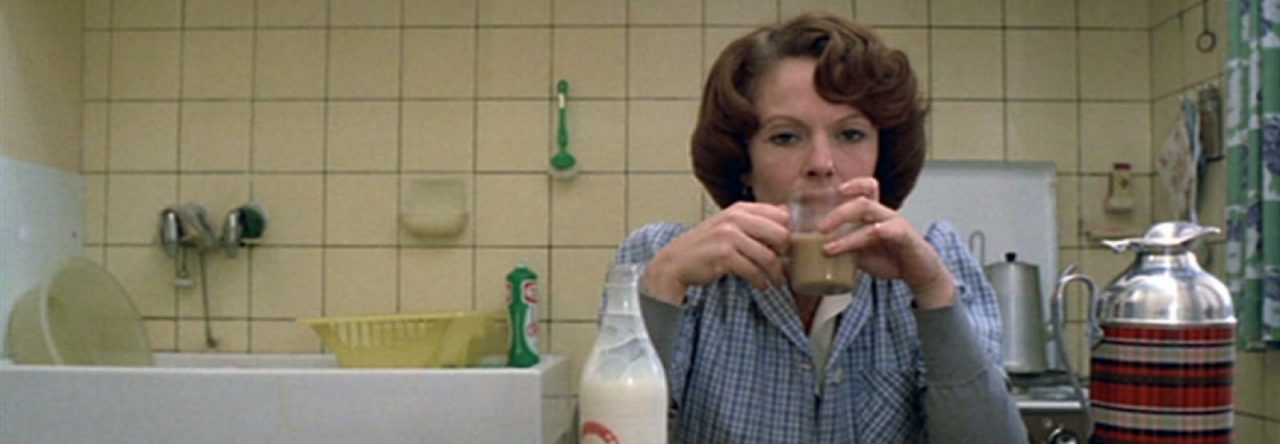
Starring Maggie Cheung as a fictionalized version of herself, Irma Vep is loosely the story of a French director René (Jean-Pierre Léaud) choosing to remake the 1915 ten-episode serial Les Vampires with Cheung playing the lead Irma Vep, an anagram for vampire. The film follows Cheung a non-French speaking actress from Hong Kong, on set for a few days of shooting where nothing goes as one would expect. Supported by costume designer Zoé (Nathalie Richard) who develops an instant crush on Cheung, she is thrown from moment to moment with little control over the circumstances.

The original Irma Vep (Musidora) from 1915’s Les Vampires

The plot synopsis is rather brief for this film, because there is A. very little of it, and B. what plot there is has next to no importance to the themes with which Assayas is wrestling. Irma Vep is an exploration of the history of French cinema, as well as its place in the wider film world in the mid-90s. As I warned up front, I am not a scholar in this department, so while some of my assumptions may be off base from what Assayas was attempting to get at, I am going to share my reading of the film.

Simply by being about remaking one of the cornerstones of French film history, especially a few decades before all movies became nostalgic look backs, Irma Vep declares that it wants to have a conversation with the countries past with the medium. Of specific note, after her first day on set, Cheung goes home with Zoé for an after-work party that she is hosting and runs across a pair of filmmakers discussing a film of theirs that Zoé calls “new” when they insist that the film is 20 to 25 years old. This is a clear allusion to the French New Wave and that what was revolutionary at the time no longer feels like where the country was cinematically. There is mention that the two directors do not make political films anymore which further emphasizes this move away from the New Wave and its aggressively progressive politics. While personally I don’t know that I buy this argument as films like La Haine had come out just a year prior, it is undeniably true that the New Wave had ended.

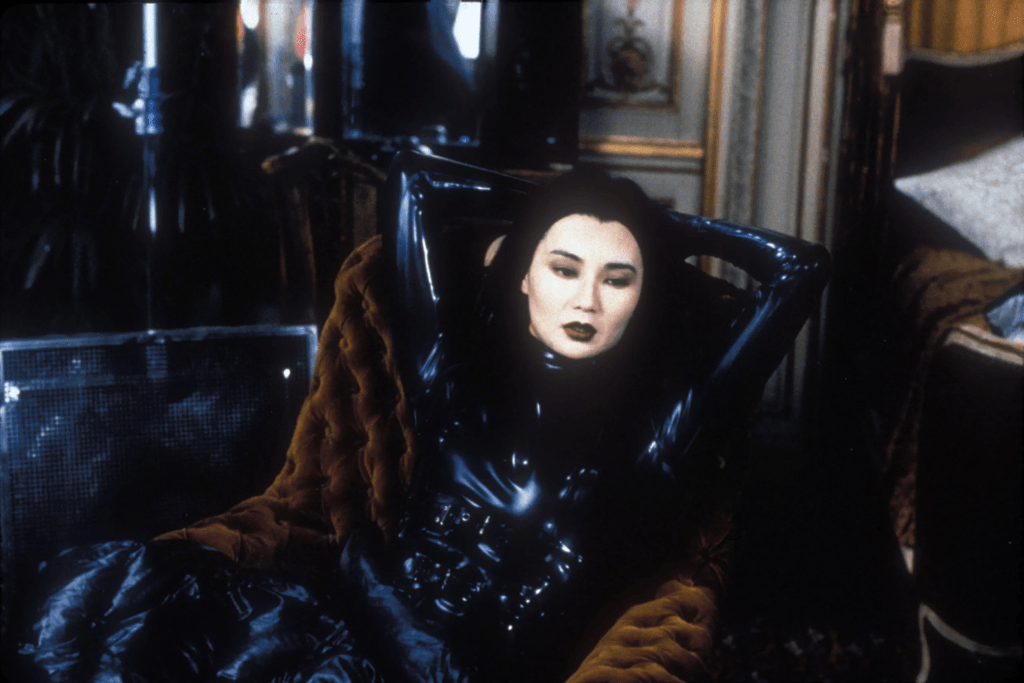
Maggie Cheung as a fictional Maggie Cheung as Irma Vep

Cheung represents France importing other cultures filmmaking into theirs. I think when also considering that in the miniseries remake Cheung’s character is instead American both represent a piece of the culture that France was being influenced by. From America, the hyperviolent indie boom (think Quentin Tarantino), and from Asia, Cheung herself was famous at the time from the Police Story and The Heroic Trio films (the latter of which is even played by René implying that is why he sought her out) represent France’s movement from Auteurism to more Vulgar Auteurism. Assayas also seems to worry that France’s film industry may be left behind as once a new director takes René’s place and does not believe a Hong Kong actress should play one of Frances most classic roles, Cheung flies not home, but to New York and Los Angeles to meet with Ridley Scott (who the real Cheung never worked for) and then her agent. This seems to be Assayas believing that America is the new home for the transgressive cinema that France had a near monopoly on for decades.

Filled with likely hundreds of references that I did not pick up, Irma Vep is an extremely deep text for being less than 100 minutes. While I would never recommend the film for someone looking to turn their brain off for a movie, if you are interested in engaging with the history that Assayas is grappling with, then Irma Vep is a French cinema 101, 201, and 301 rolled up into one unique package.

12/02/2025 – Bone Lake

The last few days have involved some rather high brow cinema, so today seemed like a good chance to prove that I don’t only watch 5 ½ hour Russian documentaries and heart throbbing dramas from auteurs. Today I reached into my 2025 back log and pulled out an aggressively sexual, sleezy horror film Bone Lake.

Starring Maddie Hasson (who despite what I originally thought is not Florence Pugh’s alias) and Marco Pigossi as Sage and Diego a couple whose relationship is on the precipice of change as Diego leaves his job teaching to work on a novel full time. They escape to a remote mansion on the titular Bone Lake only to have their weekend interrupted when it Will (Alex Roe) and Cin (Andra Nechita) show up as well having apparently rented the same place.

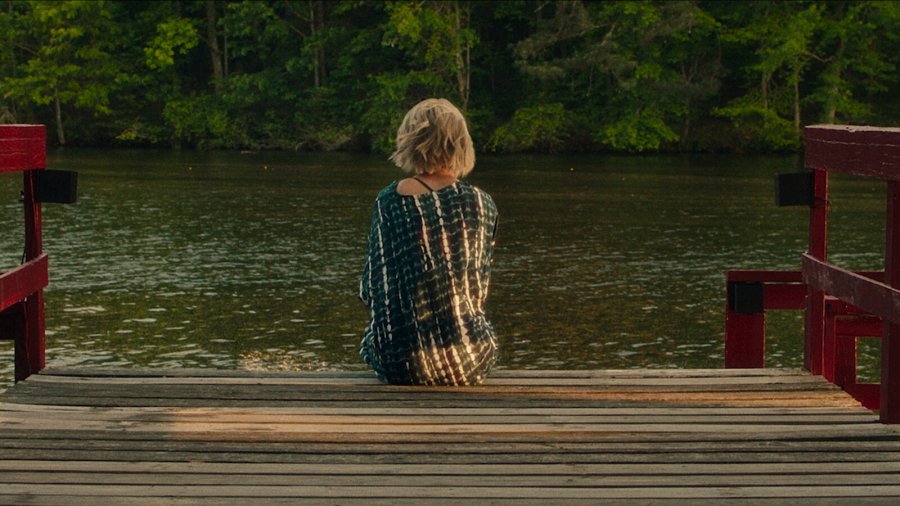
Marco Pigossi and Maddie Hasson as Diego and Sage

Mercedes Bryce Morgan directs the film by bringing a decent amount of style from the directorial chair for the journeywoman director. Her experience with directing music videos shows as much of the style is reminiscent of that medium. Perhaps the greatest accomplishment of her direction, however, is that she kept her vision untouched resulting in a film that is slightly gorier and substantially sexier than most films in this genre made today.

A significant amount of digital ink has been spilled in the last handful of years on gen Z’s disinterest in sex in movies. While I understand and respect the desire for more platonic stories in film, there is something to be said about enjoying some gratuitously horny cinema. Sex is a part of humanity worth capturing, and a titillating one at that. Bryce Morgan does not shy away from this piece of humanity and understands its inherent entertainment value.

Sage reaching for the showerhead in the bathtub

While Bone Lake won’t be brought up in the coming months as the awards conversation takes over Hollywood, it still fills a niche that has been increasingly shrinking in the current cinematic landscape. Bryce Morgan created a film that was first and foremost fun entertainment without resorting to endless flatly lit wide shots on a green screen. When so much of what makes it to theaters is $300 million blockbusters shot so safely that they risk nothing and $5 million arthouse gems (which don’t get me wrong I love), Bone Lake proves that pure entertainment does not have to be so safe it might as well be hermetically sealed.

12/01/2025 – My Undesirable Friends: Part I – Last Air in Moscow

When films cross the two-and-a-half-hour mark, that tends to be the point at which terms like bloat and poorly edited come into play. However, there exists a second line somewhere around the four-hour mark where the running time becomes a feature of the film rather than a bug. When one is locked in a room with the same few people for such an extended period (and it is essential that films this long be watched in one day with no more than a few intermissions), they become less characters on the screen and more personal acquaintances or even friends.

Julia Loktev’s five-and-a-half-hour epic of a documentary My Undesireable Friends: Part 1 – Last Air in Moscow is one such example of a film using its marathon length as an important part of the filmmaking. Through five chapters, the film makes a record of the last five months of TV Rain, the last independent, oppositional news organization in Russia, before they were forcefully closed after Russia’s invasion of Ukraine. While a 90-minute documentary on this subject would be informative and if done well impactful, Loktev’s decision to be as expansive as she was brought a power with it by getting to know a wide array of characters intimately.

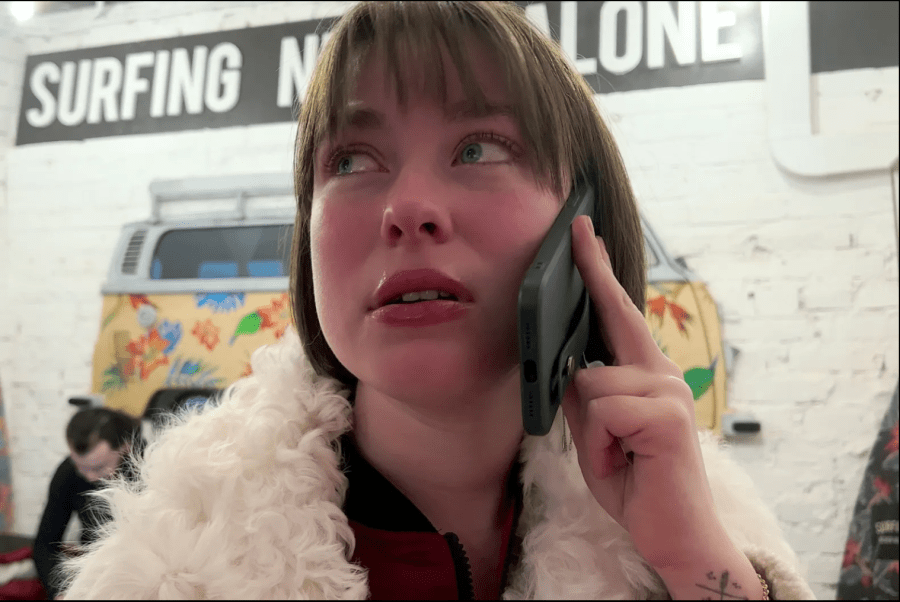
TV Rain employee “foreign agent” Anna Nemzer

Loktev is a Soviet-born American filmmaker who in October 2021 traveled to Moscow to create a documentary about Russia’s recent branding of oppositional journalists as “foreign agents” including her friend Anna Nemzer. Anna introduces Loktev to the contributors to TV Rain for which she has a show. The handful of journalists who originally were branded with the foreign agent label wear it with a combination of pride and fear and many use the required language they are required to include on every post for ironic purposes.

One of the genius decisions of the film is the chapter flow. Each individual chapter is presented in a cinéma vérité or slice of life manner. Most of the filming takes place in cars, the TV Rain studio, or people’s apartments, and each hour-long section seems most interested in giving the viewer a peek into the life of an oppositional journalist at that exact moment in time. When zooming out, however, the film takes a concrete shape. The initial two chapters provide a background for the people and the circumstances which they inhabit. The third chapter is a bit of a break from the intensity. Things are obviously still tenuous in each journalist’s life, however even as the walls close in they are able to enjoy the New Years holiday together. That moment is a welcome reprieve before the final two chapters leading until the very moment that the TV Rain employees are forced to vacate the soon to be under siege studio and exile themselves from the country.

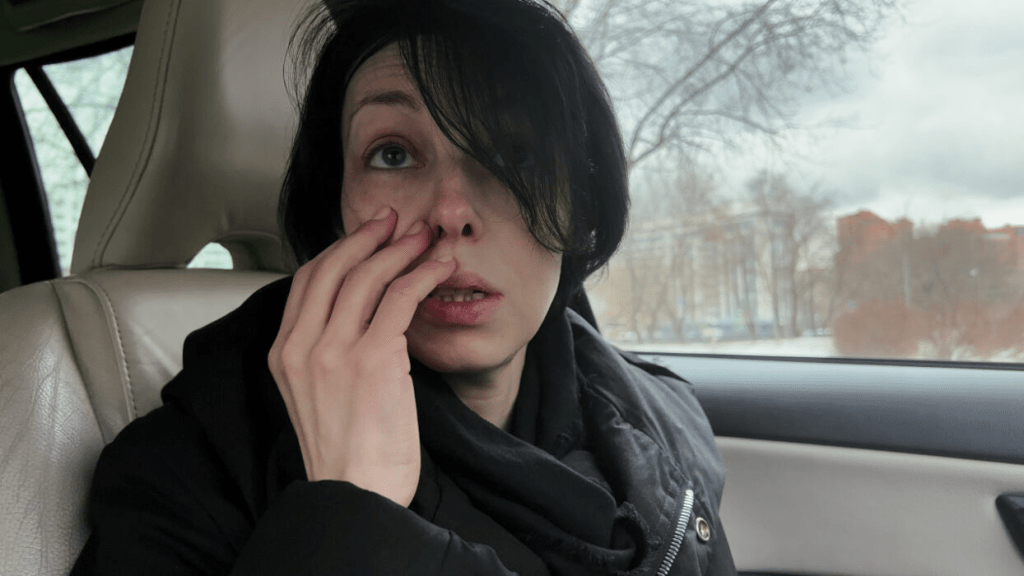
Ksenia Mironova

My Undesirable Friends is an engrossing cinematic experience starring journalists whom having spent so much time with I feel intimately connected to. The film teaches about the horrible human rights violations Putin is behind while keeping things personal. I cannot wait to dedicate another five plus hours to the topic when part II is released.