New Release Mondays – All We Imagine as Light

Grand Prix winner (second prize) at Cannes this year was the Indian film All We Imagine as Light, and it was easily the best of the big three award winners (Emilia Pérez was the Jury Prize winner and Anora won the Palme). While being produced in India, don’t expect any fantastical action or musical numbers as is common with Bollywood fare. Payal Kapadia’s film instead has more in common with a US independent film than the studio system in her country.

The film centers on roommates and nurses at the same hospital in Mumbai, Prabha (Kani Kusruti) and Anu (Divya Prabha) and their relationships. Prabha as the senior of the two women, has been married for years, but her husband has been working and living in Germany for quite a while and his calls have become less and less frequent. At the beginning of the film, it has been over a year since they’ve talked, but out of the blue he sends her a high-end rice cooker in the mail without so much as a letter. This brings her relationship or lack thereof to the forefront of Prabha’s mind.

Anu’s love life differs greatly from that of Prabha’s, but is no less complicated. She is in a relationship with a Muslim man Shiaz (Hridhu Haroon).  The cultural difference between the two means they must keep their relationship a secret, though their success at that is questionable as their relationship is the subject of gossip between the nurses at the hospital. Compounding on this is that her parents are constantly sending her pictures of Hindi men that they are trying to marry her off to.

The final plot line in the film follows Parvaty (Chhaya Kadam) a cook working at the same hospital as Prabha and Anu. She is being evicted from her home of 22 years by a predatory building company since she has no papers after the loss of her husband. Eventually she succumbs to the pressure from the builders and returns to her small village far from Mumbai with the help from Prabha and Anu where the second half of the film takes place.

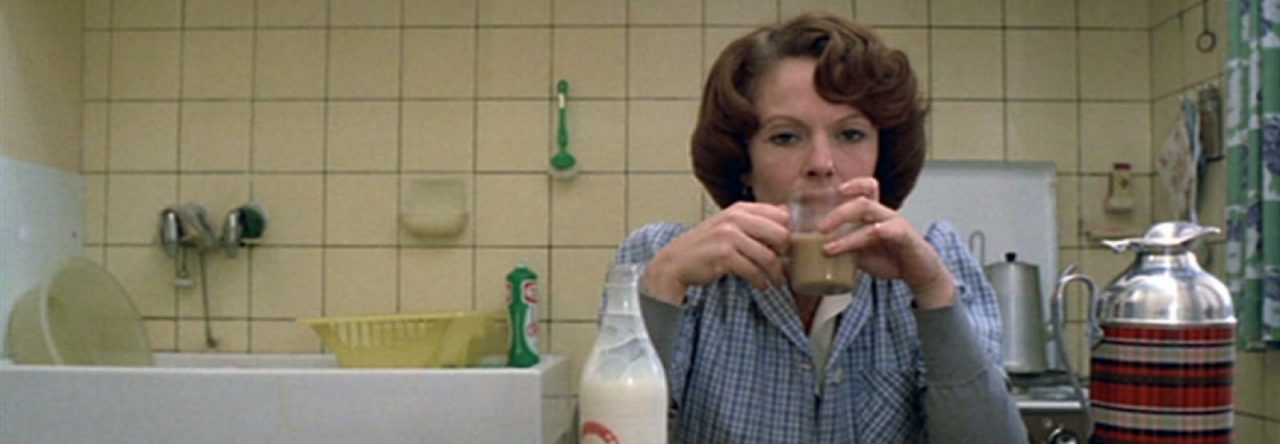
The beauty of the film is in the intimacy of both the relationships and the camera work. Cinematographer Ranabir Das holds tight on faces and hands to tell the story of how each character feels about the other. These close ups rely heavily on the actors to have perfect control over their facial expressions, and they live up to the expectations.

This intimacy is also expressed in the screenplay. Written by the director, Kapadia touches on both the day-to-day livings of her female protagonists as well as the major, or major to the characters, relationships with men. This blending of events makes the characters feel real and their experiences true to life. The lives of the characters feel lived in and personal, inducing empathy from the audience.

Intimate stories of women’s lives often get the short shrift in the film industry, especially in areas of the world where women have fewer rights, but Kapadia works against the system to create something special. Cannes missed out on having unprecedented back-to-back female filmmakers win the Palme as All We Imagine as Light is a perfect film.

New Release Mondays – Flow

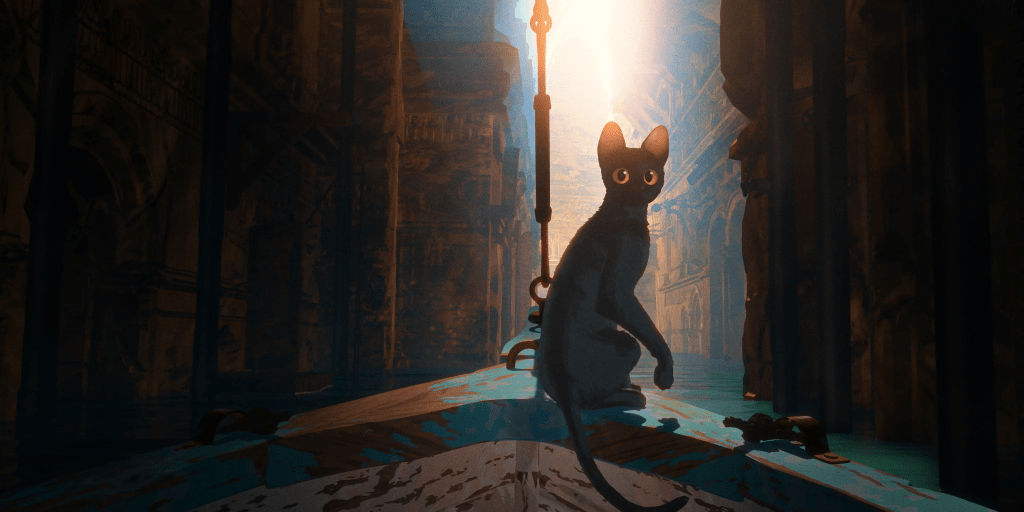
Set in a post-apocalyptic world where humanity is gone, but their past is still present, Flow utilizes this setting to create a beautiful world for its protagonist, a gorgeous black cat, to explore. The Latvian film directed by Gints Zilbalodis subjects the wonderfully rendered cat to a flood of biblical proportions forcing it to explore the world and cooperate with other animals against its natural instincts.

Cat traverses the flooded landscape on a boat it happens upon populated by a capybara which it is understandably tentative of. The makeshift crew of the boat expands to include a ring-tailed lemur, a labrador whom Cat had encountered before the flood, and a secretarybird. While in nature the animals would be at the best ambivalent to each other if not outright hostile, the boat brings with it an unspoken truce between the animals as they look to exist in the strange new world.

Zilbalodis shows real restraint in his characterization of the animals that inhabit the film. While most films would lean on humanizing the wild animals, each one feels genuine to its species when interacting in the world. This is captured both in small moments inserted into the film to remind the viewers they are watching animals (a moment of Cat chasing a sun sport as reflected in Lemur’s mirror stands out) as well as behaviors exhibited throughout. For example, Cat frequently retreats to the top of the mast for a solitary moment amongst the chaos of the animals. Likewise, Capybara is aloof and flops down on the deck of the boat to rest at random times. Most importantly, the animals never speak a language outside of their own noises, yet the feelings and motivations of each animal can clearly always be ascertained.

By keeping the animals so honest to their animalistic selves, the peril they experience as well as the joy hit the viewer more emotionally than a personified version would. Cat’s meows hit a nerve that any owner of felines understands intimately and caused this black cat owner to long to be reunited with her furball.

The only real exception to this naturalist portrayal of the animals is that they all seem to inherently know how to use the rutter to steer the boat, a job which Secretarybird takes point on once it joins the boat, but which each animal takes its turn at. This singular task is required for the animals to be able to successfully explore the newly aquatic world, but quickly falls into the realm of suspended disbelief as the rest of the animals’ behaviors feel so genuine to their species.

Another undeniable strength of the film is its visuals. The art is stylized in a way the eschews photorealism for a look that allows the animals to be more expressive, with giant eyes which speak wonders. Everything in the film is brilliantly colored in a fantastical way which while unrealistic compliments the magical essence of the situation. The remains of human civilization that the animals navigate feel both futuristic and ancient, which adds to the mystery of the world in which the animals live.

Flow is a perfect antidote to the American animation scene where even the best of films are filed with one liners and a constant state of irony left over from the 90s. The genuineness of the Latvian feature allows the viewer to connect more closely with the characters even though they don’t speak a word. Beautiful both in image and plot, Flow is the peak of what the animated medium can accomplish when allowing the creators to think outside of the snarky box in which most US animated studios reside.