A Man Called Otto: A Quaint but Pointless Remake

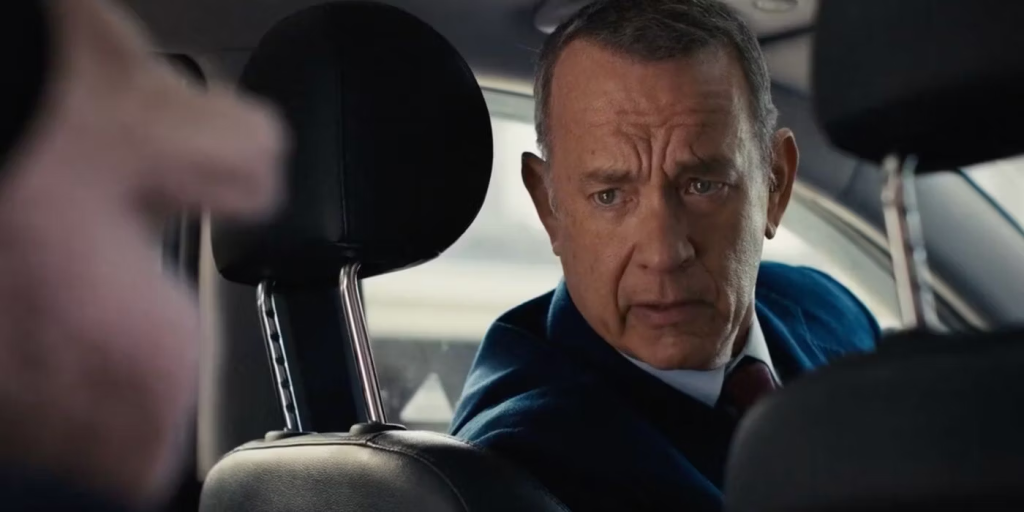
A Man Called Otto is Marc Forster’s remake of the 2015 Swedish film A Man Called Ove (dir. Hannes Holm) a quaint slice of life picture about the curmudgeonly, suicidal Otto.

Tom Hanks plays the titular Otto, a man who has lost the enjoyment he once found in life and instead has become bitter to the world around him. He begins his day by doing rounds through his gated community where he rebels against delivered ads, fixes other’s mistakes in recycling, and is genuinely rude to his neighbors who continue to try and reach out to him.

He attends his last day of work at a factory, where it is made clear that he was forced into retirement rather than choosing the decision on his own, after which he returns home with a length of rope and the intention of hanging himself. Work must have been an outlet for Otto’s meticulous nature and losing that left him with very little to do.

Just at that time the arrival of his new, and parallel parking challenged, neighbors convinces him to leave his apartment and park for them out of frustration. This good deed, even if done out of a selfish manner as Otto does not suffer incompetence well, changes his life as it introduces him to Marisol (Mariana Treviño) the Mexican woman who makes it her personal responsibility to befriend the socially prickly Otto.

The film continues from there with Marisol slowly thawing Otto’s frozen heart. While doing so, the film makes increasing use of flashbacks to tell the story of Otto(played by Truman Hanks in flashbacks) and his late wife Sonya (Rachel Keller). This provides context for some of Otto’s rudeness while fleshing out the story of the film.

Tom Hanks may be one of the great actors working today, but in this film his performance is greatly overshadowed by Treviño’s, who is new to the Hollywood system. Her constant quips at the sullen Otto’s expense provide most of the laughs for the film.

A Man Called Otto falls for the common plight of foreign films remade into English only a few years later in that the film offers very little new outside of the language change. One could easily just watch A Man Called Ove, assuming they are amiable to reading while they watch, and get the same value out of it.

This pointlessness is further exemplified by the fact that the film feels very slight. Otto’s story is interesting enough to keep one in their seat for two hours, but it has little staying power. A Man Called Otto is fine January viewing but will not be remembered come year end.

★★½

Women Talking: A Literal Masterpiece

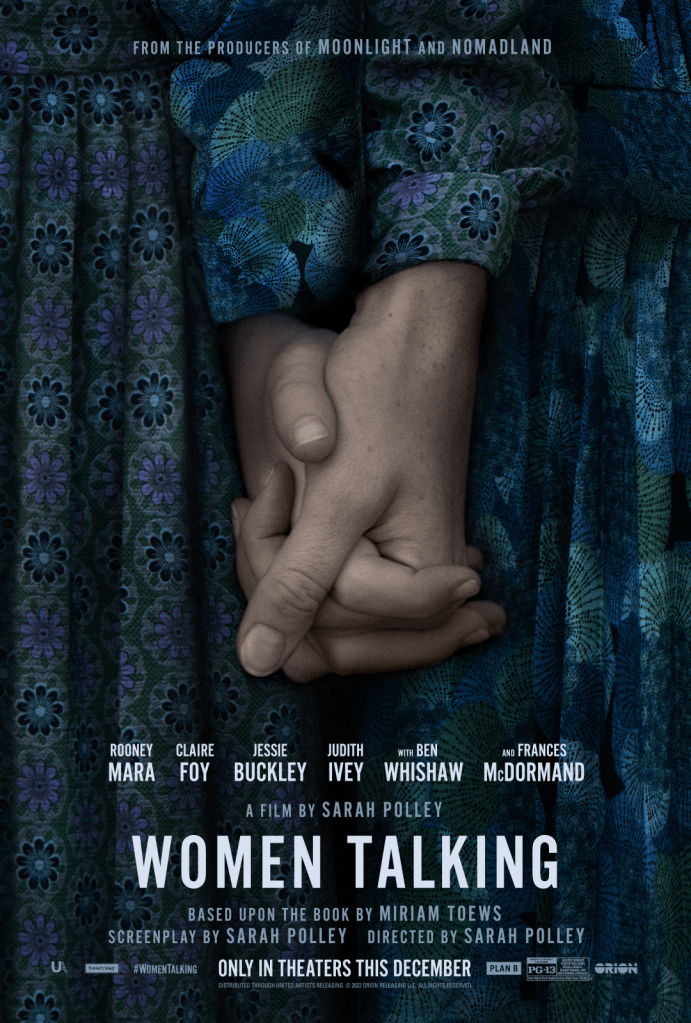
Sarah Polley returns to the feature director’s chair for the first time in ten years, Stories We Tell, and her first narrative film since 2011’s Take This Waltz with the awards favorite Women Talking. Her new costume drama utilizes an all-star cast to create a captivating piece of cinema despite the film living up to its title and being almost exclusively women talking.

The film takes place in 2010 in a Mennonite village directly following an incident where the women of the community caught a man tranquilizing and sexually assaulting a woman. The man gives up a list of other men who are guilty of the same practice and is arrested by the local town. When all but one of the other men go to town to bail the guilty parties out, the women of the town gather to discuss their options going forward.

Forgiving the men, staying and fighting them, or leaving are the choices that the women consider, and despite being illiterate they organize a vote for all the women to decide their fate. When the vote returns, it results in a tie between fighting and leaving so three families convene to discuss their eventual decision.

Ona (Rooney Mara), Salome (Claire Foy), Mariche (Jessie Buckley), and Janz (Frances McDormand) along with a handful of other older girls and women and the only man still in the village August (Ben Whishaw), whose only job is to take the minutes of the meeting, lock themselves in a barn to discuss their future.

Janz immediately gives an ultimatum that forgiving the men is the only option she will accept as it is the only way that they can still attain heaven according to their faith. When the rest of the women rebuke the idea, Janz storms off leaving the remaining women to deliberate between the other two options. The film proceeds from there with the women conversing with only one short break for them to perform their traditional duties.  

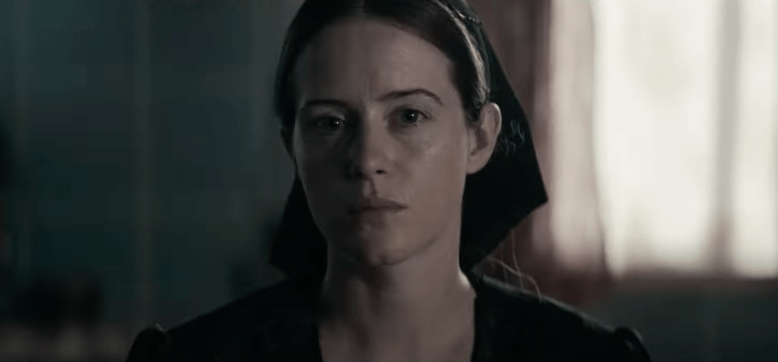
While the bulk of the film may seem actionless, the emotion displayed by each woman is entrancing as they grapple with an unknown future. Claire Foy declaring that if she should stay, she “will become a murderer” is devastating. Rooney Mara aptly captures the horror of her situation, an unmarried woman who has just realized that her pregnancy was due to the evils of men and not the supernatural. The terror that the women have endured becomes palpable because of the exquisite acting.

Much has been made about the color grading of Polley’s film, and while the decision is stark, it is both not without reason and not as distracting as out of context screen shots make it appear. The washed-out color leaves the film almost monochromatic echoing black and white filmmaking of the past. This homage to an older time reflects the out of time feeling that the Mennonite community exhibits, and especially the ancient mentality that would allow men to do this to women without consequence.

Highlighted by the unnerving acting trio of Mara, Foy, and Buckley Women Talking is a tour-de-force for a post #MeToo world.

★★★★½

Broker: Koreeda’s unique retread

Japanese auteur Hirokazu Koreeda returns to some recently treaded waters in both plot and theme with his South Korean drama Broker. While the comparisons to his Palme d’Or winning film Shoplifters (2018) are undeniable, he manages to create something fully unique and wonderful despite the similarities.

Broker much like Shoplifters revolves around an abandoned child as its inciting incident. So-young (Ji-eun Lee) is a young woman who leaves her baby Woo-sung in a baby box at a church, an actual thing in which one abandons babies in South Korea, where he is found by Ha Sang-hyeon (Song Kang-ho best known for his role in 2019’s Parasite) and Dong-soo (Gang Dong-won). The two men instead of processing the baby into the church’s orphanage, delete the footage of the drop off and take the baby home to sell on the black market.

In a slight change of feeling, So-young returns to the church to see her baby but finds it not there. Ha Sang-hyeon out of a sense of obligation tells So-young where her Woo-sung is and that he intends on selling him. They agree to do so as a team, splitting the money 50/50, and set out on a trip to a potential buyer.

Unbeknownst to the three brokers, two police officers Soo-jin (Bae Doona) and detective Lee (Lee Joo-young) know about the intent to traffic the young baby and follow the group on their journey to catch them in the act.

Throughout the rest of the film, Broker continues to layer on additionally plot points to build tension for the group of would-be criminals. This crescendos in intensity, but without ever overshadowing the small personal revelations of the characters that are the primary selling point of the film.

Another way in which Broker mirrors Shoplifters is in its examination of what makes a family and especially the power that can exist in non-traditional families. So-young and Dong-soo both grew up without a traditional family and have resorted to less than legal means to sustain themselves in their adult lives because of this lack of foundation. San-hyeon on the other hand has an ex-wife and daughter that he feels bad about not being a part of their life. All three brokers have every reason to be jaded about they concept of family, yet together they find a sense of belonging.

It is clear that they have not been completely disillusioned by the concept of family based on their pickiness in selling off Woo-sung. Finding a loving family for the baby none of them can take care of is of primary importance, the cash payment while still essential to them is only secondarily so.

Koreeda’s films always take place in the moments between what little action there is, and this remains true even in Broker’s slightly more active plotline. The tension in wondering if the brokers will get caught by the following police is interesting, but nothing compares to the meticulous work he puts into the dialogue between characters. They slowly reveal themselves to each other and by proxy the audience as a way of revealing universal truths.

★★★★