
Lately I have been feeling a romantic yearning re-enter my life, and with it has come the need to expand my sapphic cinema knowledge. While I have seen quite a few in the genre, there are quite a few from cinema’s history that I have missed out on, and if I am going to fill some holes, I might as well start at the beginning.
Mädchen in Uniform directed by Leontine Sagan and Carl Froelich is a German film from 1931 that is largely considered to be the first explicitly lesbian feature length film. Created in a Germany that soon would fall to Hitler and the Nazi party and their violent hatred of anything queer, Mädchen in Uniform feels like something far ahead of not only it’s time, but more transgressive than films would be for the following 40 years with the advent of Hays Code in Hollywood four years later.
Set in a boarding school that is light on funds and strict on discipline, Mädchen in Uniform follows Manuela (Hertha Thiele) as she is enrolled in an all-girls boarding school. Despite initially appearing meek in front of teachers she quickly fits in with the other girls, including sharing many of their crushes on one of the teachers, Fräulein von Bernburg (Dorothea Wieck), which quickly turns into complete infatuation when Bernburg gives her special attention.
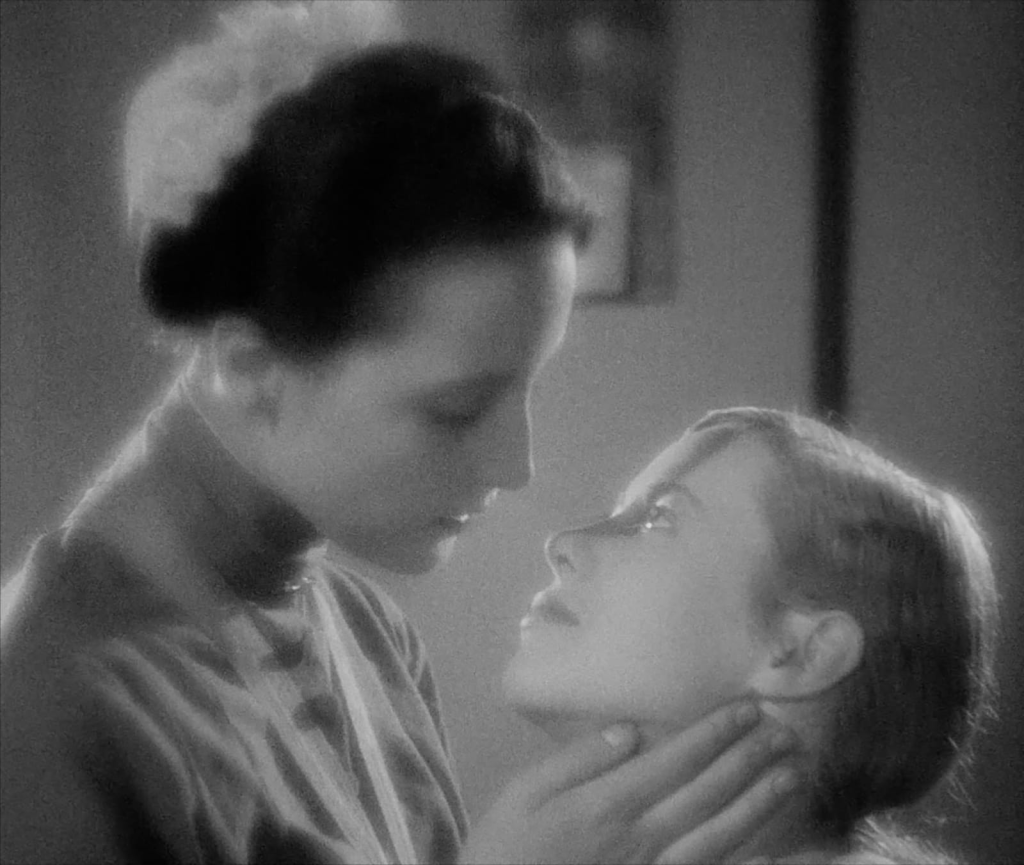
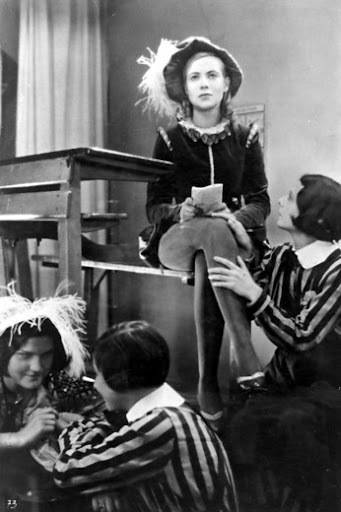
After portraying a man in a school play, where ironically she was allowed to show her legs more than the allowed girls uniforms, and getting significant attention that could be construed as sexual for a young girl going through puberty, she gets drunk on the punch that the cooks spiked for the girls. While intoxicated, Manuela loudly exclaims her feelings for and reading of the private moments she has experienced with Bernburg, but when the headmistress overhears immediate consequences for both student and teacher follow.
Having a woman as the primary director (Froelich is listed as a supervisor) keeps the film in the spirit of a childhood crush rather than a leud, titillating affair. Having a crush on an older woman who shows compassion and cares for us in a way that no one has before is a rite of passage for any girl with sapphic tendencies. Sagan captures the lovesickness of youth in a beautiful and surprisingly candid way for the time.
While the film clearly lacked the more technical cinematic language we have today with odd edits between over the shoulder shots and tight closeups, the film is well paced and builds to perfectly written and shot climax. When considering the place and time that this film was released, one line from Fräulein von Bernburg stands out as not only progressive for the time, but would still be seen as radical from some groups today: “The spirit of love, it takes on a thousand forms.”
 Woman With A Movie Blog