While most people have already given up on their 2025 New Years resolutions, I’ve been stuck in 2024 for the last few weeks as I waited for films to expand to more cities so I could finally see them and get this list out. This last year was a relatively light film going experience for me, as the six months I spent in Minnesota, I was largely unable to get to the theaters. That said I still saw over 90 new releases including most of the things on my list (I’m mostly just sad that no distributors were willing to release No Other Land). As always, I’m interested in evaluating how much of my film watching and enjoying comes from female (and this year for the first time a non-binary) directors. This year, 9 of the films in my top 2 were made by non-male directors which is a pretty sizable number given that men still make up the vast majority of directors (though the numbers are slowly but surely getting better). Now, onto the list.
25. Flow (Dir. Gints Zilbalodis)

While 2024 was a relatively great year for animated films, only one film will be making my year end list and then even just in the 25th slot. That said Flow is more than deserving of its place on this list. The Latvian film tells a story of biblical proportions as a great flood devastates the land which humans have already left. In their absence, the film is populated with various species of animals, none of which talk in a language humans can understand. Having characters who don’t speak is always a risk in any film, especially in one devoid of human facial experiences, but Zilbalodis delivers despite this hindrance as the animals which inhabit the world are vibrant, alive, and each have their own personalities. The black cat at the center of the film was so convincing that I found watching the film in the theater to be almost torturous as I missed my own black cat who was less than three miles away at home so much. Stunningly beautiful, Flow is the best animated film of the year, and a great way to kick off my list.
24. Anora (Dir. Sean Baker)

Sean Baker has made a career out of humanizing sex workers, and Anora is another entry into that lineage of film. A transcendental Mikey Madison plays Ani (or the titular Anora) who evolves from sex worker just doing her job to girlfriend for hire and eventually wife of Ivan (Mark Eydelshteyn) the unbelievably rich son of a Russian oligarch. When his parents’ goons come to Ivan and Ani’s home to confront him, Ivan flees leading to a screwball comedy as the goons along with Ani search the city for Ivan. It may be lower on my list than most people’s as the search for Ivan dragged on a little long in my book, there is no denying that Sean Baker is a masterful filmmaker and the way he elevates his protagonists is commendable. The Palme d’Or winning film may be a little messy at times, but there is no denying Madison has immaculate acting chops and is deserving of all of the recognition.
23. The Fire Inside (Dir. Rachel Morrison)

While most people were aware of three of the films that opened on Christmas this year (Babygirl, Nosferatu, and A Complete Unknown all of which missed the list) it is the fourth film that opened on the holiday that I believe was the best. What is at it’s heart a sports film, The Fire Inside spends just as much time after its protagonist wins the gold medal to tell the story of the disrespect female athletes receive especially when they are in sports that are seen as less feminine. With a strong lead performance by the young Ryan Destiny as Claressa Shields and a stand out performance from the Oscar nominated Brian Tyree Henry as her coach Jason, the film takes what should be a rags to riches story but brings it back to reality. Even after proving herself the best in the world, Claressa a Flint Michigan native still has to fight tooth and nail for respect in a world antagonistic against strong Black women, and director Rachel Morrison is able to capture that struggle and agony from a young woman who did everything right but still has to fight to survive.
22. A Real Pain (Dir. Jesse Eisenberg)

In A Real Pain, Eisenberg and Kieran Culkin play cousins who take a Holocaust tour of Poland in the wake of their grandmother’s passing. While previously close, the two have drifted over the years as Eisenberg’s David has settled down with a wife and child while Culkin’s Benji remains as aloof and free spirited as ever. These contrasting personalities inevitably lead to clashes between the two as their emotions are already high given the circumstances of their reunion. Set primarily in David’s viewpoint, Benji can be seen as infuriating, yet Eisenberg paints the film with a deft hand to show how each cousin is mourning in their own way and acting out accordingly. Excellently acted by both, Culkin’s vast oscillations in mood in an understandable and believable way steel the show.
21. We Live in Time (Dir. John Crowley)

Yes, the crazy horse poster movie made my year end list. This is a film that seemed to disappear from the conversation even before it came out, but I think the chemistry between and acting prowess exhibited by Florence Pugh and Andrew Garfield carry this film excellently. While this film is certainly a melodrama, that moniker is often unfairly maligned and when done well can still result in an excellent piece of filmmaking. Pugh in particular is remarkable as Almut, a chef/ restaurateur. Jumping between years the relationship between the two leads is always believable and captivating. Crowley’s decision to tell the story non-linearly is welcome as it allows lighter moments to be intercut with the darker, more melodramatic happenings that result in a film that feels much more even than had it played out chronologically.
20. Bird (Dir. Andrea Arnold)
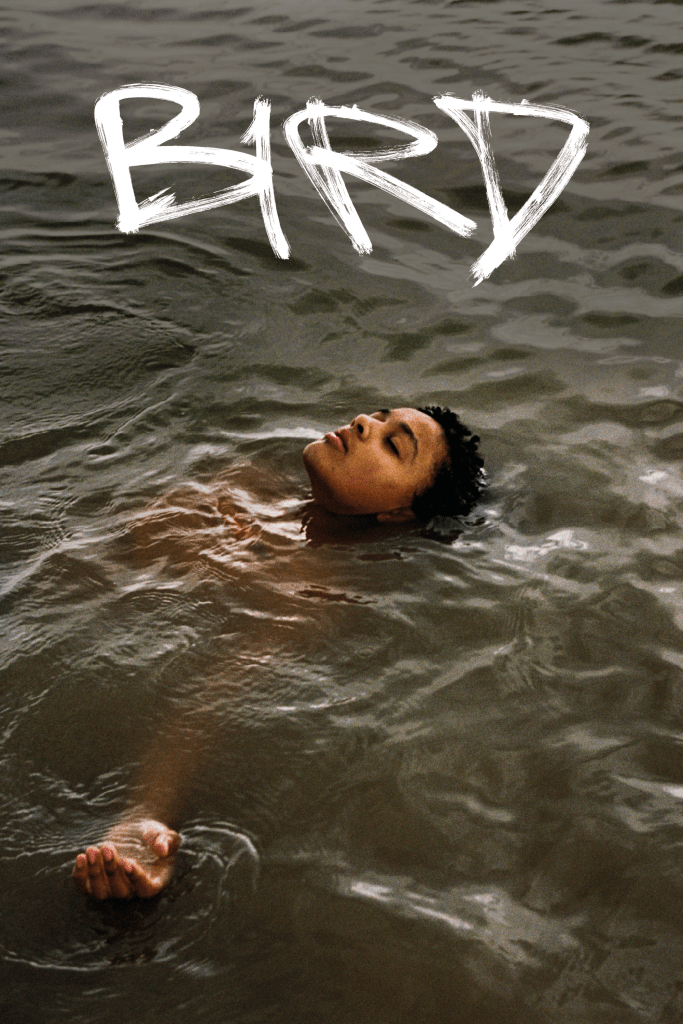
After the huge success of casting at the time non-actor Sasha Lane in her previous narrative feature American Honey, director Andrea Arnold once again finds gold in casting Nykiya Adams in her first feature film as Bailey, a 13-year-old girl squatting in an apartment building outside of London with her father Bug (Barry Keoghan), his girlfriend and her daughter. Arnold once again captures the teenage angst of her young female protagonist as Bailey wants nothing to do with her father and wants to live as if she’s older than she is. Accompanied by a mysterious young man named Bird (Franz Rogowski) Bailey takes on tasks too adult for her to deal with though she feels pressured to do so. Culminating with a bit of magical realism, Bird captures the fine line between childhood and adulthood and how girls living in less than ideal circumstances are forced to cross that line sooner than they should. Arnold as always has a great deal of respect for her protagonist and captures her experiences without judging like others might.
19. His Three Daughters (Dir. Azazl Jacobs)

Unceremoniously dumped on Netflix, His Three Daughters could have received some significant Oscar pushes had it had the chance to find its audience on the big screen. Carrie Coon, Natasha Lyoone, and Elizabeth Olsen play sisters Katie, Rachel, and Christina reunited in the last days of their father’s life sharing a single roof for the first time since they were kids. Between the already stressful circumstances of their reunion and their conflicting personalities, tensions abound between the three women as one thing compounds upon the next. These tensions escalate throughout the film leading to numerous misunderstandings and fights letting each of the three women stretch their acting muscles in what proves to be an excellent showcase for all three.
18. Gasoline Rainbow (Dir. Turner Ross and Bill Ross)

Following five high school graduates as they take one last road trip to the coast before leaving for college Gasoline Rainbow is a tone poem capturing a moment in one’s life where the future appears endless before you, much like the Pacific Ocean that the teens strive to see. Embarking in an old van that appears to be on its last legs, the film captures the listlessness of small town life and the urge to see what exists beyond the seemingly endless stretch of highways surrounding all the five friends have ever known. Light on plot, the Ross brothers capture what its like to be a certain age in a certain place knowing that life will change forever in a couple of months in ways both wanted and unwanted. An ethereal road trip movie that is timeless.
17. The Last Showgirl (dir. Gia Coppola)

Sometimes a film acts as a reclamation project for a disrespected actor and makes one question what they may have been missing for years or decades, and The Last Showgirl is that project for Pamela Anderson. Directed by Gia Coppola, the film centers Anderson as Shelly a Las Vegas showgirl at a storied show in the last weeks of the show’s life. Anderson’s performance is mesmerizing as the former star of the show coming to terms with her aging and losing direction with the closing of the show that she kept her job at largely as a legacy piece. The film comments on society’s lack of want or respect for women performs once they age out of their traditional beauty standards as well as the sacrifice that women have to endure to provide for their loved ones. Refusing to be just a story of loss, the film also shows the power of female solidarity and its power to unite even despite momentary fights. Ending on an ambiguous reality questioning moment, Anderson’s performance is career defining and deserving of all the accolades.
16. Tuesday (Dir. Daina Oniunas-Pusic)

Of all the Seinfeld alumnus Julia Louis-Dreyfus proves time and time again that she has the most skill and range. Tuesday sees Louis-Dreyfus flexing her dramatic muscles as the mother, Zora, of a sick daughter, Tuesday (Lola Petticrew), who is forced to confront death who arrives at their home in the form of a talking bird (Arinzé Kene). Even before the appearance of death, Zora largely hides from her daughter unable to stomach the inevitability of losing her, and attempts to destroy the manifestation of death when he makes himself known to save her from the pain. Wonderfully layered in storytelling and acted emotion, Tuesday is an underseen gem that plays stronger than one would expect largely because of Louis-Dreyfus’s performance.
15. The Beast (Dir. Bertrand Bonello)

Maybe it’s my person love of French cinema, but in my opinion, Léa Seydoux is one of the most underappreciated actresses working today. The Beast is the most recent film in which she excels. Set in the near future where artificial intelligence is in control, Seydoux’s Gabrielle undergoes a process of cleaning her mind of traumas from past lives so that she can rid herself of emotions and take a higher position in the new world. From this premise, the film takes a light Cloud Atlas approach to filmmaking where Seydoux plays her predicesors at various points in time, with George MacKay playing a man attached to her in one way or another in each moment. While I personally would have welcomed more time periods, and an even longer run time, the film is still a miraculous experiment and earns it’s spot high up on my list.
14. Challengers (Dir. Luca Guadagnino)
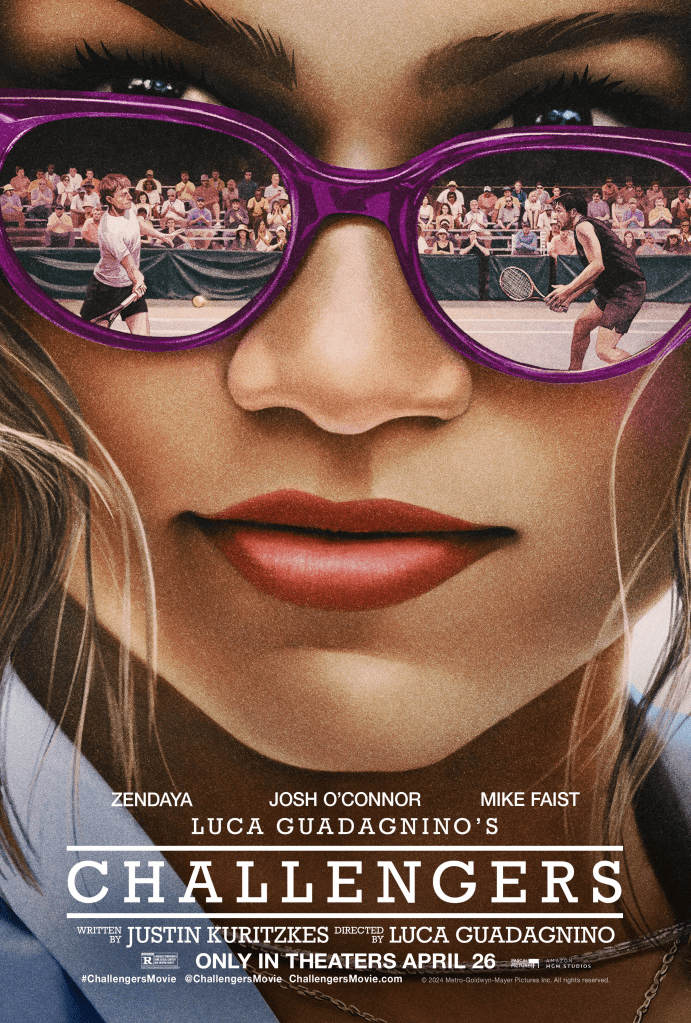
Guadagnino released two films this year, and while he seemed to think Queer was the one worth pushing for awards, Challengers was in my mind the undeniable better film. Boasting a year’s best score by the duo Trent Reznor and Atticus Ross, every moment of the film is propulsed forward by a litany of great cinematic decisions. Between the unique “ball cam” camera movements, oozing sexual tension between all three leads, time jumping, and the afore mentioned booming score, every second of Challengers is a welcome affront to the senses. The love triangle between Art, Patrick, and Tashi (Mike Faist, Josh O’Connor, and Zendaya) is a delight to view, and the constant phallic imagery (special shout out to the churro) prove that every leg of the triangle has just as much sexual passion as the other.
13. Conclave (Dir. Edward Berger)

2022’s surprise Oscar breakout All Quite on the Western Front introduced the world to German director Edward Berger, but while his skill was undeniable, few would have guessed that he would make a relatively high grossing English language film for his next outing. Conclave tapped into the underserved adult audience at the box office as the mystery/ drama surrounding the election of a new Pope under the supervision of Cardinal Lawrence (Ralph Fiennes) was a true crowd pleaser. With a stacked supporting cast including Stanley Tucci, John Lithgow, and Oscar hopeful Isabella Rossellini all putting in great performances, it’s the deft direction by Berger that highlight the film and prove he is more than a one hit wonder.
12. Red Rooms (Dir. Pascal Plante)

Taking place during the trial of fictional serial murderer Ludovic Chevalier, Kelly-Anne (Juliette Gariépy) has an odd obsession with the case. Presumed to be fan girl of the charged, Kelly-Anne’s true motivations remain mysterious throughout the runtime of the psychological thriller. Appearing at times sociopathic, Kelly-Anne’s obsession takes her well passed the line of acceptability and legality in a way that keeps one guessing throughout. The film wouldn’t have succeeded without Gariépy’s miraculous portrayal of the cold Kelly-Anne. Like all good thrillers, Red Rooms kept me glued to my seat watching what would happen next with apprehension and anticipation.
11. Love Lies Bleeding (Dir. Rose Glass)

Maybe putting the Kristen Stewart lesbian film on my list is a little cliché, but the heart wants what the heart wants. All jokes aside, Glass follows up her moody horror film Saint Maud with a bombastic, ‘roided out fever dream of love story. Jackie (Katy O’Brian) enters Stewart’s Lou’s life as a hurricane, breaking her out of her uneventful life living in the shadow of her father (an unhinged Ed Harris). The pair fall for each other fast and have undeniable chemistry as the film indulges in the sexiness of their relationship. Mix in some murder complete with unsettling gore, and the film is a singular experience in 2024 film.
10. Evil Does Not Exist (Dir. Ryûsuke Hamaguchi)
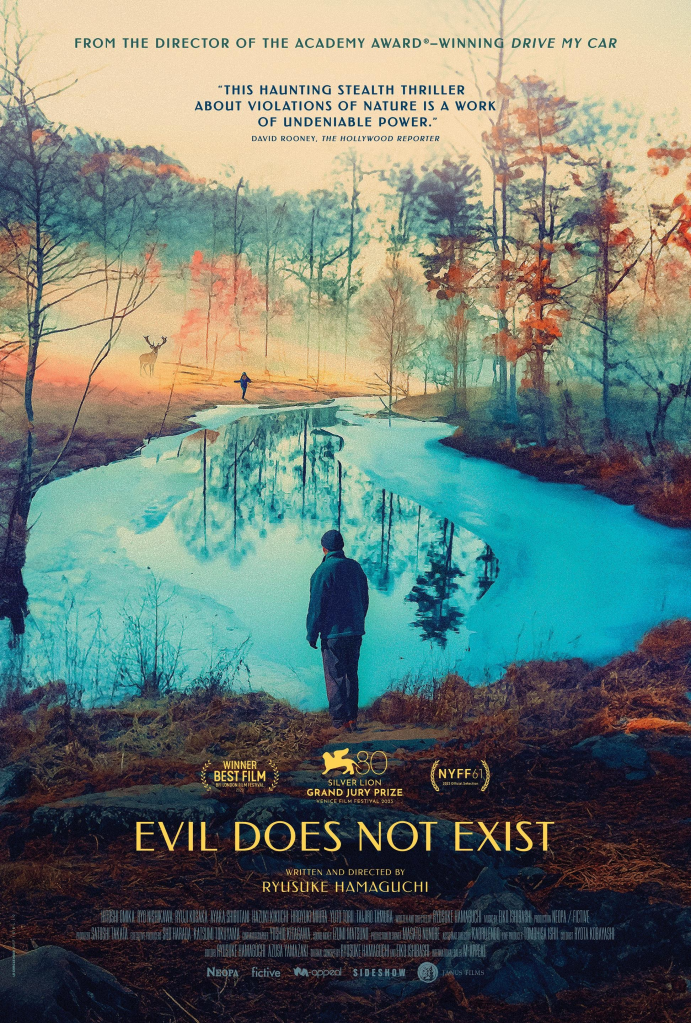
A few years removed from his Oscar surprise Drive My Car, Hamaguchi returns with another quite contemplative Japanese feature. Takumi (Hitoshi Omika) lives in a remote wooded village with his young daughter Hana(Ryô Nishikawa) doing odd jobs for the other village residents. When a corporation plans on building a glamping facility in the area, the village becomes concerned with the pollution it will bring to their water supply. Despite this threatening presence, Hamaguchi still takes his time and uses silence to force the audience to identify with the serenity of the village and question the upheaval that the proposed building would have on the community.
9. The People’s Joker (Dir. Vera Drew)

For the first time in the over a decade since I’ve been putting out these lists, a comic book movie has made the list… sort of. For those who don’t know, The People’s Joker is Vera Drew’s parody of the DC villain. It debuted at the Toronto International Film Festival in 2022, but it was quickly shut down with a cease and desist from the comic corporation. Two years later the film finally received a release as it was deemed protected by parody law. The first of two trans allegories on my list Drew plays Joke the Harlequin, a trans comedian working in an underground anti-comedy club in Gotham. The film touches on identity and finding oneself all through the guise of famous comic characters. If like me, you’re not a fan of the stranglehold the comic industry has had on the media landscape the past decade and a half, don’t let this one pass you by assuming it’s more of the same.
8. How to Have Sex (Dir. Molly Manning Walker)

Taking place during the British summer holiday, How to Have Sex centers around three female friends as they take place in teenage debauchery and attempt to get laid. Tara (Mia McKenna-Bruce) is especially anxious to have sex, as she never has before. Director Molly Manning Walker plays on the presumed importance of losing one’s virginity and explores how sex as a symbol can be damaging when not emotionally prepared for it. McKenna-Bruce embraces her character’s mental state after losing her virginity in a way much different than she expected. Her dissociated wandering after the incident and eventual breakdown to her friend were some of the best acting moments of the year.
7. Sing Sing (Dir. Greg Kwedar)

For all the accolades I will sing for the distribution studio A24, Sing Sing was one of the largest failures in their tenure. Not because the movie is bad, obviously as it has made my top 10 of the year, but because they completely botched the distribution of the film. It never even came close to opening wide which likely cost it quite a few Oscar nominations. That said, even a baffeling distribution model shouldn’t be enough to deny Colman Domingo his second consecutive Oscar nomination as the enigmatic prisoner John Divine Whitfield. The film headlined by Domingo imparts the importance of art programs in correctional facilities to the wider public and is an essential film in humanizing the incarcerated population.
6. The Breaking Ice (Dir. Anthony Chen)

One of the least seen films on this list, The Breaking Ice touched me in a way that I was ill-prepared for. Li Haofeng (Haoran Liu) is a twenty something man lost in the world. He is constantly receiving calls from his therapist’s office concerned that he hasn’t shown up to his session and seems unsure of what his life is for. While out of town for the wedding of a college friend, he ends up in the company of a tour guide Nana (Dongyu Zhou) and her friend Han Xiao (Chuxiao Qu). The three of them create an immediate friendship that hovers in the liminal space between platonic and romantic and brought my depressed self a lot of hope in the cold winter.
5. Nickel Boys (Dir. RaMell Ross)

Shot almost entirely in first person, RaMell Ross’s devastating examination of the criminalization of Black boys, is a masterwork. Chronicling the friendship of two Black boys, Elwood (Ethan Herisse) and Turner (Brandon Wilson), who meet in Nickel Academy, a reform school for criminal youth with a sordid secret Nickel Boys pushes the boundaries of the medium to induce sympathy for its two subjects. By putting oneself directly in the eyes of the dual protagonists, one is able to empathize with the unjust lot in life they received. Early on the film plays loose with narrative structure playing only short clips over long periods in time, but once Elwood enters Nickel and meets Turner, the film takes a somewhat more narratively structured approach and is stronger for it.
4. Do Not Expect Too Much from the End of The World (Dir. Radu Jude)
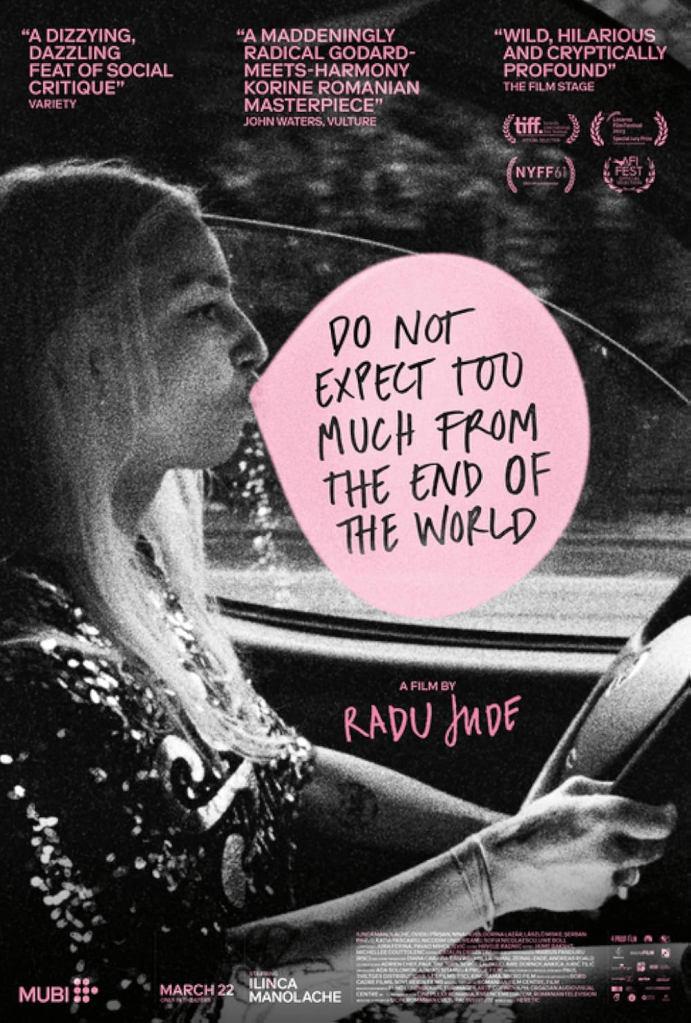
At nearly three hours long, this Romanian film will most assuredly not be for everyone, especially as Angela’s (Ilinca Manolache) alter-ego Bobita is tailor made to be a turn off, but the brashness of the film and its lead are essential to the feel of the film. Jude’s film can be seen as a hit piece against capitalistic tendencies and the corporations that have complete control over a working-class person’s ability to survive in the world. Overworked and underpaid, Angela is put face to face with the people whose lives her bosses directly negatively impacted, but in need of her paycheck she escapes into short videos under her assumed male chauvinist identity as a reprieve from the world crumbling around her.
3. All We Imagine as Light (Dir. Payal Kapadia)

Something needs to be done about the best international film category at the Oscars because countries refuse to put forward their best films (especially India between this and RRR in 2022) leaving them unable to be nominated thus denying them of the recognition that they deserve. All We Imagine as Light is a wonderful picture following three women living on their own in Mumbai. Directed by a woman, Payal Kapadia, the film captures the intimacy between female friendship and its universality even if not more so existent in a country where women’s rights to independence, especially in making their romantic decisions, is less common.
2. The Brutalist (Dir. Brady Corbet)

Sometimes upon first viewing of a film, I don’t think anything special of it, yet even without a subsequent viewing it lodges itself in my mind and refuses to budge greatly increasing in my opinion throughout the years. This is what happened with director Brady Corbet’s previous film, Vox Lux. That film still haunts me six plus years after its release. The Brutalist I feel will have a likewise long lifespan in my mind, though this one hit with me immediately. This three-and-a-half-hour epic, complete with overture and intermission, explores the impact trauma has on oneself and the processing of said trauma through art. Beautifully shot and scored, The Brutalist feels akin to a dream, with fictional architect László Tóth’s building being impossible to comprehend in its scope and layout.
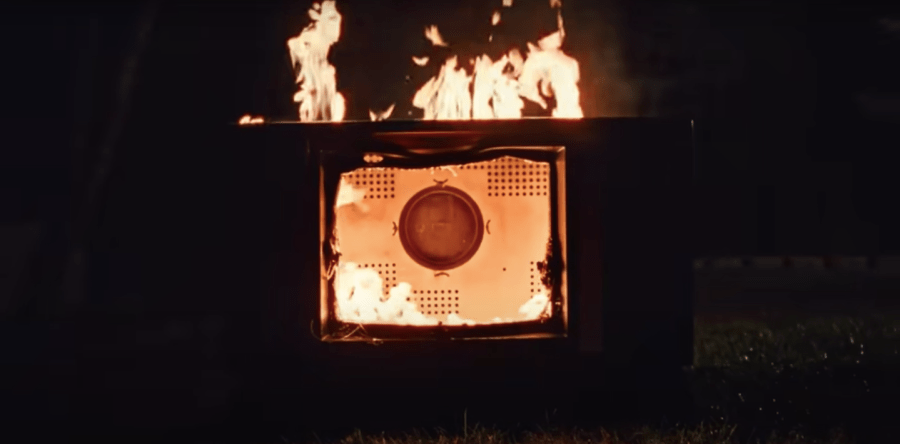
1. I Saw the TV Glow (Dir. Jane Schoenbrun)

In their newest release, Jane Schoenbrun takes the power of nostalgia and uses it as a jumping off point to make one of the most poignant allegories for the trans experience ever committed to celluloid (yes I double checked, it was shot on film). Owen (played by Ian Foreman while young and Justice Smith after) and Maddy (Brigette Lundy-Paine) are both outsiders who bond over a teenage TV show called the Pink Opaque. Their experiences with the show take on a surreal quality and end up existing as a hazy memory but are essential to their being. While Owen’s journey takes a dark turn due to personal inaction, the film’s enduring image is the message “there is still time” written in sidewalk chalk on the street in suburbia. This sentiment leaves the viewer with the hope that it’s never too late to live one’s truth.
 Woman With A Movie Blog
the challenger sound track is indeed excellent. Great list.
LikeLike