
In this period, Varda’s far left political leanings were at the forefront of her filmmaking. Between documentaries about leftist figures, filming the Black Panther movement, and a combined effort on North Vietnam, she left no secret as to who she believed was fighting for change. She also aligned herself with the Hippie movement in Southern California during this time.
The Creatures

A film about the creative process, Michel Piccoli plays a writer who with his mute wife (played by the marvelous Catherine Deneuve) take up residence in an old fortress on a sparsely inhabited island. While they keep mostly to themselves Piccoli does enter the village from time to time to pick up food and plenty of wine, but his real motive is to observe the locals for inspiration for his next writing project. The film uses checkered patterns as a motif throughout which come into play in the end as in Piccoli’s book he sees himself playing a game of chess with the people of the town as his pawns. The film sets out to explore the morality of this, but it does not quite stick the landing. Still another good film by Varda though.
Elsa La Rose
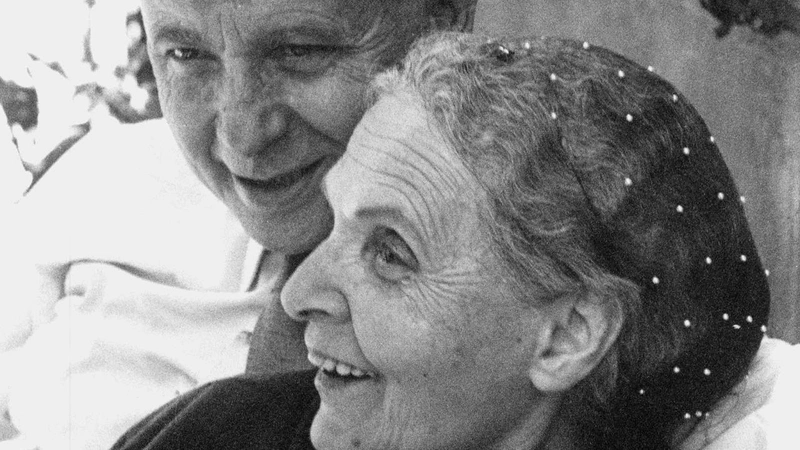
Part of a pair of films she made with her husband Jacques Demy, Elsa La Rose is a documentary short about Elsa Triolet as Narrated by her husband Louis Aragon. Both were prominent communist writers in the day. The film is Louis’s love letter to Elsa where he proclaims “My universe, Elsa, my life.” This does stand in slight contrast with the sentiment we get from Elsa herself where she doesn’t love Louis’s poetry about her because it puts her on a pedestal and diminishes himself in the process.
Christmas Carol
Another unfinished project of Varda’s that the Criterion Channel has saved what little exists over. In 4 minutes of fragments of scenes it’s hard to know what could have been, but it does deal with a trio of friends a theme which would be revisited in Lions Love (… and Lies).
Far from Vietnam

A piece of counter propaganda about the Vietnam War, Far from Vietnam is a collaborative piece between Jean-Luc Godard, Joris Ivens, William Klein, Claude Lelouch, Chris Marker, Alain Resnais, and Agnès Varda, the film explores the North Vietnamese prospective either directly, through the defecting southern Vietnamese, or the various protests in America. It’s unfortunately hard to tell what Varda’s part if any (she’s listed as “Credited only” on IMDB) is in the film to compare it to the rest of her oeuvre.
Uncle Yanco

The first of Varda’s California pieces, Uncle Yanco is a personal piece about Agnès meeting her Uncle Jean (Yanco) Varda. The short explores Agnès’s ancestry as narrated by Yanco, as well as Yanco’s hippie lifestyle in the “Aquatic suburbia” in which he lives. A loving tribute to the artist who proclaims “Hell is doing what you don’t like to do”.
Black Panthers

One of Varda’s most conventional film, Black Panthers is a documentary short exploring the organization of the same name as they rally for the release of one of their head members Huey Newton who was accused of shooting a cop even though no witness ever saw a weapon in his hand. The documentary fits with the far left politics that Varda has prescribed to and is powerful in its portrayal of the movement.
Lions Love (… and Lies)

Varda introduces Lions Love (… and Lies) as “the utopia of success without the effort of work” which equates to two hours of hippie bullshit, but I say that in the most affectionate way. Staring Viva of Andy Warhol fame, the film follows her and the two men in her throuple as they lackadaisically frolic through life, only to have to contend with reality when Bobby Kennedy and Andy Warhol are shot the same week their house guest Shirley (played by director Shirley Clarke) overdoses on sleeping pills. Though scripted, the film is most curious about being a fly on the wall of the hippie movement during that tumultuous time.
While 1963’s Salut les Cubains may have been the start of Varda’s fascination with far-left movements, the late 60s was when she made it her obsession. Excepting The Creatures, and possibly the unfinished Christmas Carol, every film she made in the later half of the 60s was an examination of far-left culture. A trend noticed in many of her films, is that she likes replicating shots of important moments, especially first meetings, in her film. In Elsa la Rose for example, she shoots Elsa entering the bar where she first met Louis 4 or more times to draw attention. Overall what this period in Varda’s filmography lacked in compelling narrative features it gained in meaningful documentary work.
 Woman With A Movie Blog