I’m so late this year, I’m sorry. But It’s finally list time again! I love films and I love sharing my love of films with others. As I’ve done for the past decade plus, I’ve put together a list of what I consider to be the best films of the year that just ended. I put this off as long as I did so that I could see The Zone of Interest, but honestly I had a lot to catch up on after mental health issues kept me from seeing most of the year end films. Of the films on this list, 10 of them were directed by women, which is quite a high percentage considering what the wide release percentage of women directors tends to be. As far as regrets go, there were two Argentinian films I wanted to watch before putting together this list, The Delinquents and Trenque Laquen, but at 3 and 4 ½ hours a piece, they just weren’t in the cards this year. Additionally not being in one of the major markets, Seattle is only so big, I was unable to see The Taste of Things and Perfect Days. Both open here in mid-February, but I didn’t want to be that delayed in putting out my list any further. Now without further ado, the list.
25. Fallen Leaves (Dir. Aki Kaurismäki)
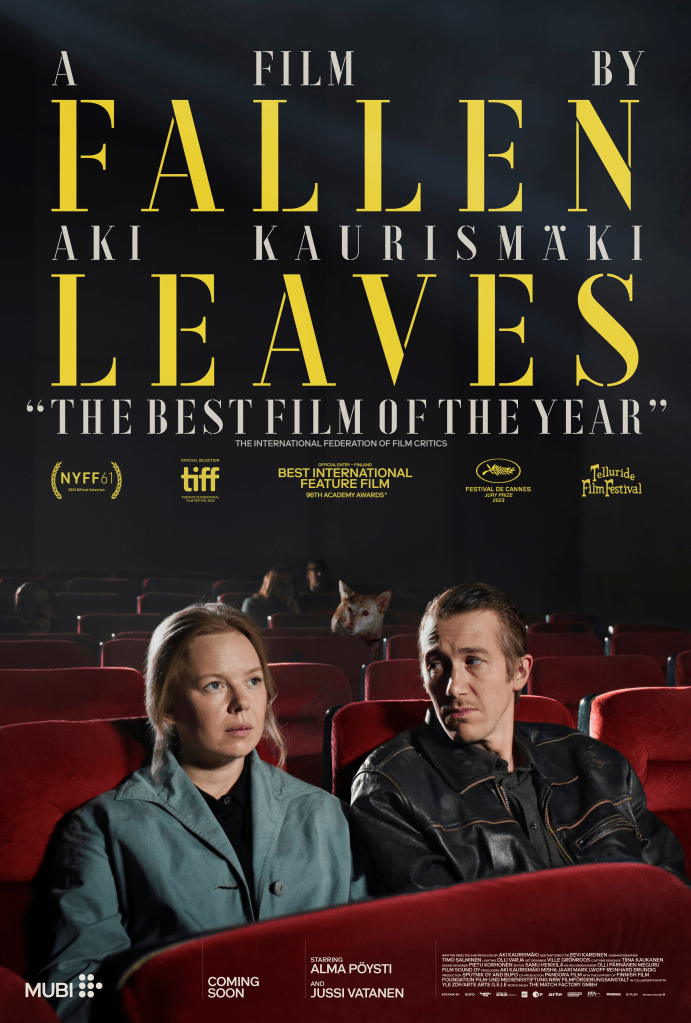
Finnish director Aki Kaurismäki is the master of the dry, social commentary comedy, and his most recent film Fallen Leaves fits into that category and excels while doing so. A love story between two miserable, working-class people, Fallen Leaves captures the desperation for connection that can plague the underserved. Ansa (Alma Pöysti) may not especially like Holappa (Jussi Vatanen), but that does not stop her from falling in love in service of no longer being alone. Patently ridiculous and lovingly poignant, Kaurismäki delivers a great film about living the best life one can.
24. All Dirt Roads Taste of Salt (Dir. Raven Jackson)

It did not take long for the pretentious side of my list to show its face. All Dirt Roads Taste of Salt is definitely not for everyone, but for those willing to put up with a meandering, vibes over narrative approach to filmmaking, Raven Jackson’s film will be a blessing. The story of a Black, Mississippi woman that spans decades speaks to moments that make a life. Methodical in its pacing, All Dirt Roads Taste of Salt feels almost Malickian and I say that in the best way possible.
23. The Holdovers (Dir. Alexander Payne)

Alexander Payne and Paul Giamatti reunite 19 years after Sideways to create the most quintessentially winter film of the year. While Giamatti may bring the star power to the film this place on the list is essentially a Da’Vine Joy Randolph recognition. She plays Mary, a cafeteria worker who is staying over at the school for the holidays as a way of grieving her son’s passing. Her performance is devastating as she slowly breaks down as the holiday break continues, and she will almost certainly walk away with an Oscar this year as the lone winner for the film.
22. Blue Jean (Dir. Georgia Oakley)

While it is true that many lesbian films end up being period pieces, most of them take place well before the Thatcher era where Blue Jean does. Rosy McEwen plays Jean a physical education teacher who needs to hide her homosexuality from her place of employment less risk being fired because of the archaic Tory laws. McEwen is the highlight of the film as she captures the strife of a women unsure with how to proceed as herself. A solid screenplay also heightens McEwen’s performance in this underseen gem.
21. Barbie (Dir. Greta Gerwig)

While many people were skeptical of a movie based on Barbie, I had faith in Gerwig’s direction to deliver something special, and I feel confident that I won that bet. Some may scoff at the feminism 101 speachs that inhabit the film but remembering that this film is a PG-13 film that many teens will watch should absolve that critique. Outside of the philosophical arguments about the film, Barbie is just outright fun. Margot Robbie and Ryan Gosling are both exceptional, and the return of the dream ballet in “I’m Just Ken” was the most entertaining moment in film this year.
20. R.M.N. (Dir. Christian Mungiu)

Christian Mungiu, acclaimed director of 2007’s 4 Months, 3 Weeks and 2 Days, returns to the big screen with the slowest of burns R.M.N. The film explores human nature when confronted with the unknown. Matthias (Marin Grigore) is the unlikable protagonist at the center of the film. He has extramarital affairs, is less than understanding of his scared son, and takes a passive approach to the racism that has infected his town. Yet through these unlikable eyes, the story has a strong sense of right and wrong and stands with those who need it most. Undeniably a slow watch, but the payoff is well worth the commitment.
19. 20,000 Species of Bees (Dir. Estibaliz Urresola Solaguren)
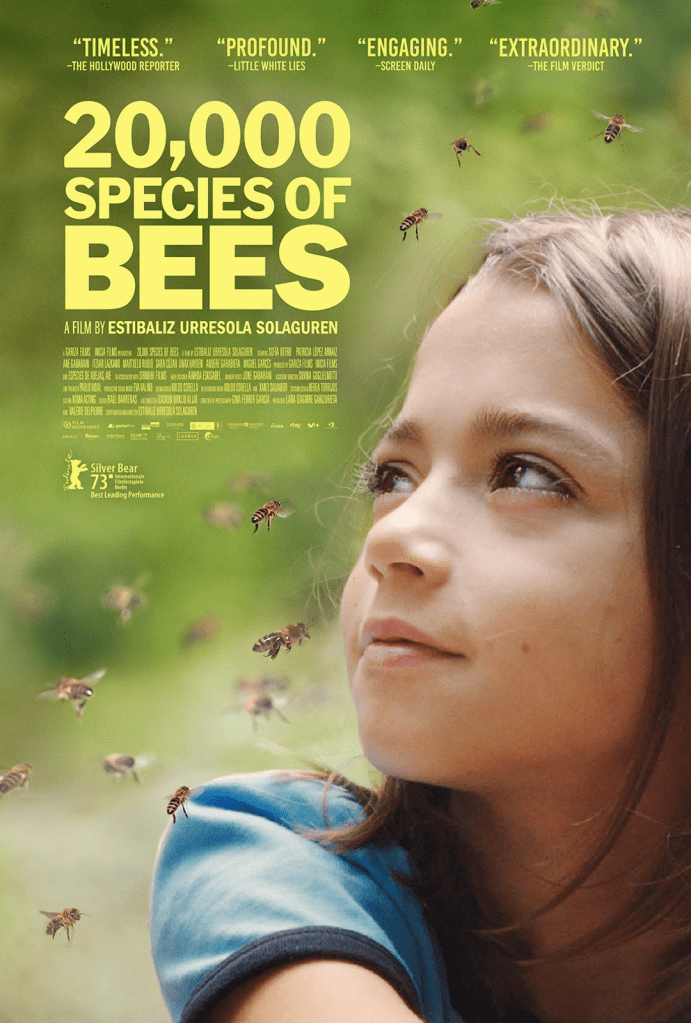
Possibly the least traditional entry onto my list, 20,000 Species of Bees was a SIFF discovery for me, and one for which I was clearly the target audience. The film is about Lucía (Sofía Otero) an eight-year-old who is just coming to terms with her gender identity and her mother Ane (Patricia López Arnaiz) learning to accept her daughter for who she is. As a trans woman, I found the story to ring exceptionally true. Lucía’s inner conflict with whom she was reminded me of my own, and Ane’s reluctance followed by eventual acceptance felt like what I wished would have happened for me. Extremely emotional and expertly acted, 20,000 Species of Bees is a film to look out for if it ever receives distribution.
18. Monster (Dir. Hirokazu Kore-eda)
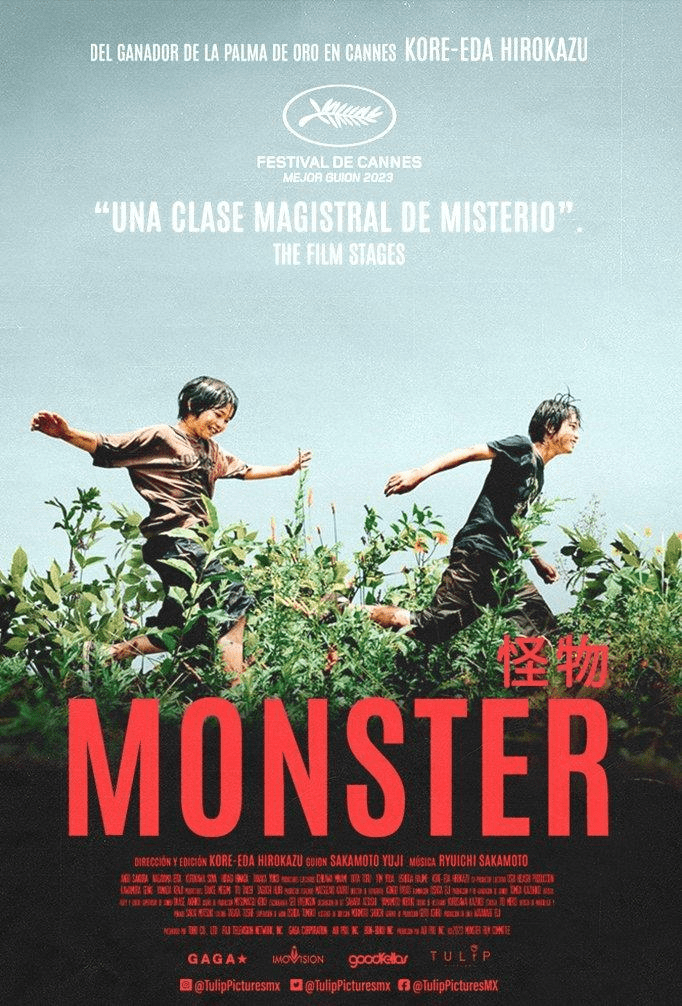
A modern day Rashomon (Dir. Akira Kurosawa, 1950), Monster is acclaimed Japanese director Hirokazu Kore-eda’s tale on perspective. When her son Minato (Soya Kurokawa) starts acting strangely, his mother Saori (Sakura Ando) is understandably concerned. Starting with her perspective, Kore-eda slowly unravels the mystery behind Minato’s strange behavior. And while the principle view point may shift at various times throughout the film, it is Ando’s performance as the mother desperate to find out what is wrong with her son that shines through.
17. Poor Things (dir. Yorgos Lanthimos)

I never would have guessed that the man who directed Dogtooth (2009) would become one of the most well known and acclaimed directors working 15 years later, but Lanthimos has managed to tap into the weirder aspect of the cultural mind. Poor Things is another film that should not have mass appeal, but we are better off because it does. Emma Stone is excellent as Bella Baxter, the Frankenstein’s Monster stand in of the mad genius Dr. Godwin Baxter (Willem Dafoe). Stone plays Bella as an infant minded creation all the way to a wise beyond her years independent woman and is convincing at all stages of that development. A wickedly devious performance for a wickedly devious film.
16. Are You There God? It’s Me, Margaret. (Dir. Kelly Fremon Craig)

I am a sucker for a good coming of age film, and that is exactly what Kelly Fremon Craig delivered with Are You There God? It’s Me, Margaret. The adolescent girl’s coming of age film seems to be Craig’s forte as this film follows up her 2016 debut The Edge of Seventeen. While Abby Ryder Fortson is great as the titular Margaret, it is Rachel McAdams, playing Margaret’s mother Barbara, who steals the show. Craig rightfully expands Barbara’s role from what it was in the book, and McAdams delivers wonderfully on the expanded material.
15. Showing Up (Dir. Kelly Reichardt)

As far as current actor director pairs go, it is hard to pick a pair much better than Michelle Williams and Kelly Reichardt. Williams is able to thrive under Reichardt’s deliberate pacing and muted direction to portray characters still filled with the depth normally ascribed to showier performances. Showing Up is a look at the less glamorous side of being an artist. Working hard for little acknowledgement and fighting hard for every bit of exposure. The film may well be too slow for most viewers, but for those willing to sit with a movie and take it at its own pace, it is an excellent watch.
14. The Iron Claw (Dir. Sean Durkin)
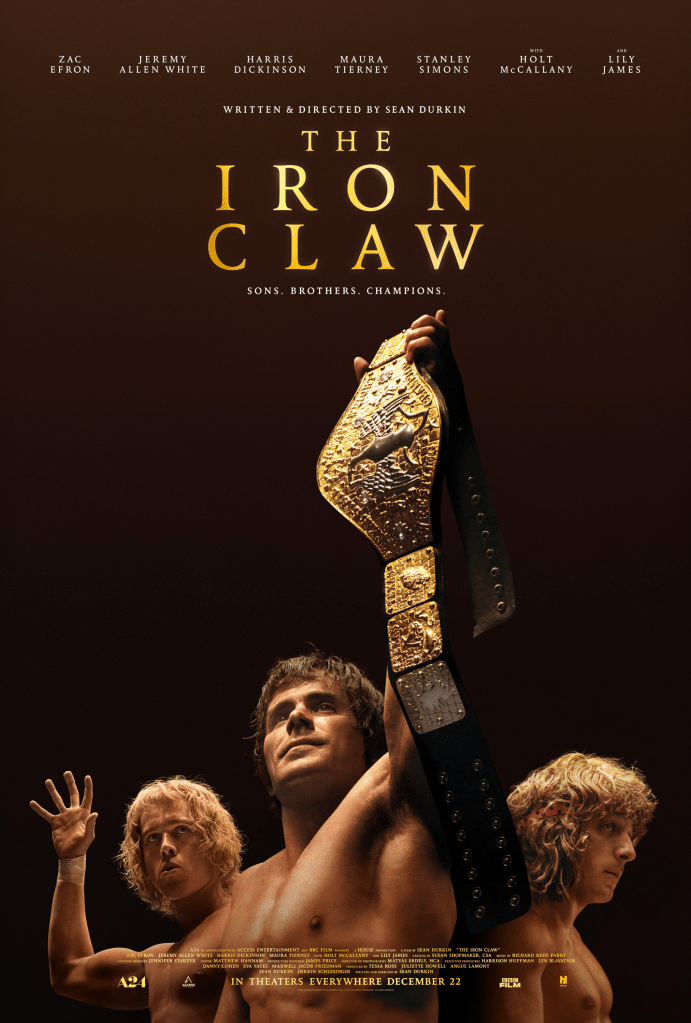
I have never watched a single wrestling match in my life, but one does not need to in order to find the latest Sean Durkin film The Iron Claw fascinating. The tragic story of the Von Erich brothers lends itself perfectly to the silver screen. Durkin is masterful at slowly teasing the dark side of things out from his subjects and he does just that from this film. He lets the unease slowly build before exposing the devastating truth of the Von Erich curse. As the eldest (living) brother Kevin, Zac Efron proves that he is more than just a pretty face, but an excellent actor as well. His performance is what allows the audience to maintain hope despite all of the tragedies the film portrays.
13. May December (Dir. Todd Haynes)

Director Todd Haynes reunites with Julianne Moore and works with Natalie Portman and Charles Melton for the first time to deliver a story based largely on the Mary Kay Letourneau scandal from the late 90s. In this film Moore plays the Letourneau stand in Gracie seemingly happily married to her victim Joe (Melton) 20 years after the abuse. Portman’s Elizabeth throws a wrench into their lives when she comes to observe Gracie in service of performing as her in an upcoming film. Haynes’s film is filled with melodrama and camp in a way that heightens the absurdity of the situation (even if based on real life). All three actors put in exquisite performances in a film that leaves them all questioning the relationship at the center of their connection.
12. Afire (Dir. Christian Petzold)

German auteur Christian Petzold’s most recent film Afire is a haunting look at someone so blinded by a self-imposed sense of obligation that he misses out on the small wonders of life in front of him. Leon (Thomas Schubert) is an asshole, even if deep down he does not want to be. On a trip with his friend Felix (Langston Uibel), they meet Nadja (Paula Beer) who attempts to befriend Leon even if Leon’s instincts keep ruining things. All this happens under the threat of impending wildfires which threaten to ruin the three’s holiday. Poignant and contemplative, Afire is another excellently realized film for Petzold.
11. Beau is Afraid (Dir. Ari Aster)

Ari Aster follows up is two highly acclaimed horror films (2018’s Hereditary and 2019’s Midsommar) with something completely different in Beau is Afraid. While the most recent film could maybe be classified as a horror film, that would be more in the horrific root word than what the genre has come to mean. Joaquin Phoenix gives a terrifying performance of Beau, a man plagued with anxiety. Phoenix’s performance and Aster’s direction combine to create a perpetual feeling of unease as reality is blurred under Beau’s anxious delusions.
10. Infinity Pool (Dir. Brandon Cronenberg)
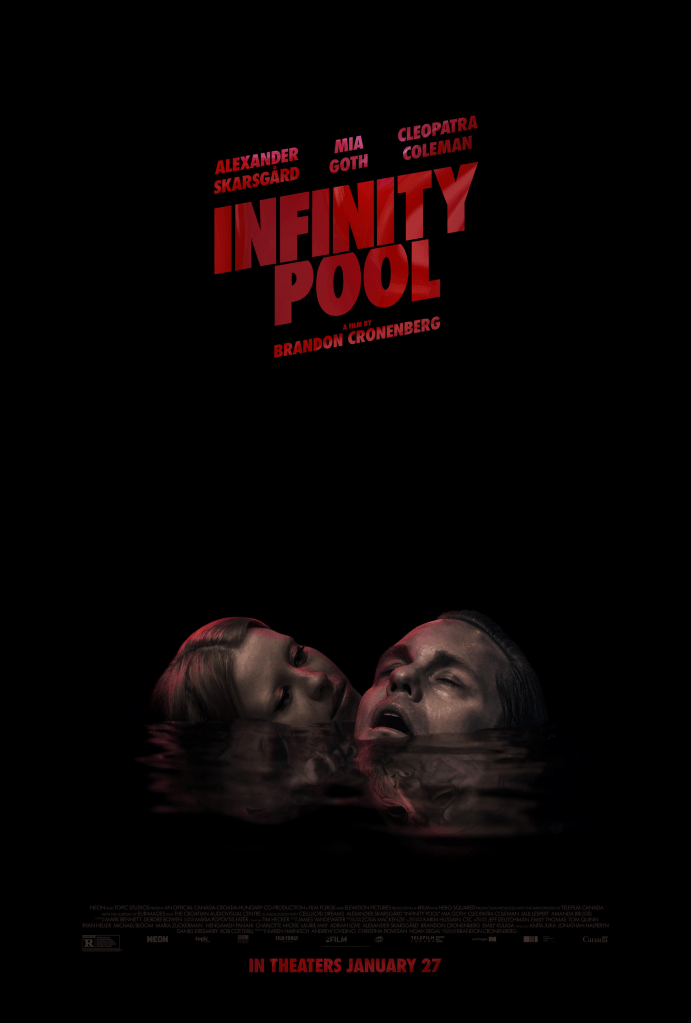
The best horror film of the year continues to prove that Brandon Cronenberg is more than just a nepo baby, he is an excellent film maker with his own style. Infinity Pool lingered with me, the creepy imagery, the complex themes, and especially the supporting performance from Mia Goth. The film is dark and twisted in a way that lingers in the mind for weeks after viewing. Alexander Skarsgård is excellent as the slimy failed author James, and as mentioned, Mia Goth as Gabi is impeccably deranged.
9. Asteroid City (Dir. Wes Anderson)

If you think Wes Anderson’s style is a little bit too much, then this is not the film for you. However, if you want to see Wes Anderson dive into his style headfirst and make the most Wes Anderson film ever, then you need to see Asteroid City. Consisting of multiple layers of storytelling, the film is a complex narrative that I’m still grappling with after only one watch. The innermost layer of the film, the one in color, is filled to the brim with interesting acting decisions and Anderson’s trademark production design. Yet it is the combination with the outer layers that elevate Asteroid City into one of Anderson’s best.
8. Killers of the Flower Moon (Dir. Martin Scorsese)

It is sacrilege to say this as a cinephile, but Scorsese has never really been my cup of tea. I respect him as a film maker, and I’ve never disliked his movies, they just have not resonated with me the way they do for most. That said Killers of the Flower Moon spoke to me in a way that most of his more recent films have not. While much of the film does fall in the bad men doing bad things that many of his films fall into, the inclusion of Lily Gladstone as Mollie Burkhart won me over. By centering on the victim, he made a film that resonated much more with me. Scorsese’s undeniable prowess with directing combined with a sympathetic co-lead make this one of his best films. I only wish that Gladstone appeared on screen more.
7. How to Blow Up a Pipeline (Dir. Daniel Goldhaber)
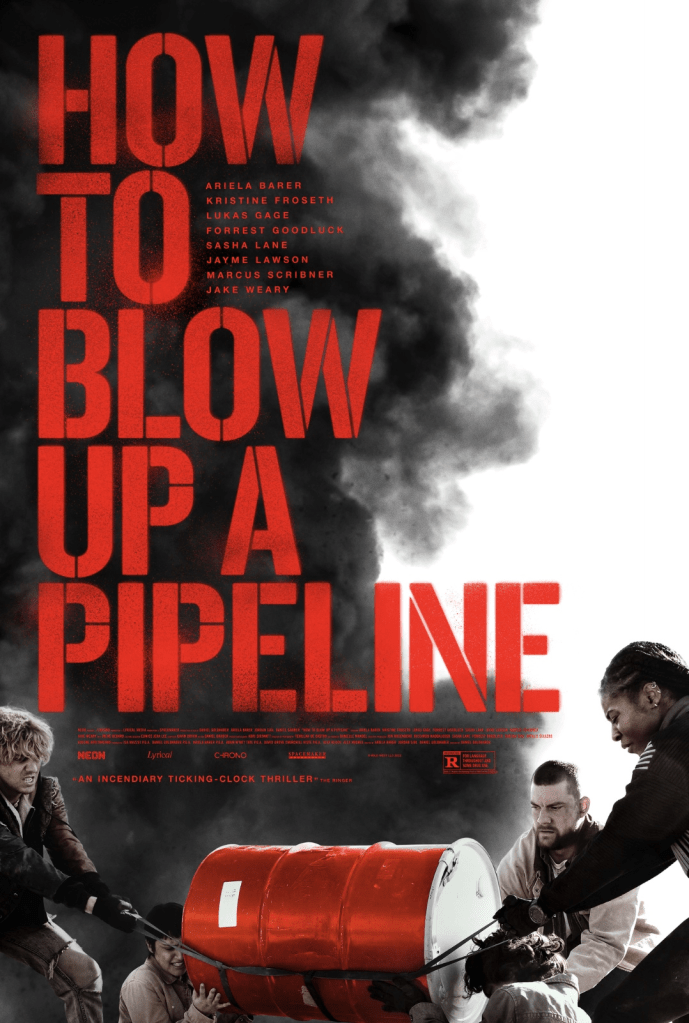
We’ve reached the point in our climate dystopia where our films can paint ecoterrorists as both the protagonists of a film and completely in the right. How to Blow Up a Pipeline is an incredibly tense thriller about a band of people whom all for different reasons believe that the destruction of an oil pipeline in Texas will serve their causes. Goldhaber cuts back and forth between the ecoterrorists’ past that motivated them to join this cause with the building of bombs and act of blowing up the pipeline. The film is remarkable in its ability to build tension and speak to a necessary issue in today’s world.
6. Anatomy of a Fall (Dir. Justine Triet)

The Palme winning Anatomy of a Fall cemented itself this year as one of the greatest courtroom dramas in cinema history. Sandra Hüller is impeccable as a wife who is under suspicion of killing her husband. She skirts the line in her performance such that the audience can never be certain if she is innocent or guilty. Much of that uncertainty is also due to Triet’s remarkable direction. The use of audio recordings of a fight between Hüller’s Sandra and her husband Samuel (Samuel Theis) is a linchpin of the film. It both represents a possible motive for Sandra and questions if normal marital fights can be used to incriminate. Triet delivers a complex picture of marriage and the court system.
5. A Thousand and One (Dir. A.V. Rockwell)

Sundance Grand Jury: Narrative winner A Thousand and One snuck up on me for how good it was. Similar to 2016’s Moonlight (Dir. Barry Jenkins), A Thousand and One explores the Black experience of a young man through various points in his life. Rockwell’s film, however, uses these time skips to show the evolving relationship between a boy and his mother played wonderfully by Teyana Taylor. Her performance is one of the best of the year, as she manages to capture Inez’s change over the decade while still making each era feel like the same person, just with more years of experience. I’d also like to call out Gary Gunn’s score for the film which was my favorite of the year.
4. The Zone of Interest (Dir. Jonathan Glazer)
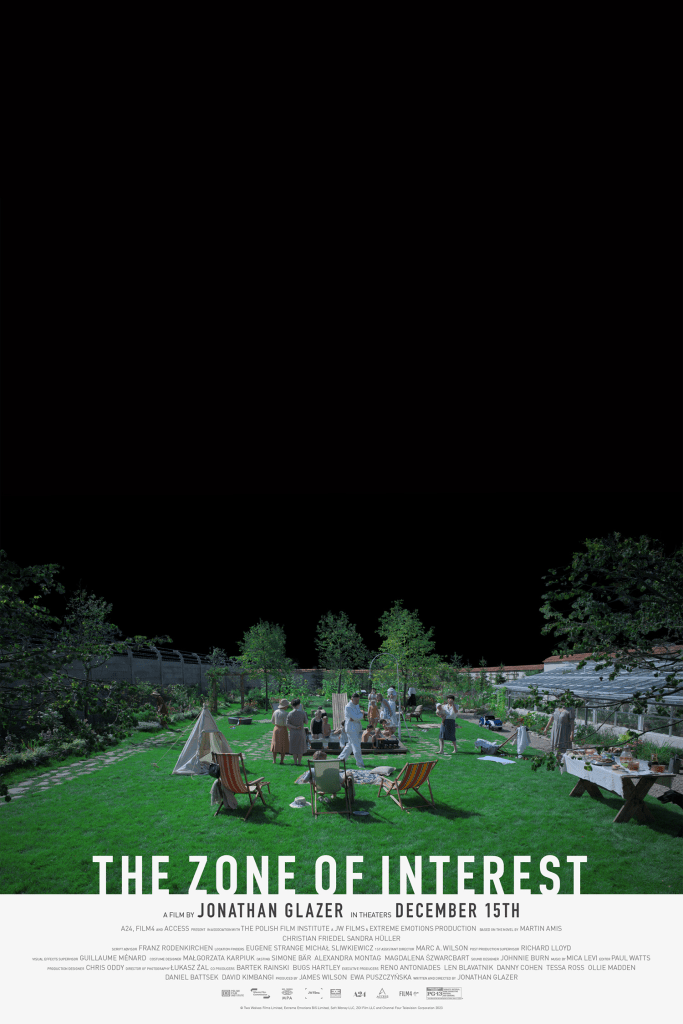
The second of Sandra Hüller’s Oscar worth performances this year, Jonathan Glazer’s follow up to the haunting 2014 Under the Skin is no less shaking. Taking place in an estate sharing a wall with Auschwitz, The Zone of Interest manages to capture the horrors of the Holocaust without showing a single frame of the violence inflicted upon its victims. Instead, everything is conveyed through sound design and the acting of the guilty family. The sound design is in particularly remarkable, and while I don’t think it is the frontrunner, I will be very upset if it’s snubbed on Oscar nomination morning. While the sound design may be the most apparent standout of the film, the entire thing is meticulously put together in a way to leave the viewer in devastated silence.
3. The Blue Caftan (Dir. Maryam Touzani)

What at its heart is a love triangle film between a married couple and the worker they hire to work at their apparel shop, The Blue Caftan is an exceptionally warm watch that can’t help but fill the viewer with love. While Youssef (Ayoub Missioui) would be seen as in interloping home wrecker in most films, here he and his relationship with Halim (Saleh Bakri) is understood by Halim’s wife Mina (Lubna Azabal) and the three of them end up in a familial relationship where each clearly cares about the rest. A complex romance, The Blue Caftan was an amazing watch that stuck with me even as a mid-SIFF watch.
2. All of Us Strangers (Dir. Andrew Haigh)
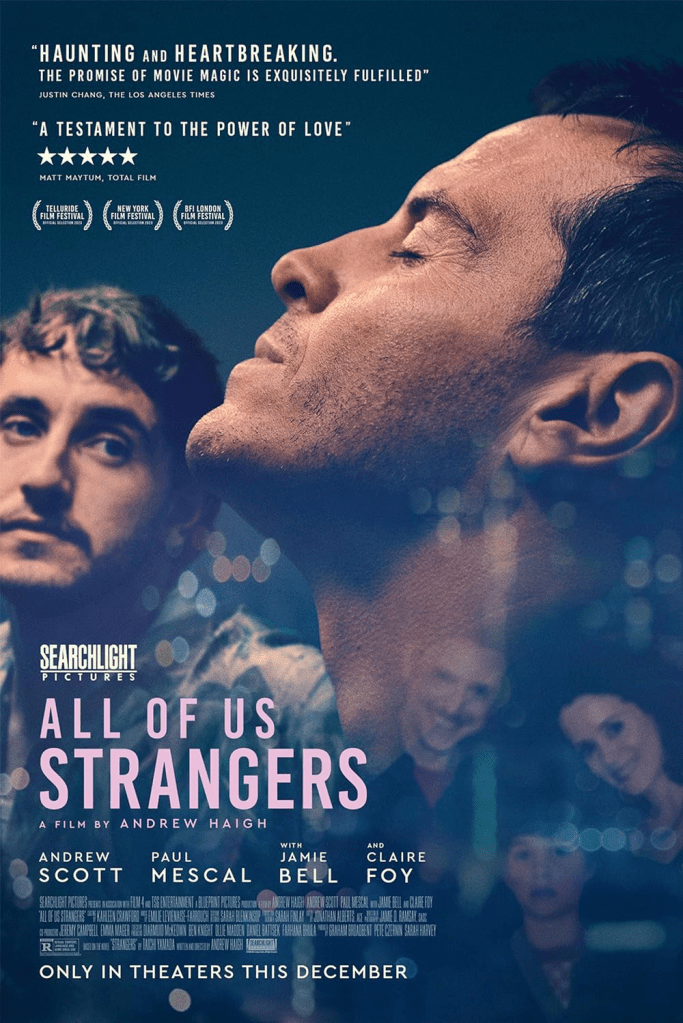
One of the last films I saw in my 2023 film catch up, All of Us Strangers came awfully close to being my number one. The film is an exploration of a man’s struggles with his queerness due in large part to never being able to tell his parents who he was. Haigh lets Adam (Andrew Scott) process that longing by creating a world where his parents still live in their childhood home having never aged since they passed when he was 12. These scenes are intercut with his burgeoning relationship with Harry (Paul Mescal) which grows as Adam is able to process his identity with his late parents. The film hit me especially hard as a queer person who is struggling with processing her past, but even without that personal connection the film would rank high on this list.
1. Past Lives (Dir. Celine Song)

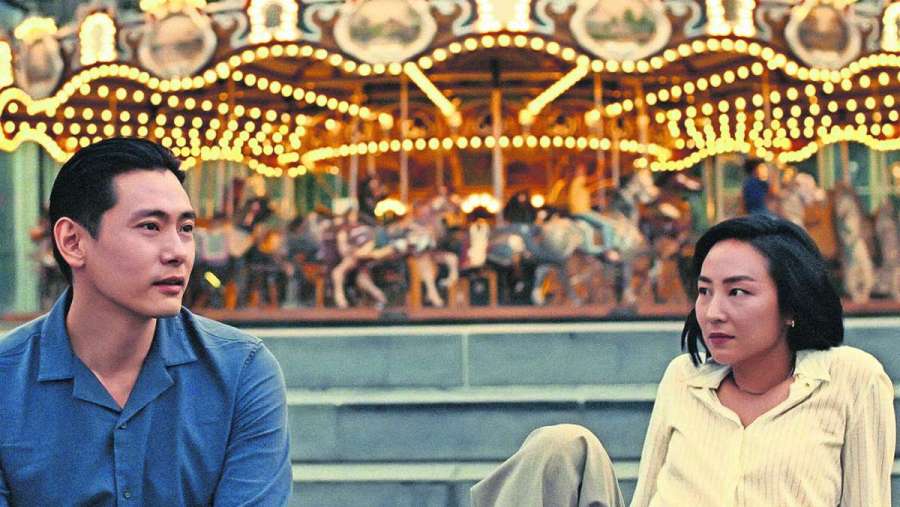
I managed to catch Celine Song’s directorial debut at the opening night gala for SIFF (The Seattle International Film Festival) and while she could not directly talk about her captivating screenplay – it was the midst of the writer’s strike – one couldn’t help but see the brilliance in her that lead to such a perfect screenplay and perfect movie as she addressed the pack room of viewers stunned in silence. Past Lives is both a romance and not at the same time. It captures the longing that exists when considering the potential loves that we never had, and how even when we are happy in our current lives those memories persist. Greta Lee is revelatory as a woman who is happy in her current life, married to a man she loves, but is taken by the remembrance of a boy she used to know. The movie feels like the inverse of Linklater’s Before films and deserves to be seen with the same reverence.
 Woman With A Movie Blog